

Appearance varies with the base
The starting colour and surface can change how bright, dense or even the glitter looks. Compare samples on the intended cup body.
Controlled decorative coating
A glitter finish adds visible sparkle to the cup’s coating. The colour, the size and density of the sparkle and the logo are judged together on one finished sample, which takes up to 7 days for an existing model. For a finished example, see the silver glitter tumbler on the customer cases page.
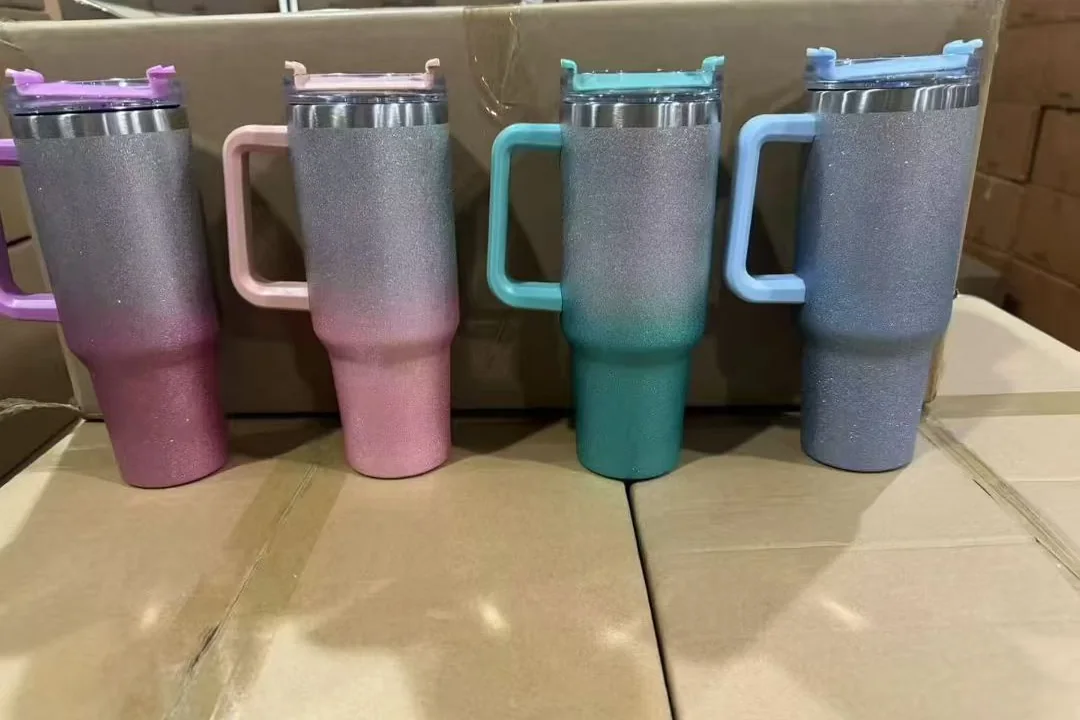
Confirm the cup model, material and starting surface.
Define particle visibility, colour, gradient and gloss.
Trial the logo on the approved coating system.
Keep one physical sample and written acceptance points.
Buyer answer
For bulk glitter tumblers, describe what you want to see and feel on the finished cup, and send a picture or a reference cup if you have one. The coating is matched to it on a sample.
The starting colour and surface can change how bright, dense or even the glitter looks. Compare samples on the intended cup body.
Check the shoulder, handle side, base transition and any recessed areas. A front photo alone cannot show complete coverage.
The logo goes on after the coating and is checked on the glittered sample, because sparkle can reduce contrast.
Process control
Glitter can be made with different coating systems. The coating goes on after the body is formed, sealed, polished and temperature-tested, and before the logo.
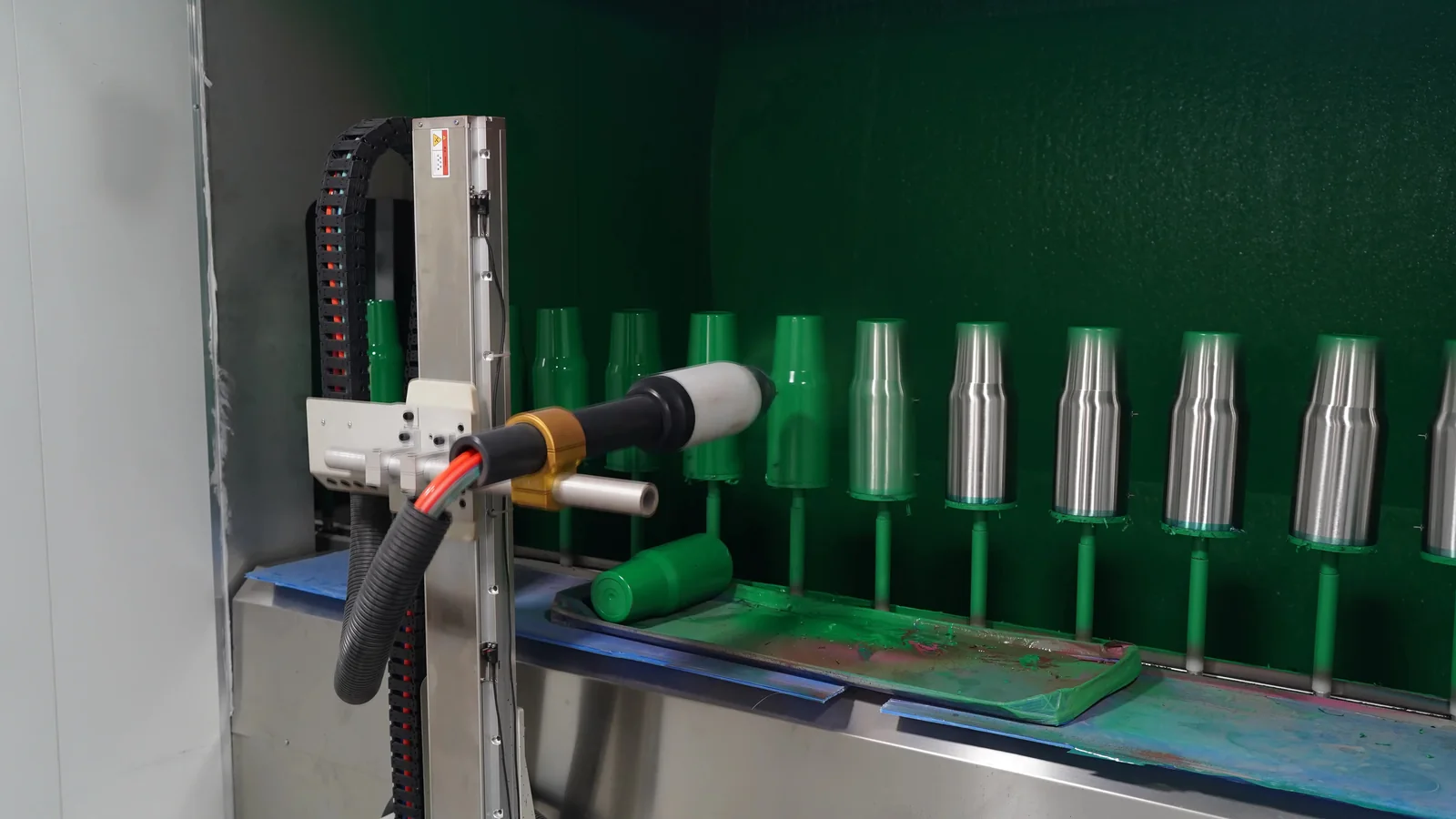
The threads, rim, base and handle joins are masked so they stay clear.
Agree the base colour, particle look, transition area and proposed protective finish. Do not assume every design uses the same primer, glitter carrier or clear layer.
Use the documented conditions for the selected materials. A surface that looks dry is not, by itself, proof that it is ready for decoration, packing or care claims.
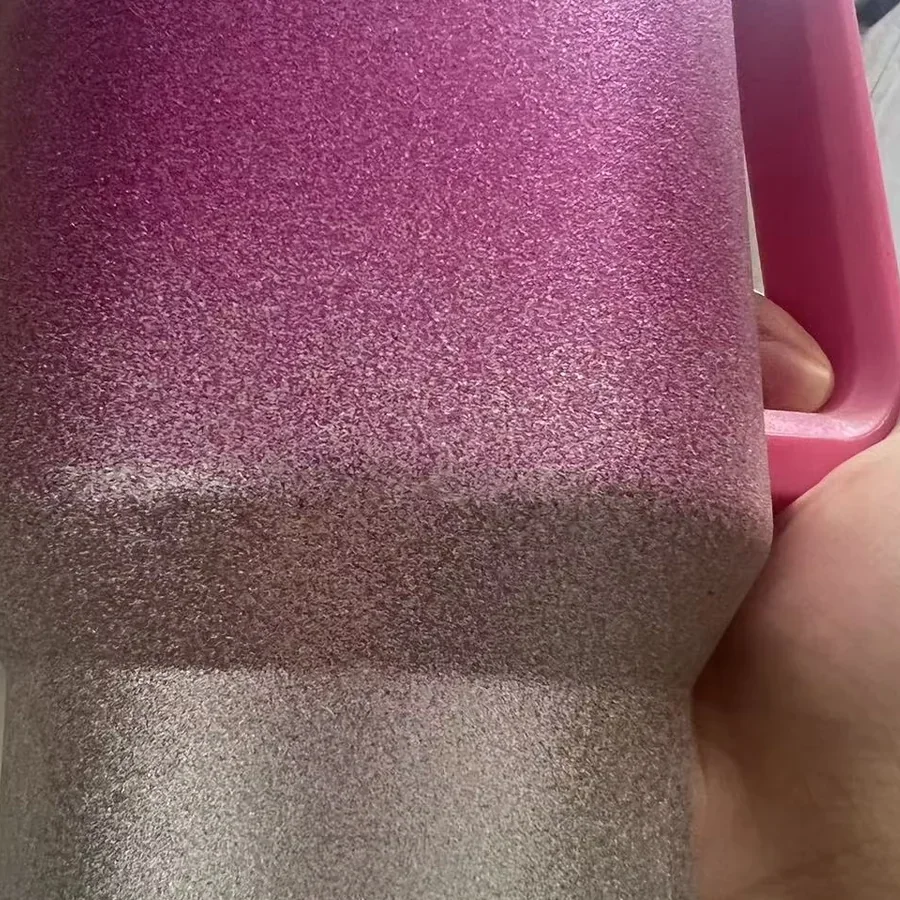
Check colour, particle distribution, thin areas, dust, runs and boundaries from several angles. Retain observations before the logo trial begins.
Approval language
Words such as “sparkly”, “fine glitter” or “silver fade” are a good start; a picture or a reference cup makes the target clear.
Sample release
The sample is the full cup with its lid, handle, glitter finish and logo. Bulk production takes 7–12 days after it is approved, and bulk orders are inspected to ISO 2859-1, general inspection level II, AQL 2.5 for major and 4.0 for minor defects.
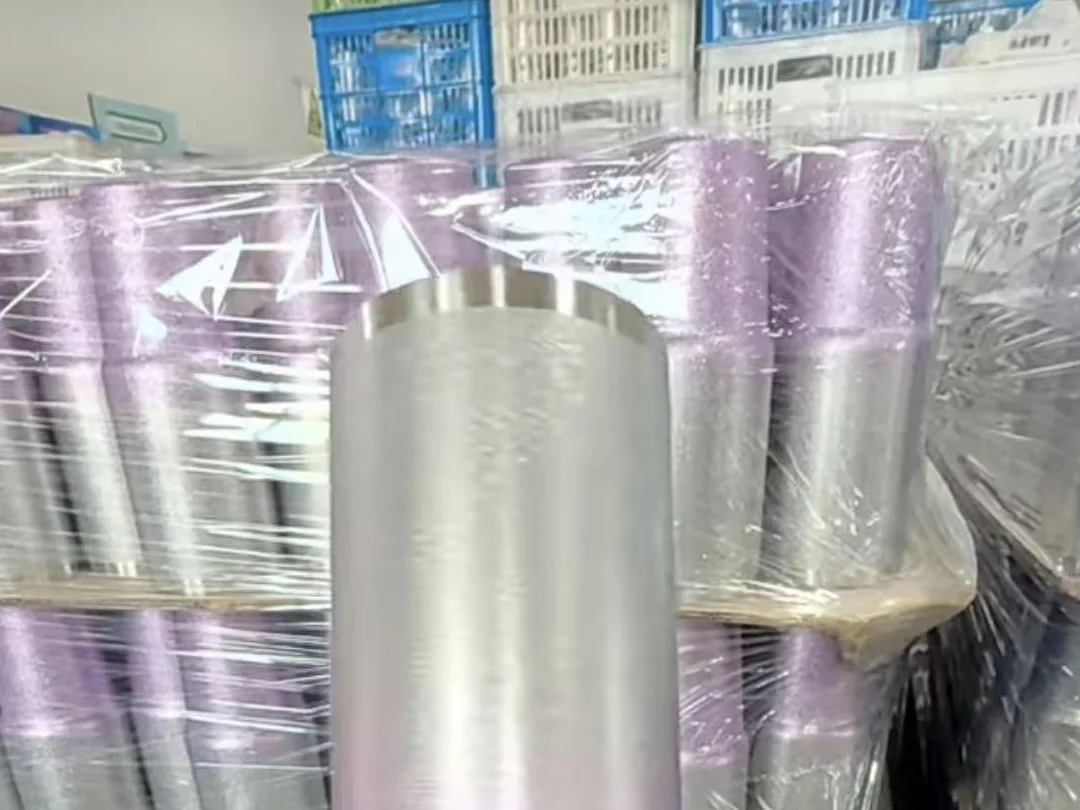
See how quality-control records support repeat orders.
For a diamond-effect paint example, see the Molly Tea tumbler.
Repeat production
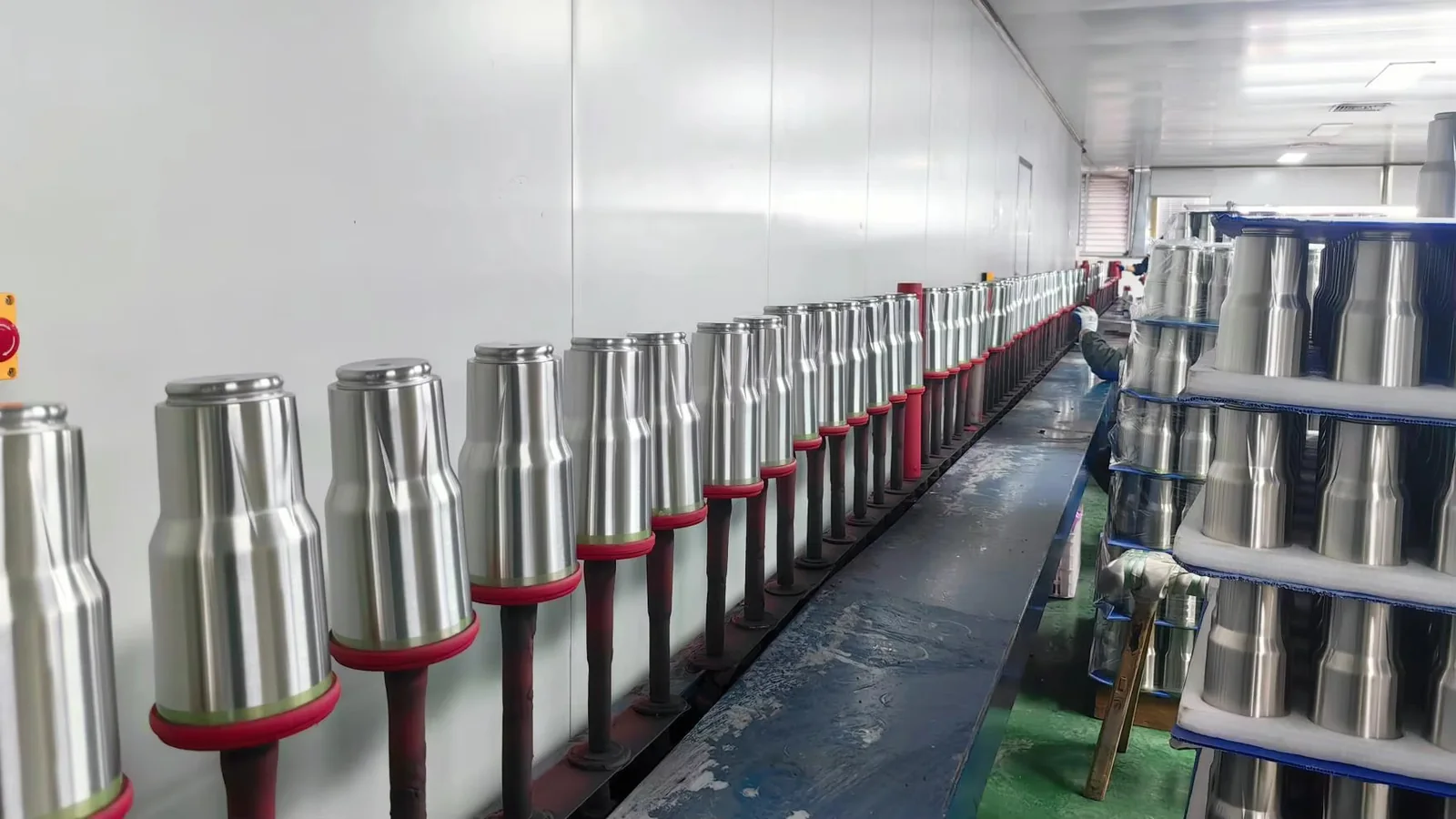
Individual fixtures help present cup bodies to the finishing process in a repeatable orientation. Buyers should still define the visible acceptance points: fixture spacing alone does not prove colour, coverage or durability.
For a repeat order, the approved sample is the reference. Coating colour can vary slightly between batches, which is normal.
Method choice
“Glitter” describes the intended visual effect. Spray painting and powder coating describe broader coating routes. Ask the supplier to propose the system that suits the cup, appearance, decoration and intended care requirements.
| Buyer priority | What to define | What to approve |
|---|---|---|
| Glitter appearance | Particle visibility, colour, density, gradient and gloss | Actual finished cup under agreed viewing conditions |
| Logo compatibility | Artwork, size, location, contrast and method | Logo trial on the selected glitter finish |
| Handling and care | Intended use and the care statement proposed for the coating system | Relevant test plan or supplier documentation before claims are made |
| Batch consistency | Reference sample, acceptable visual range and re-sample triggers | Bulk inspection against the approved sample |
Buyer questions
A glitter finish puts visible reflective particles into the cup’s exterior coating. For a bulk order, the effect, the base colour and the logo are approved on a sample of the actual cup.
Coverage depends on the cup shape, masking limits and proposed coating system. Define whether the effect should cover the full exterior or stop at specific rims, bases, handles, seams or attachment points, then inspect those boundaries on a sample.
Yes, a logo can be trialled after the coating is defined. The suitable method depends on the finish, artwork and required appearance. Approve the real logo sample for contrast, position, edge quality and compatibility with the selected surface.
Yes. The starting colour and surface can affect apparent brightness, coverage and contrast. Compare the intended colour and glitter effect on the production cup rather than relying only on a digital rendering or loose colour swatch.
Look at the assembled cup from several angles and in daylight: sparkle, colour, any fade, gloss, the edges at the rim and base, and the logo.
Do not assume a care claim from appearance alone. Care guidance depends on the selected coating, cup construction and verification plan. Request the proposed care statement and supporting test or supplier documentation before publishing a dishwasher claim.
Request another sample when a change could affect the approved result—for example the cup body, starting surface, colour, coating materials, particle effect, logo method, artwork size or placement.
RFQ preparation
Send the cup model, a glitter reference, the logo, the quantity per colour, packaging, payment terms and trade terms.
Search BG Drinkware
Add us on WeChat

WeChat ID: +86 151 5891 9004
Open WeChat, tap + then Scan, and point it at the code.