Rust Spots or Tea Stains in a Stainless Steel Bottle? How to Tell
Brown marks inside a 304 stainless steel bottle are a common worry for buyers. Many are tea or coffee stains that clean off. Real rust spots have a cause, and in BG Drinkware's experience it is usually damp. Here is how to tell them apart and how the steel grade is checked.
By Feng, Head of After-Sales Service & Online Marketing Lead
Brown marks inside a stainless steel bottle are either stains or rust spots. Tea and coffee stains are common and clean off, so wash the bottle properly first and see what is left. When real rust spots appear on a 304 inner wall, the causes can vary, but in BG Drinkware's experience damp is the most common one, such as moisture picked up in storage or transit. Cleaning products matter too: the Nickel Institute warns that chlorine compounds left on stainless steel may cause corrosion and that steel wool can leave particles that cause rust staining. A magnet cannot tell 304 from 201. BG Drinkware, a drinkware manufacturer in Yongkang, China, confirms its 304 inner walls with a test solution. If spots remain after a proper clean, report them with photos so the supplier can check the batch.
How can you tell tea stains from rust spots?
Clean the bottle properly, then look again. Tea and coffee stains build up where the drink sits and come off with a thorough clean. Marks that stay after cleaning are the ones to look into. In BG Drinkware's experience, those are most often linked to damp.
Tea or coffee stain
A brown film or ring where the drink sits. It cleans off.
Rust spots
Small spots that stay after a proper clean. Damp is the most common cause.
Cleaner damage
Marks after bleach, chlorine cleaners or steel wool, which stainless steel should not meet.
Grade in doubt
Checked with a test solution at the factory, not with a magnet.
For the cleaning routine that removes tea and coffee stains, see how to clean a stainless steel bottle.
Why would a 304 stainless steel bottle get rust spots?
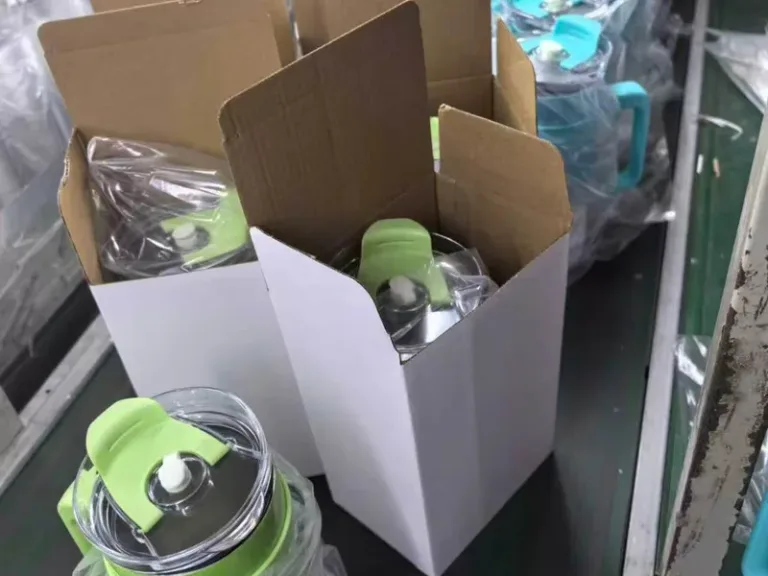
Usually because of damp. The causes can vary, but in BG Drinkware's experience moisture is the most common one, such as bottles packed, stored or shipped in damp conditions. Cleaning products can also cause marks: chlorine cleaners left on the steel and particles from steel wool can both leave marks.
The Nickel Institute's cleaning guidance for stainless steel warns that chlorine compounds left on the surface may cause corrosion, and that steel wool can leave particles that cause rust staining. For the steel grades themselves, and why the inner wall is the one to specify, see 18/8 vs 304 vs 316 stainless steel.
How is the steel grade checked?
Not with a magnet. ASSDA, the Australian stainless steel industry association, states that magnetism has no relationship to corrosion resistance, and both 304 and 201 are usually non-magnetic. BG Drinkware confirms its 304 inner walls with a test solution, and food-contact test reports cover the 304 inner wall of two of its models.
| Symptom | Likely cause | How to confirm | What to do |
|---|---|---|---|
| Brown film or ring where the drink sits | Tea or coffee stain | It comes off with a thorough clean | Clean it; repeat as part of normal care |
| Spots that stay after cleaning | Damp, the most common cause | Check how the bottles were stored and shipped | Report with photos; the supplier checks the batch |
| Marks after bleach or steel wool | Chlorine residue or steel particles | Check what the bottle was cleaned with | Stop using them; clean with warm, soapy water |
| Doubt about the grade | Possible grade mix-up | Factory test-solution check | Ask the supplier how the grade is confirmed |
Food-contact test reports for the 304 inner wall of two BG Drinkware models are on the test reports page. For the checks in detail, see quality control.
What should a brand specify to avoid rust complaints?
Name the grade for each wall, ask how the factory confirms it, and keep the bottles dry from packing to the shelf. Add a care card that rules out bleach, chlorine cleaners and steel wool. On arrival, open a few cartons and check for damp before the stock goes out.
- Grade per wall: BG Drinkware's standard is a 304 inner wall and a 201 outer wall; a 316 inner wall and a 304 outer wall are options.
- Grade check: ask how the inner wall is confirmed; BG Drinkware uses a test solution.
- Dry packing: agree the inner packaging and cartons, and check a few cartons for damp on arrival.
- Care card: warm, soapy water and a brush; no bleach, chlorine cleaners or steel wool.
The standard minimum order is 500 pieces, negotiable; a sample of an existing model takes up to 7 days, and bulk production takes 7–12 days after the sample is approved. For cartons and inner packs, see export packaging and cartons.
Stainless steel rust FAQ
Short answers to the questions people ask most about rust spots and tea stains inside stainless steel bottles and tumblers, and how the steel grade is checked. Cleaning cautions come from the Nickel Institute, magnet facts from ASSDA, and the rest from BG Drinkware's own records.
Can a 304 stainless steel bottle rust?
Spots can appear on stainless steel under the wrong conditions. In BG Drinkware's experience, damp is the most common cause, such as bottles stored or shipped in moist conditions. Chlorine cleaners and steel wool can also leave marks. Clean the bottle first, because many brown marks are only tea or coffee stains.
How do I remove tea stains from a stainless steel bottle?
Tea stains clean off. Wash the bottle with warm, soapy water and a bottle brush, rinse it and dry it open. For a full routine for stubborn stains, see BG Drinkware's guide to cleaning a stainless steel bottle. Avoid bleach, chlorine cleaners and steel wool on the steel.
Can I check whether my bottle is 304 with a magnet?
No. ASSDA states that magnetism has no relationship to corrosion resistance, and both 304 and 201 are usually non-magnetic. BG Drinkware confirms its 304 inner walls with a test solution, and food-contact test reports for the 304 inner wall of two of its models are on its test reports page.
What should I do if spots stay after cleaning?
Photograph them and report them to the seller or supplier, with how the bottle was stored and cleaned. The supplier can check the batch and confirm the grade. For a bulk order, agree in advance how such complaints are handled and how the inner wall's grade is confirmed.
Sources
- Nickel Institute: Stainless Steel in Architecture, Building and Construction – Guidelines for Maintenance and Cleaning
- ASSDA: 200 series stainless steels, high manganese (CrMn)
This guide is based on BG Drinkware's production and after-sales records. Related guides: a lid that leaks after washing, a rattle inside an insulated bottle and why a water bottle smells.
Specifying stainless steel bottles?
Send the capacity, quantity, model, steel grade for each wall, colour, logo method, packaging, payment terms and trade terms.