
SMETA 4-Pillar vs amfori BSCI: Which Social Audit Do Retail Drinkware Buyers Accept?
Before approving a wholesale or retail drinkware supplier, compliance teams check whether the factory holds an accepted social audit. Here is how Sedex SMETA and amfori BSCI differ, which markets prefer each report, and what to check when a plant relocates.
By Feng, Head of After-Sales Service & Online Marketing Lead
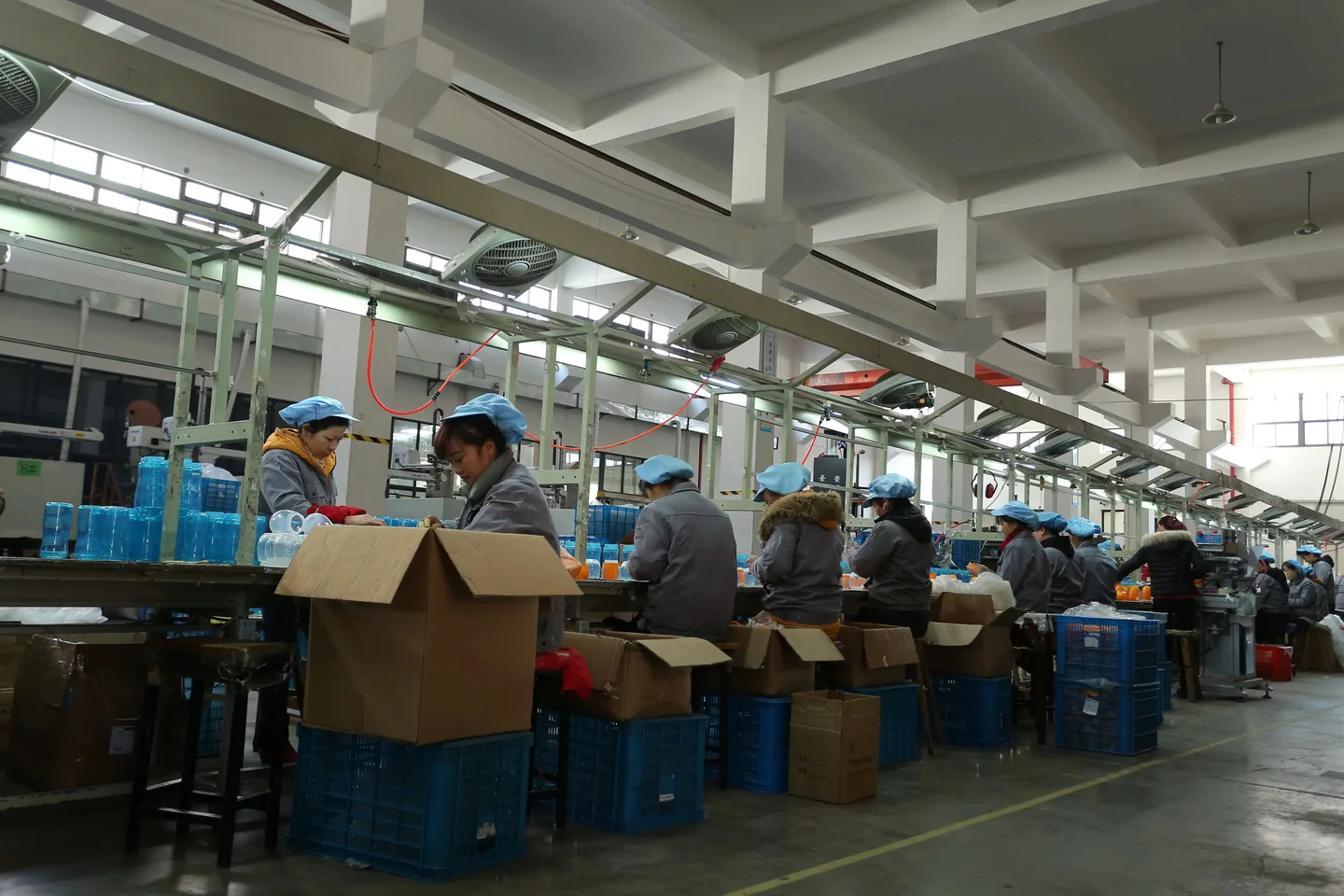
amfori BSCI and Sedex SMETA are the two social audit frameworks most often requested from drinkware manufacturers, and neither automatically replaces the other unless a buyer's responsible-sourcing policy allows cross-recognition. European supermarket and non-food chains commonly ask for amfori BSCI (which grades a site from A to E across 13 performance areas), whereas North American big-box retailers, warehouse clubs and global beverage or entertainment brands more frequently request a Sedex SMETA 2-Pillar or 4-Pillar report shared via a Sedex ZC site number. SMETA 2-Pillar covers Labour Standards and Health & Safety; SMETA 4-Pillar adds Environment and Business Ethics. BG Drinkware holds an active amfori BSCI rating of C at its Haohu Road site in Yongkang (valid until 4 April 2027) and is scheduling both BSCI and SMETA audits at its relocated Yongkang facility.
How do Sedex SMETA and amfori BSCI differ in structure?
Both audits inspect working conditions against the ETI Base Code and ILO conventions, but they report results differently. amfori BSCI issues an overall letter rating from A to E, while Sedex SMETA publishes a factual non-compliance list without a single pass/fail letter.
Because SMETA does not assign a single grade, each retail buyer applies its own acceptance matrix—classifying findings into Zero Tolerance, Critical, Major or Minor and setting a Corrective Action Plan (CAPR) deadline before purchase orders can ship. For how BSCI letters work, see what a BSCI audit rating means for a drinkware supplier.
| Feature | amfori BSCI | Sedex SMETA 2-Pillar | Sedex SMETA 4-Pillar |
|---|---|---|---|
| Core scope | 13 performance areas including labour, OHS, environment & ethics | Labour Standards + Health & Safety (+ management systems) | 2-Pillar scope + Extended Environment + Business Ethics |
| Scoring output | Letter rating A to E | CAPR findings list (no letter grade; buyer grades internally) | CAPR findings list across all four pillars |
| Platform & ID | amfori Sustainability Platform (amfori ID) | Sedex Advance / Platform (ZC site reference) | Sedex Advance / Platform (ZC site reference) |
| Typical buyer profile | European retailers, importers & promotional distributors | US/UK retailers & brand licensees onboarding tier-1 factories | Big-box retail, club stores & global beverage/FMCG merch |
Where do auditors focus inside a stainless steel drinkware plant?
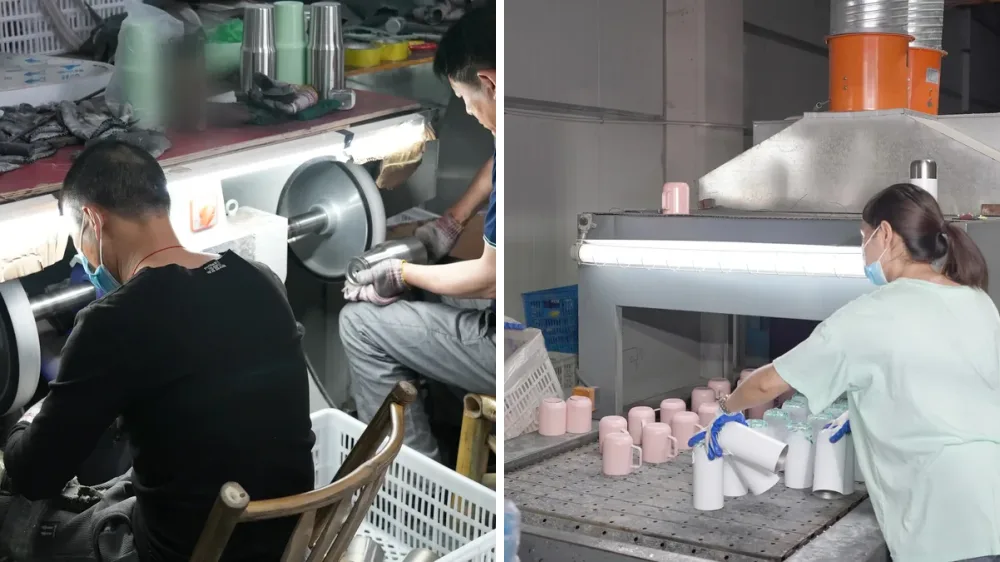
Social auditors spend half the audit in payroll and attendance files and the other half walking forming, welding, polishing, coating and packing floors. Drinkware plants have specific occupational health and environmental checkpoints that plastic-only assembly shops do not.
Polishing & dust extraction
Mechanical wheel polishing generates fine metal dust, requiring local exhaust ventilation, dust-collection maintenance logs and masks.
Coating & curing lines
Powder coating, spray booths and UV inks require secondary containment, Safety Data Sheets (SDS), eye-wash stations and chemical PPE.
Press & laser guarding
Hydraulic hydroforming/punch presses and rotary laser-marking stations require two-hand controls, light curtains or enclosure guards.
Peak-season hours
Q3–Q4 holiday and back-to-school rushes test overtime limits, rest-day rules and accurate timecard-to-payroll reconciliation.
To see how physical production steps are organised on our floor, review our drinkware manufacturing process.
When should a buyer ask for SMETA 4-Pillar instead of 2-Pillar?
Choose SMETA 4-Pillar when your retail customer or licensor scores environmental permits, wastewater/air emissions and anti-bribery controls alongside labour and safety. Upgrading later often means booking a second audit visit.
In a drinkware factory, the Extended Environment pillar checks environmental impact assessments (EIA), hazardous-waste transfer manifests for paint sludge or spent filters, compressor/oven energy tracking and water discharge permits. The Business Ethics pillar checks anti-corruption policies, subcontractor disclosure and grievance confidentiality.
Do US big-box retailers accept an existing BSCI report?
Some North American retailers accept an active amfori BSCI audit (often requiring at least a C rating plus closed critical findings) under mutual-recognition rules, while others insist on an accredited audit firm uploading a SMETA report from their approved firm list.
- Approved audit company (AAC) list: Check whether the buyer accepts any APSCA-registered firm (e.g., SGS, Intertek, Bureau Veritas, UL, ELEVATE/LRQA, TÜV) or restricts uploads to a specific subset.
- Audit window: Confirm whether the audit had to be unannounced or semi-announced; fully announced audits are rejected by several major US retail and licensing programmes.
- Site address & legal entity: Verify that the Chinese business-licence name and street address match the exact plant producing your order—see manufacturer vs trading company.
How BG Drinkware manages BSCI and SMETA across its facility relocation
A social audit never travels in a moving truck: moving equipment to a new street address requires fresh site registration and a new on-site audit once production runs at the new location.
- Active Haohu Road BSCIOur Haohu Road site in Gushan Town, Yongkang (amfori ID 156-053538-000, site 156-053538-001) holds a semi-announced amfori BSCI C rating valid until 4 April 2027 for orders made at Haohu Road.
- New-site EHS & layout build-outOur relocated Yongkang facility is configured around clear emergency exits, polishing dust extraction, chemical storage compliance and access-controlled packing halls.
- Dual BSCI & SMETA roadmapOnce production lines are commissioned at the new address, fresh site-specific amfori BSCI and Sedex SMETA 4-Pillar audits are scheduled to support both EU and North American retail onboarding.
- Separate product verificationSocial audits never replace food-contact lab testing or pre-shipment quality control—scope FDA, LFGB and EU test reports per model.
Check current document status any time on our test reports and social audit page.
SMETA vs BSCI FAQ
Direct answers to common compliance questions when onboarding a custom tumbler or water bottle manufacturer.
Is SMETA 4-Pillar harder to pass than SMETA 2-Pillar?
SMETA does not issue a pass or fail certificate; instead, 4-Pillar adds environmental-permit, waste-manifest and business-ethics checkpoints to the 2-Pillar labour and safety audit. For a drinkware plant with proper EIA permits and chemical-waste disposal contracts, booking 4-Pillar upfront satisfies a wider range of US and EU retail buyers in one visit.
Can a trading company's Sedex number cover the drinkware factory?
No. Sedex distinguishes buyer/agent accounts (ZB) from physical production sites (ZC). Retail compliance teams verify the ZC site address against the actual manufacturing floor and export shipping records.
How soon after a factory relocation can a SMETA or BSCI audit take place?
Auditors need active production lines, valid fire/environmental acceptance records for the new building, and typically at least one to three months of attendance and payroll records at the new site so working hours and wages can be verified accurately.
Does SMETA or BSCI cover Walmart FCCA, Costco GMP or Disney FAMA?
SMETA and BSCI address the social/ethical pillar—and SMETA is widely accepted as a social-compliance input by big-box retailers and licensors—but buyers still run separate quality/GMP assessments (such as FCCA or club-store GMP), C-TPAT security checks, or formal licensor FAMA site authorizations before production begins.
Sources
Audit frameworks referenced above describe third-party responsible-sourcing standards used across global retail and licensing supply chains; BG Drinkware does not claim affiliation with or endorsement by third-party retailers or trademark owners. Related pages: certifications, manufacturing and custom tumblers.
Checking social audit alignment for an upcoming RFQ?
Tell us which audit framework your compliance team requires (amfori BSCI or Sedex SMETA 2/4-Pillar), your approved audit firm list, target quantity and ship date.