Club Store and Big-Box Drinkware Packaging: PDQ Display Trays, Multi-Packs and Transit Tests
Warehouse clubs and national discount chains rarely unpack individual white boxes by hand—they roll pallets onto the floor or lift tear-away trays straight onto shelves. Build your custom drinkware packaging around the store’s handling rules before locking unit quotes.
By Feng, Head of After-Sales Service & Online Marketing Lead
Big-box and warehouse-club drinkware packaging must perform two contradictory jobs: survive ocean freight and DC conveyor drops without scuffing powder coatings or cracking plastic lids, then open in seconds on the sales floor with zero loose polybags or razor cuts. Club stores typically specify 2-pack or family-pack open-window boxes nested inside die-cut corrugated PDQ (Pretty Darn Quick) display trays stacked on 48 × 40 inch (1219 × 1016 mm) GMA Grade-A / CHEP-spec pallets with zero carton overhang, high-crush ECT/burst corrugated board, verified UPC-A and GS1-128 carton barcodes, and ISTA 1A or 3A transit testing. BG Drinkware engineers box dielines, internal dividers, PDQ trays and carton drop specs alongside the physical tumbler sample.
How do shelf boxes, belly bands, multi-packs and PDQ trays compare?
Choosing the wrong primary and secondary pack inflates ocean freight volume or triggers DC rework fees. Match the pack architecture to how store associates replenish the aisle.
| Pack format | Typical channel | Engineering & cost impact |
|---|---|---|
| Belly band / hangtag + egg-crate master | Mass-merchandise open-stock shelves | Lowest packaging cost & smallest CBM; requires thicker carton cell dividers so handles and coatings never rub |
| Individual tuck-end colour box | Specialty retail, gifting & ecommerce | Full 4-side brand story & dust protection; adds ~15–25% carton cube over egg-crate packing |
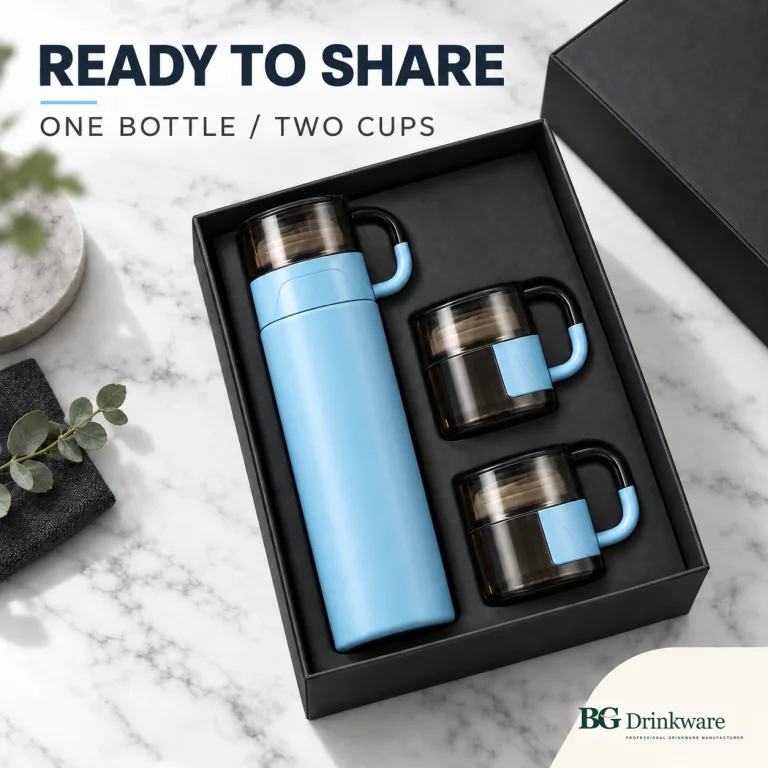
| 2-pack open-front / window club box | Warehouse clubs & seasonal value sets | Shows real cup finish & lid without plastic windows; needs die-cut collar locks so cups cannot twist or collide |
| Shelf-ready PDQ tray + shipper hood | Club pallet displays & big-box endcaps | Lift-off corrugated hood reveals pre-arranged display tray; requires high-ECT board so bottom-tier trays never buckle |
For primary box approval steps, read retail-ready drinkware packaging: approve the box and label.
How to stop 40 oz tumbler handles, straws and coatings from scuffing in transit
Handled 30 oz and 40 oz tumblers are asymmetric and top-heavy: in a loose tray, vibration rotates the cups until metal or hard-plastic handles rub flat shiny spots onto neighbouring powder coats.
Anti-rotation die-cut collars
Lock the narrow cup base and the handle slot into corrugated base/neck inserts so two cups in a club twin-pack never touch.
Straw & lid immobilisation
Clip or sleeve external reusable straws separately inside the box or cup interior so sharp straw tips cannot scratch UV prints or clear lids.
Scuff-free protective wraps
Where retailers restrict single-use PE polybags, switch to tissue paper wraps or smooth clay-coated inner board liners tested against matte and soft-touch coatings.
No-knife hood removal
Use tear-strip or lift-off telescoping hoods on PDQ shippers so store staff never slice across printed display boxes with box cutters.
Pallet footprint, carton weight limits and barcode gates that trigger DC chargebacks
Retail routing guides penalise noncompliance automatically at receiving—even when the drinkware inside is flawless.
- Zero pallet overhang: For US 48 × 40 in pallets, design PDQ tray footprints as clean modular fractions (for example, four 24 × 20 in trays or six 16 × 20 in trays per tier) so cartons sit flush inside the wood edge; overhang crushes walls by 25–30%.
- Conveyable carton weight & size: Keep standard DC master cartons within your buyer's single-person lift limit (commonly 30–50 lb / 13.6–22.7 kg max) and above minimum conveyor dimensions—compare drinkware export cartons and freight volume.
- Barcode verification (ANSI/ISO Grade B or better): Print high-contrast UPC-A / EAN-13 retail barcodes (avoid red ink or metallic foil backgrounds) and place GS1-128 / ITF-14 shipping labels at the exact corner distance specified in the routing guide.
- Multi-DC & store-ready splits: Consolidate PO allocations by distribution centre before container stuffing—see planning split shipments to several warehouses.
Which transit and compression tests should be run before mass printing PDQs?
Approve structural white-cardboard mockups (white dummies) filled with actual water-weight or finished stainless tumblers before paying for litho laminating plates.
- ISTA 1A / 3A free-fall drop test10-point corner, edge and flat drops from height calibrated to gross carton weight—inspecting for dented steel bottoms, cracked Tritan lids, popped handles and torn PDQ lip fronts.
- Vibration & rub simulationRandom vibration table test checking whether matte black or dark navy powder coats develop rub marks against corrugated dividers over a 10,000 km sea/rail journey.
- Box compression / BCT checkVerify Edge Crush Test (ECT) and top-to-bottom compression strength under high-humidity conditioning so bottom-layer club trays stay crisp in humid summer containers.
- Barcode scan & label checkScan pre-production printed proofs and confirm country-of-origin, care instructions, care cards and regulatory batch tracking marks.
For defining lab vs factory drop scopes, see drinkware packaging transit testing.
What to include in your RFQ when quoting PDQ or retail multi-pack drinkware
Quoting "standard colour box" first and switching to a club PDQ pallet display later changes unit carton cost, container load count and production lead time.
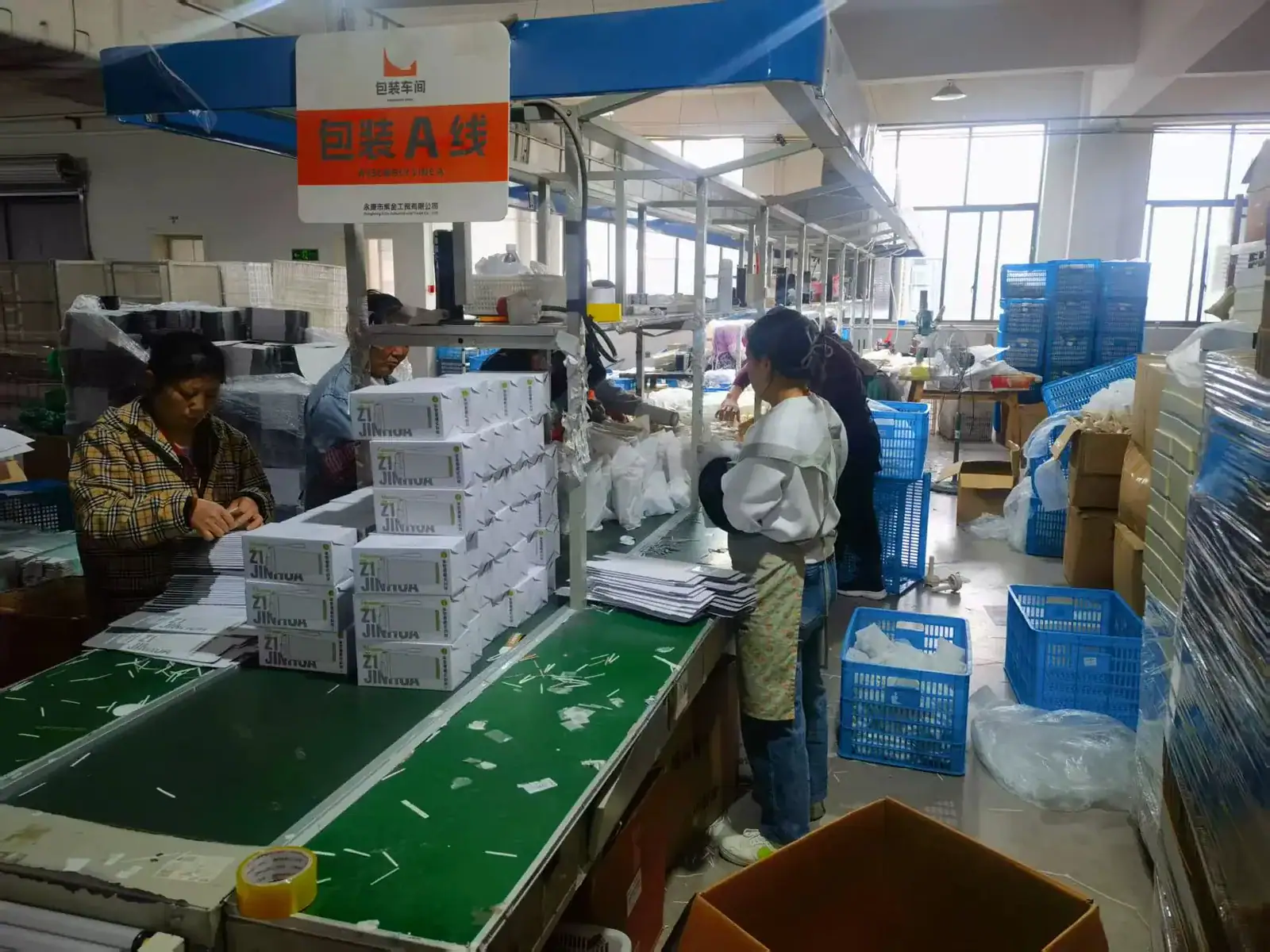
Send the cup model and capacity, unit count per selling pack (single vs 2-pack), units per PDQ tray, target pallet footprint and max stack height (including pallet), plastic-reduction rules, and whether cartons ship floor-loaded or palletised FOB Ningbo. At BG Drinkware, our relocated Yongkang packing lines are structured to support controlled retail kitting, barcode checks, GMP sharp-tool rules and C-TPAT loading verification—see certifications.
Club-store & PDQ drinkware packaging FAQ
Answers on minimums, freight cube and structural sampling for retail-ready drinkware packs.
How much does PDQ palletised shipping reduce 40 ft container quantity compared with floor-loaded cartons?
Floor-loading individual cartons uses nearly every cubic metre of a 40 ft HQ container, whereas palletised PDQ displays leave pallet height, deck-board clearance and aisle gaps—typically reducing unit count per container by 20% to 35% depending on tumbler size and max pallet height.
Can BG Drinkware build unprinted structural PDQ white samples before artwork is finished?
Yes. Once the tumbler, lid and accessory configuration is chosen, we cut structural corrugated white mockups to verify tray footprint, collar lock fit and drop survival—then supply exact dielines for your graphic team.
Are plastic blister windows required on 2-pack club drinkware boxes?
Increasingly no. Many North American and European retailers prefer plastic-free open-cutout corrugated structures with engineered top-and-bottom paperboard locks that display the real powder-coated finish while remaining 100% curbside recyclable.
What corrugated flute and board grade works best for heavy 40 oz stainless steel tumblers?
Individual retail boxes commonly use E-flute litho-laminated corrugated or heavy 350–400 gsm CCNB/kraft board with corrugated inserts, while outer PDQ trays and master shippers typically use B-flute or BC double-wall corrugated rated to the pallet stack load.
Sources
Packaging dimensions, pallet footprints and transit-test methods should always be matched to your retailer's current routing and structural packaging manual. Related pages: packaging, wholesale drinkware and tumblers.
Watch: Preventing Carton Collapse & Sizing Export Cases
Engineering retail boxes or PDQ trays for a drinkware launch?
Share your vessel model, pack configuration (single, twin-pack or PDQ tray), pallet height limit, barcode rules and target order quantity.