Bulk Tumblers vs Print on Demand for Merch Brands
Compare a bulk tumbler run and print on demand using one design and one sales window. Estimate what you can sell, then compare landed cost, stock left over and how quickly you can reorder.
By Feng, Head of After-Sales Service & Online Marketing Lead
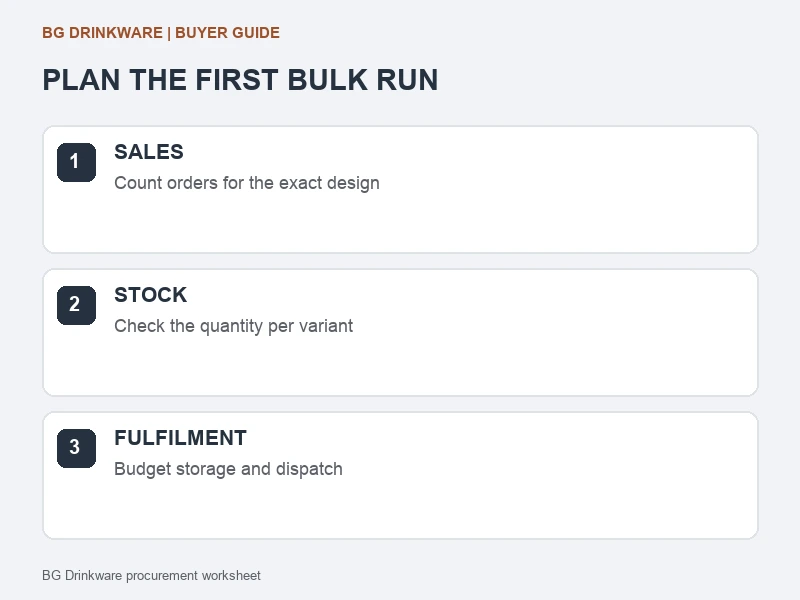
Print on demand lets a merch brand test a tumbler design while production follows individual customer orders. A bulk tumbler order makes sense when you can support the minimum quantity for the exact model, colour and logo you want to stock. Compare sales for that version with the cash tied up in unsold units, the storage bill and the cost of fulfilling each order. BG Drinkware, a drinkware manufacturer in Yongkang, China, applies the usual 500-piece minimum per model and colour. Different logos on the same model and colour count separately. BG handles bulk orders. Buyers can request a decorated sample directly to check the finish before placing a factory order. Plan the launch around the time stock can reach your warehouse and check who will pick, pack and ship each order. If demand is concentrated in one design, you can buy that design in bulk while continuing to test other artwork on demand. Lower minimums for some start-up teams need an order-specific quotation.
When does a bulk tumbler order make sense?
Consider bulk when one specific tumbler can sell through enough of its first run to justify the stock commitment. Print on demand can help test a design before you buy inventory. The decision depends on sales for the version you want to order and your ability to fulfil those sales.
| Decision | Print on demand | Bulk factory order |
|---|---|---|
| When stock is made | After an individual order, under the provider’s terms | In a run ordered in advance |
| Main cost to compare | Production and shipping per fulfilled order | Landed stock cost, storage and fulfilment |
| What to validate | Provider’s product and service limits | Physical sample, quantities and receiving plan |
Look at paid orders over a period that reflects how you plan to sell the run. A launch spike may tell you what an audience bought during a promotion. Check whether regular sales after that promotion support the next order, especially if you will change the body, price or delivery promise.
Keep wholesale commitments separate from website sales. A retail partner ordering cases has a different delivery and packing requirement from an individual shopper. Record when each buyer expects stock, which variant they agreed to buy and how much of the factory run would still need to sell.
How do you size the first run?
Plan the first run by model, body colour and logo. BG applies its usual 500-piece minimum per model and colour, and a different logo on the same model and colour counts separately. Compare each proposed order line with its own demand estimate and confirm the finished specification in the quote.
For example, if one black tumbler with your main logo accounts for most sales, compare a quote for that version with a broader range. A second colour or a second logo is another commitment. Two qualifying lines at 500 pieces each mean 1,000 pieces to finance and receive. This is an illustrative order split.
Estimate sell-through separately for each line using a conservative case. A broad range may look good on a product page but leave the slower version in storage while the best seller runs out. Consider keeping slower designs on demand until you can support their own stock commitments.
Related guide: Tumblers in Bulk: The Ordering Timeline, MOQ and Checks From a Manufacturer.
Which costs belong in the comparison?
Compare the two routes over the same sales window and with the same fulfilment scope. For bulk, collect the factory quote, inbound costs and the cost of holding and dispatching stock. Include the value still tied up in unsold units at the end of the window.
Use two separate figures for a bulk run. The first is cash committed before sales, including the sample, the stock and charges due before delivery. The second is the cost of serving a customer order once the stock is in hand. Check that you can pay the costs due before delivery, even if the unit quote looks attractive.
Request an itemised quote for the exact version. BG prices decoration from the artwork. If one design is printed at a different size or uses different colours, ask for an updated quote so your comparison reflects the actual order. Include the packing and delivery assumptions beside the product price.
Related guide: Custom Tumblers with Logo: The 8 Details a Manufacturer Needs to Quote Your Order.
What should match before you move a listing to bulk?
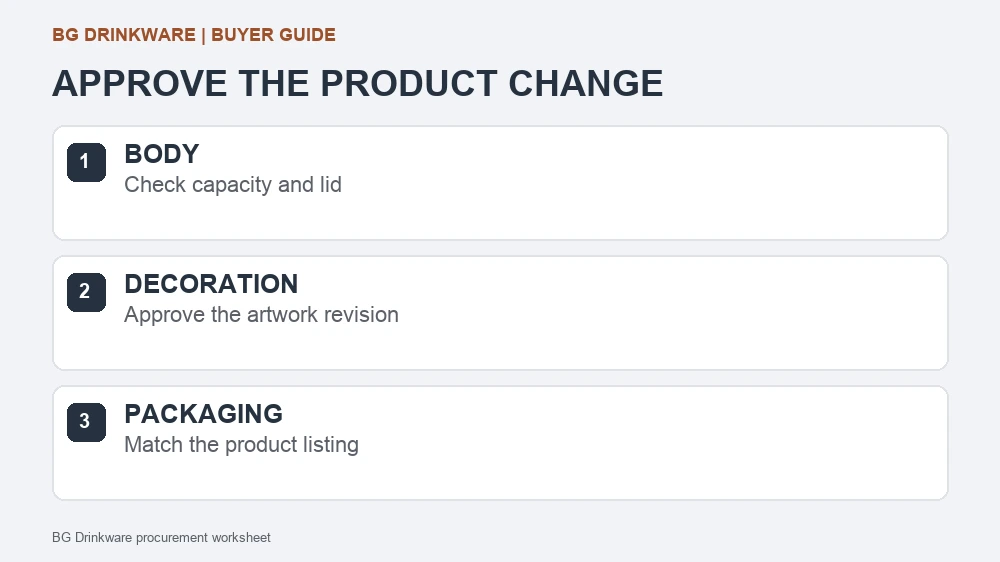
Check the new product against the description a customer will read and the sample they would receive. Approve the model, finish and logo on a physical sample and check the box or label if those affect the listing. Retain the approved sample and design revision for repeat orders.
BG does not offer per-order print-on-demand fulfilment. Ask BG directly for a sample of the factory model and specify the finish and artwork you want to check. Keep the product in the on-demand catalogue separate from the model selected for the factory run. Compare capacity, lid components, finish and artwork placement before reusing listing photos. If a dimension or accessory differs, update the listing and any customer-facing packing information before shipping the new stock.
Keep a signed or dated approval that identifies which sample and artwork revision apply to the order. The approved sample gives receiving staff something to compare against if a question arises. Record any agreed differences, such as a packaging insert that will only be included in the bulk run.
Related guide: Golden Sample: How Brands Keep Bulk Drinkware Matching the Approved Sample.
How do you avoid promising stock too early?
Give the launch plan separate dates for product approval, factory completion and warehouse receipt. Plan for inbound transport and the time needed to check and book stock into your fulfilment system. Ask for an order-specific schedule before promising an in-stock date, especially if the artwork or packaging is still changing.
- Record demand for the exact model, colour and design.
- Confirm minimums and cost by order line.
- Approve the actual sample and packaging requirements.
- Assign responsibility for receiving and fulfilment.
Set a reorder review date before the sales window ends. Compare remaining stock with recent demand and the time needed to approve, produce and receive a replacement run. This lets you revisit the decision while stock is still available. Keep the same model and artwork references in the next request, with any changes called out.
Buyer questions
Can I use on-demand sales to choose a first bulk quantity?
Yes. Use paid sales for the exact design and check whether changes to the model, price or delivery time could affect demand. Compare a conservative sales estimate with the minimum and the cash held in stock. A short promotion is one data point, so record how it differs from normal sales.
Can two designs share one minimum at BG?
BG counts different logos separately even when the body model and colour are the same. The standard minimum is 500 pieces per model and colour. Ask for a quotation with a separate order line and quantity for each logo so you can check which lines meet the minimum before committing. Lower minimums for some start-up teams need an order-specific quotation.
What should I include in the bulk cost?
Start with the product, decoration, sample and packing items in the quotation. Add the inbound costs that fall to you, plus storage, order handling and dispatch to the customer. Use the same time window and fulfilment scope when comparing print on demand and include the cash that remains in unsold inventory.
Can I keep testing other designs on demand?
You can use separate routes for different designs if you can manage the listings and fulfilment. Keep the bulk product specification and stock count separate from the on-demand version. Tell customers which delivery estimate applies to each listing and review the factory option for another design once its sales can support a run.
Compare the actual versions you can order and sell, with the same assumptions about customer delivery.
Ask for a quote for your first run
Send the model, colour and logo for each order line, with quantities, packaging needs and the date stock must be ready to sell.
Choose a tumbler for your first run before sending your specifications.