Insulated Teapot With Strainer: A Buying Guide for Hotels, Cafés and Brands
An insulated teapot with a strainer brews loose-leaf tea and keeps it hot for the table or the office. For a bulk order, the strainer material, the lid and the capacity matter more than the shape. Here is what to compare.
By Feng, Head of After-Sales Service & Online Marketing Lead
An insulated teapot with a strainer is a double-wall stainless steel pot with a removable mesh infuser for loose-leaf tea, so you can brew, lift out the leaves and keep the tea hot for serving. For a bulk order, compare the infuser and inner-wall steel, the lid and pouring action, the capacity and the finish. BG Drinkware, a drinkware manufacturer in Yongkang, China, makes insulated teapots and carafes from 800 ml to 1,800 ml. Several models use 316 stainless steel for the inner liner and the tea infuser, such as the 1,200 ml, 1,500 ml and 1,800 ml teapots, while others use a 304 inner wall. Lids include press-to-pour and press-open designs, and finishes include powder coating in colours such as white, black and red. Most models start at 500 pieces per colour. A sample of an existing model takes up to 7 days, and bulk production takes 7–12 days after approval.
Why does the strainer material matter?
The strainer sits in hot tea for the whole brew, so it is the part buyers ask about first. A stainless steel mesh infuser is easy to clean. On BG Drinkware's larger teapots, both the inner liner and the infuser are made of 316 stainless steel.
| Model | Inner liner | Exterior |
|---|---|---|
| 1,200 ml and 1,500 ml teapot | 316 stainless steel, with a 316 infuser | 201 stainless steel, baked-paint finish |
| 1,800 ml teapot | 316 stainless steel, with a 316 infuser | 201 stainless steel, powder coated |
| 900 ml teapot | 316 stainless steel inside | 304 stainless steel |
| 800 ml and 1,000 ml press-to-pour teapot | 304 stainless steel | 201 stainless steel; PP lid |
For the difference between steel grades, see 18/8 vs 304 vs 316 stainless steel.
Which lid and pouring action suit your use?
The lid decides how the teapot is used. A press-to-pour lid lets staff pour with one hand and closes when released, which suits cafés and meeting rooms. A press-open lid lifts for filling and pouring. Either way, the seal only resists leaks when the lid and gasket are correctly fitted and closed.
- Press-to-pour. One-handed pouring; see the 800 ml and 1,000 ml press-to-pour teapot.
- Press-open. Opens for pouring and refilling; see the 900 ml teapot.
- Spout shape. Some models, such as the press-to-pour teapot, have a V-shaped spout.
- Handle. Plastic, wood-look or large handles, chosen for grip and look.
One model, the 800 ml and 1,000 ml teapot with wood-look handle, can be ordered with a temperature-display lid; confirm the version when you order.
What capacity should an insulated teapot be?
Size it by how many cups each pot serves before it is refilled. An 800–1,000 ml pot suits a small table or a desk, 1,200–1,500 ml suits a meeting room or a family, and 1,800 ml suits shared service in hotels and cafés. Larger pots are heavier to pour when full.
BG Drinkware's range runs from an 800 ml carafe to the 1,800 ml teapot, plus a 1,500 ml commercial coffee flask for coffee service. Capacity is listed brim-full, and some designs are calculated to the thread position, so confirm how a figure is measured. For a coffee-only option, see the 1,500 ml coffee flask, which starts at 1,000 pieces per colour.
How should heat retention and leaks be tested?
Agree the conditions before approving the sample: starting temperature, fill level, room temperature and time for heat retention, and lid position and duration for leakage. BG Drinkware's standard check uses 95°C water measured after 6 hours, or the buyer's own method; record the result on the approved sample and test bulk the same way.
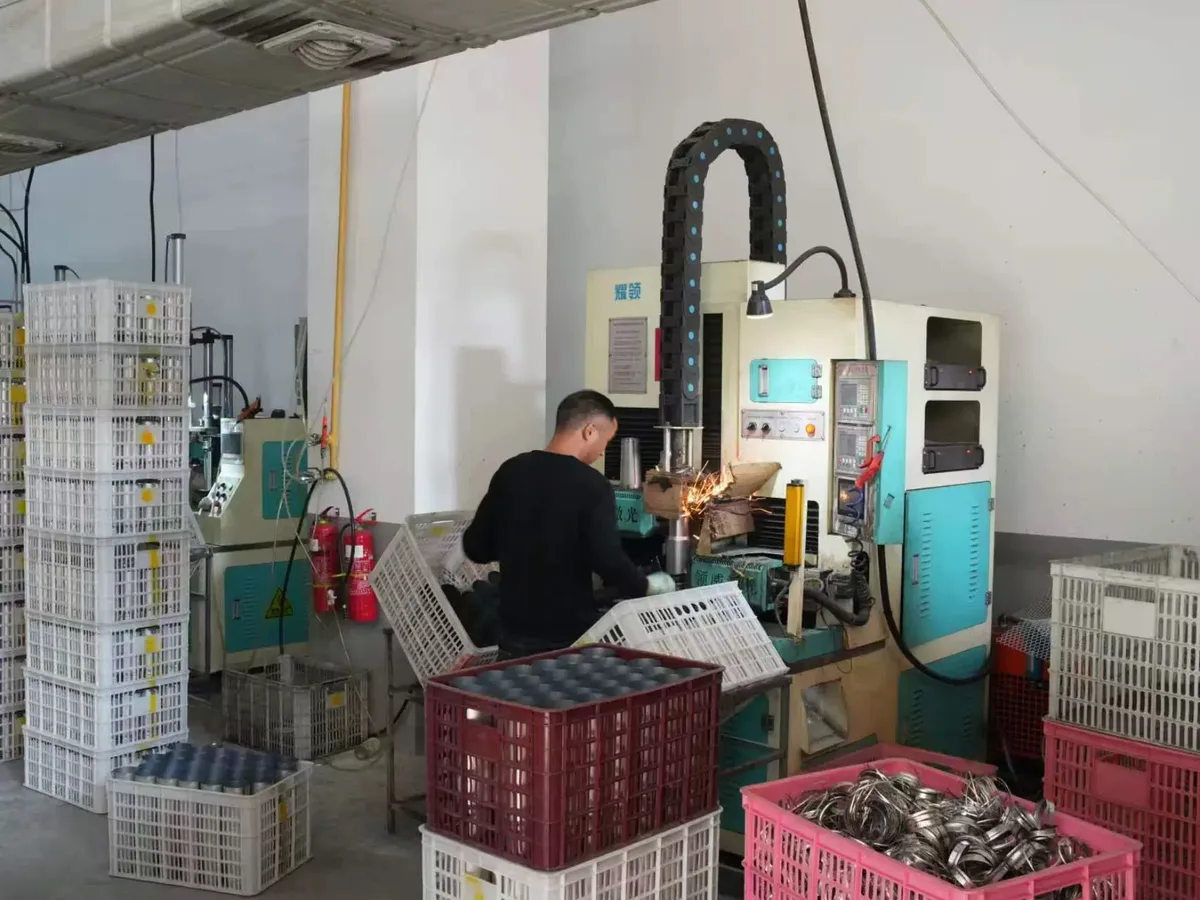
Every vacuum vessel is temperature-tested unit by unit before shipping, with the number of test rounds set by the buyer. The 1,200 ml and 1,500 ml teapot uses a hydroformed liner; for how vacuum vessels are made, see how vacuum insulated bottles are made, for checks on bulk, quality control, and for the heat-retention test, how long a thermos keeps drinks hot.
How do you order insulated teapots in bulk?
Send the capacity, quantity, model, colour, logo method, packaging and terms. Most of BG Drinkware's teapots start at 500 pieces per colour, and the 800 ml and 1,000 ml press-to-pour teapot at 500 per colour per capacity. A sample of an existing model takes up to 7 days.
Bulk production takes 7–12 days after approval. As packing examples, the 1,800 ml teapot ships 24 pieces per carton in a 74 × 48.5 × 47 cm carton, and the 1,200 ml teapot 30 pieces per carton in a 72 × 51 × 38 cm carton. See the range on our thermal teapots page. For a bottle to brew tea on the go, see tea infuser bottles. For coffee service, see insulated carafes.
Insulated teapot FAQ
Short answers to the questions hotels, cafés and brands ask most about insulated teapots with strainers: which material the infuser uses, how long tea stays hot, whether the lid leaks, and how many to order. Each answer uses the product details set out in this guide.
What is the strainer made of?
On BG Drinkware's 1,200 ml, 1,500 ml and 1,800 ml insulated teapots, both the inner liner and the tea infuser are 316 stainless steel. Other models use a 304 inner wall. Check the material for the exact model you order, and confirm it on the sample before bulk production.
How long does an insulated teapot keep tea hot?
It depends on the starting temperature, how full the pot is and the room temperature, so there is no single figure. BG Drinkware's standard check fills the pot with 95°C water and measures the temperature after 6 hours, or uses the buyer's method. Test the approved sample that way and use that result in any claim you make.
Do insulated teapots leak?
BG Drinkware's teapots are designed to resist leaks when the lid and gasket are correctly fitted and the lid is fully closed. Agree a leakage test on the sample, such as tilting the closed pot for a set time, and use the same check on the bulk order.
What is the minimum order for custom teapots?
Most models start at 500 pieces per colour; the 800 ml and 1,000 ml press-to-pour teapot starts at 500 per colour per capacity, and the 1,500 ml coffee flask at 1,000 per colour. A sample of an existing model takes up to 7 days, and bulk production takes 7–12 days.
Sourcing insulated teapots?
Send the capacity, quantity, model, colour, logo method, packaging, payment terms and trade terms for a quotation.