Promotional drinkware blind shipping: agree the presentation
Promotional drinkware blind shipping needs an agreed description of what the agency's client will see on the cartons, individual packs, labels and accompanying documents. Identify which supplier branding and price information should be omitted, whose contact details should be used and which transport records still have to accompany or support the shipment.
Promotional drinkware blind shipping needs an agreed description of what the agency's client will see on every layer: outer carton, individual pack, inserts, packing list, price material, shipping label and accompanying documents. For each one, record whether it should be blank or carry the agency's or client's approved details, who supplies the content, and which contact handles delivery questions or returns. Keep carton marks and quantities traceable to the order, and have the logistics provider confirm the transport and customs information the route still requires. Neutral packing defines a presentation; it does not guarantee the source cannot be traced. Check the actual labels, inserts and documents before dispatch, and raise the request before goods are packed. BG Drinkware, a drinkware manufacturer in Yongkang, China, supports neutral shipping without requiring its own branding or a price sheet in the customer-facing pack, with the exact arrangement confirmed for each order.
BG Drinkware, a drinkware manufacturer in Yongkang, China, supports neutral shipping without requiring its own company branding or a price sheet to remain in the customer-facing pack. Confirm the exact arrangement for the order. Removing a supplier's promotional identity does not remove the need for the transport and customs information required for the actual route.
What does the agency want the client to see?
Define neutral presentation by packaging layer and document, rather than using blind shipping as the whole instruction. State whether each item should be blank, carry the agency's approved details or use the client's branding. Include contact and return information where relevant, so the recipient is not left without an agreed route for delivery questions.
The aim may be to keep the manufacturer's marketing identity and prices out of the client's delivery. It may also include agency-branded inserts or a specific sender presentation. Those are separate instructions, and neutral packaging does not automatically supply artwork, printed materials or a substitute address.
For a promotional drinkware order, identify the intended recipient and the customer-facing arrangement before the packing quotation is final. Even a single shipment to one client needs a presentation review; multiple destinations are not what defines a blind shipment.
Which packaging and document fields need approval?
Review the outer carton, individual pack, packing list, inserts, price information, shipping label and contact details separately. Assign the approved content and the person supplying it. Have the supplier identify any proposed presentation that cannot be used for the selected transport arrangement before labels are printed or the goods are packed.
| Layer or document | Instruction to record |
|---|---|
| Outer carton | Branding to omit, agreed contents identification and carton marks |
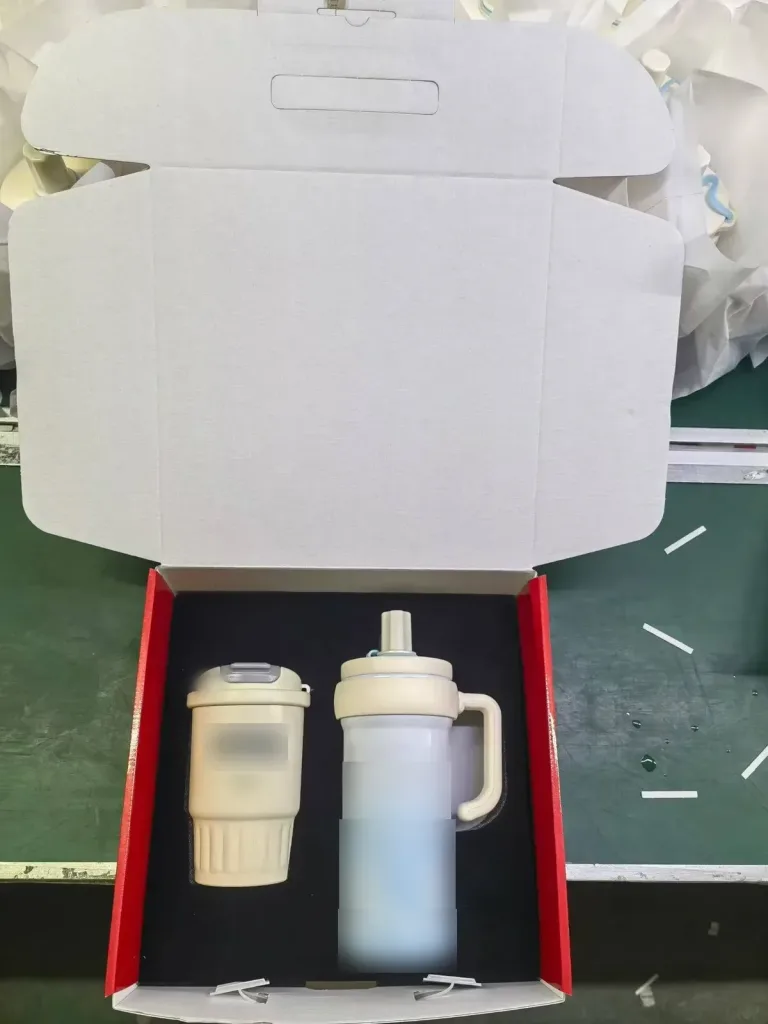
| Individual pack | Plain, agency-branded or client-branded version; applicable artwork |
| Inserts and care information | Required contents, approved copy and supplying party |
| Packing list | Whether included, approved identification and recipient-facing details |
| Price material | Which price sheet or promotional insert must be omitted |
| Shipping label | Proposed sender, recipient and contact details for logistics review |
| Transport documents | Required information and how the responsible parties will provide it |
| Delivery questions or returns | Approved contact route and any confirmed address |
Swipe or scroll to view the full table.
Tie those instructions to the selected packaging arrangement. A plain gift box does not establish what appears on the master carton. Likewise, omitting a price sheet does not establish whether another document contains commercial information needed for the shipment.
Use actual approved names and contact details. Do not invent a sender, a returns address or a carrier instruction to make the presentation appear neutral. Have the logistics provider review the proposed label and document arrangement for the shipment being booked.

What information must still remain available?
Confirm the transport, customs and order-tracing information needed for the chosen route with the responsible logistics parties. Agree how it will be supplied and distinguish it from optional marketing or price inserts. Neutral shipping should preserve an accurate, usable shipment record rather than making the goods impossible to identify or receive.
Keep carton identification and product quantities traceable to the order, even where the visible reference uses the agency's agreed code. Use the export carton planning guide when defining those marks and counts. The agency needs to resolve a missing carton or wrong version without relying on a supplier-branded sales leaflet in the box.
Do not promise that neutral shipping makes the manufacturer's identity or country of origin undiscoverable. It defines an agreed presentation, not an assurance that no transport record, product marking or business interaction can reveal a source. Any customer commitment should match the presentation actually reviewed for the order.
Where the project involves sensitive client information, agree the relevant contacts and sharing arrangements through the confidentiality discussion. Do not treat the words blind shipping as a substitute for those instructions.
How should the agency check the shipment before dispatch?
Review the proposed packing layout and the actual labels, inserts and document versions intended for the order. Identify the checks needed before dispatch and who will confirm them. A neutral-pack mockup can support approval, but the final check needs to address what will actually be packed and attached to the shipment.
Include the presentation checks in the quality control instructions: correct individual pack, no unapproved price insert, agreed carton identification and the approved accompanying material. Confirm separately that the logistics documents and labels use the reviewed information. Packing photographs should show the relevant layers without being treated as a record of every unit checked.
If the request arrives after boxes or labels have been prepared, ask what needs changing, whether repacking is involved and how that affects the quotation or dispatch plan. There is no basis to assume a late neutral-shipping request has no cost or timing effect.
Keep the final instruction with the order, including any agreed exception. Once the presentation has been checked, the agency can tell the client what will arrive and which contact to use for questions, without relying on an undefined promise to hide all supplier information.
Blind shipping questions
Agencies usually raise these questions when arranging a neutral delivery to a client, about supplier branding, direct delivery, price documents and late requests.
Does BG require its logo or price sheet in the parcel?
BG has confirmed that its own company branding or a price sheet need not remain in the customer-facing pack. Specify the desired presentation for each packaging layer and accompanying item. Confirm the shipping-label and document arrangement separately, because the necessary transport information depends on the actual route and cannot be inferred from the branding instruction.
Does blind shipping mean the same thing as direct delivery?
Direct delivery identifies where the goods are sent; blind shipping concerns the presentation and supplier information seen by the recipient. A direct shipment can still carry supplier branding unless a different arrangement is agreed. State both the delivery destination and the required packaging and document presentation instead of treating either term as a complete instruction.
Can all price information be removed from every document?
Specify which optional price sheet or insert should be omitted, then have the responsible logistics parties confirm the information needed for transport and customs. Agree how required documents will be issued and provided. Do not treat the absence of a price leaflet as permission to omit or change information needed for the shipment.
Can the request be made after the goods are packed?
Ask the supplier to assess the current packing and label status before assuming the change can be made. Identify the affected cartons and materials, then confirm the feasible scope, any additional work and dispatch impact. Obtain acknowledgement of the revised instruction and the agreed packing check before relying on it in a client commitment.