Tumbler Straws: Silicone, Stainless Steel, PP, Tritan or SK Copolyester?
The straw is the part of a tumbler the user's mouth touches, so material and fit matter. Here is how the five common straw materials differ, and what to specify so the straw fits the lid, the cup and the buyer.
By Feng, Head of After-Sales Service & Online Marketing Lead
Tumbler straws are usually made from one of five materials: silicone, stainless steel, PP (polypropylene), Tritan or SK copolyester. Silicone is soft and flexible, which suits children and anyone who chews a straw. Stainless steel is rigid and durable, but it can feel cold or hot with the drink. PP is light and low in cost. Tritan, a copolyester made by Eastman, and SK copolyester, made by SK chemicals and sold under the ECOZEN name, are clear and rigid plastics. BG Drinkware, a drinkware manufacturer in Yongkang, China, supplies straws in all five materials. The straw also has to fit: its length, diameter and shape must match the lid opening and the cup height, so specify the straw together with the lid. The standard minimum order is 500 pieces, negotiable, and a sample of an existing model takes up to 7 days.
What are tumbler straws made of?
BG Drinkware supplies straws in five materials.
Bends and squeezes, gentle when bitten. Often chosen for kids' cups.
Does not crack. Can feel cold or hot with the drink.
Light and low in cost. Usually translucent rather than glass-clear.
Clear and rigid, with a glass-like look.
Clear and rigid, an alternative clear copolyester.
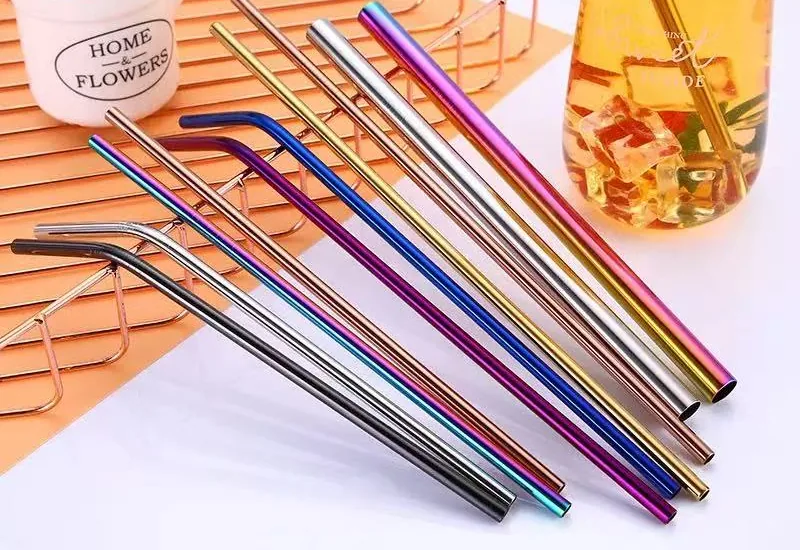
BG Drinkware supplies straws in all five materials. Stainless steel straws come straight or bent, and in coloured finishes as well as plain steel, as the photo above shows. The right choice depends on who drinks from the cup, how the straw is cleaned and how it must look in the pack. See custom tumblers.
How do silicone, stainless steel and plastic straws compare?
All five do the same job; they differ in feel, look and durability.
| Material | Feel | Look | Main strength | Watch for |
|---|---|---|---|---|
| Silicone | Soft, flexible | Coloured, often opaque | Comfortable, gentle to bite | Can be harder to push through a tight lid seal |
| Stainless steel | Hard, smooth | Metallic or coloured finish | Durable, will not crack | Can feel cold or hot with the drink; hard on teeth if bitten; coloured finishes can scratch, so check finish durability on the sample |
| PP | Light, slightly flexible | Translucent or coloured | Low cost, light | Less clear than copolyester |
| Tritan | Hard, smooth | Clear | Clarity with rigidity | Rigid, so length and bend must fit the lid |
| SK copolyester | Hard, smooth | Clear | Clarity with rigidity | Rigid, so length and bend must fit the lid |
Silicone, which is gentle when chewed.
Stainless steel, plain or in a coloured finish.
Tritan or SK copolyester.
PP, matched to the lid colour.
Are plastic tumbler straws BPA free?
Ask for the material and the test report, not just the label.
Eastman states that Tritan™ is free of BPA, and in 2010 it published third-party test results reporting no BPA and no estrogenic activity in the resin. For any copolyester, including SK chemicals' ECOZEN®, a "BPA free" claim on a finished straw should be backed by the material declaration and a test report that covers that straw, because colourants and additives are part of the finished straw.
How do you make sure a straw fits the tumbler?
Specify the straw with the lid and the cup, not on its own.
A straw that is too short leaves the last of the drink out of reach, and one that is too long sticks out too far or will not close under a lid cover. The outer diameter must match the hole or silicone seal in the lid, and a bent straw must clear the lid shape. For one size in detail, see what size straw fits a 40 oz tumbler.
- Material and colour, matched to the lid
- Length, outer diameter and straight or bent shape
- How the straw passes through the lid: open hole, silicone seal or cover
- Whether a cleaning brush or spare straws go in the pack
- Quantity of straws per cup, and spares per carton if needed
For bottles rather than tumblers, see the stainless steel bottle with straw guide.
What should a straw order specify?
The straw details sit inside the normal tumbler quotation.
Include the straw material and shape in the request together with the usual details: capacity, quantity, model, colour, logo method, packaging, payment terms and trade terms. The standard minimum order is 500 pieces and negotiable, and some models start from 100 pieces per colour. A sample of an existing model takes up to 7 days, and bulk production takes 7–12 days after sample approval. Approve the straw on the physical sample, with the lid closed and the cup full. For cups made for iced coffee, see iced coffee tumblers.
Tumbler straw FAQ
Which straw material is best for a tumbler?
There is no single best material. Silicone suits children and people who chew straws, stainless steel suits a durable or plastic-free product, Tritan and SK copolyester suit a clear lid, and PP suits large price-sensitive orders. Choose the material for the user first, then confirm the length and diameter fit the specific lid on a sample.
Are stainless steel straws better than plastic straws?
They are more durable and do not crack, and they suit buyers who want a plastic-free product. They also feel cold or hot with the drink and are hard on teeth if bitten, which matters for children. Plastic straws are lighter and cheaper, and clear copolyester straws match clear lids. The better choice depends on the user and the program.
What is SK copolyester?
SK copolyester is a clear, rigid plastic made by the Korean company SK chemicals and sold under the ECOZEN name. It is a clear, rigid copolyester resin used in drinkware. BG Drinkware supplies straws in SK copolyester as well as Tritan, PP, silicone and stainless steel.
How do you clean a reusable straw?
Rinse it straight after use, then push a straw brush through the full length with warm, soapy water, and let it dry fully before reassembling the lid. Brush every straw through its full length, as a clear straw makes residue easier to see; any straw that has kept a smell or stain after cleaning should be replaced. Check the care label for the specific product.
How do you specify replacement straws?
Give the material, length, outer diameter, shape and colour of the straw on the approved sample, so any replacement matches the lid and the original order. If you plan to pack extra straws or a cleaning brush, list them in the packing specification with the quantity per cup or per carton. For lids and seals, see our guide to replacement lids for bulk orders.
Sources
- Manufacturing.net: Third-party test results on Eastman Tritan copolyester (BPA and estrogenic activity)
- UL Prospector: ECOZEN® YF 300 copolyester datasheet (SK chemicals)
Tritan is a trademark of Eastman Chemical Company. ECOZEN is a registered trademark of SK chemicals.
Choosing straws for a tumbler range?
Send the tumbler model, lid and preferred straw material, and BG Drinkware will reply with a quotation.