

Good starting fit
Full-colour graphics, gradients, photographic elements or repeating patterns on a qualified light coated body.
FULL-COLOUR DRINKWARE CUSTOMIZATION
Sublimation tumblers can carry photographs, gradients and repeating graphics across a large coated surface. The result depends on a compatible blank, a workable wrap layout and controlled transfer conditions—not artwork alone.
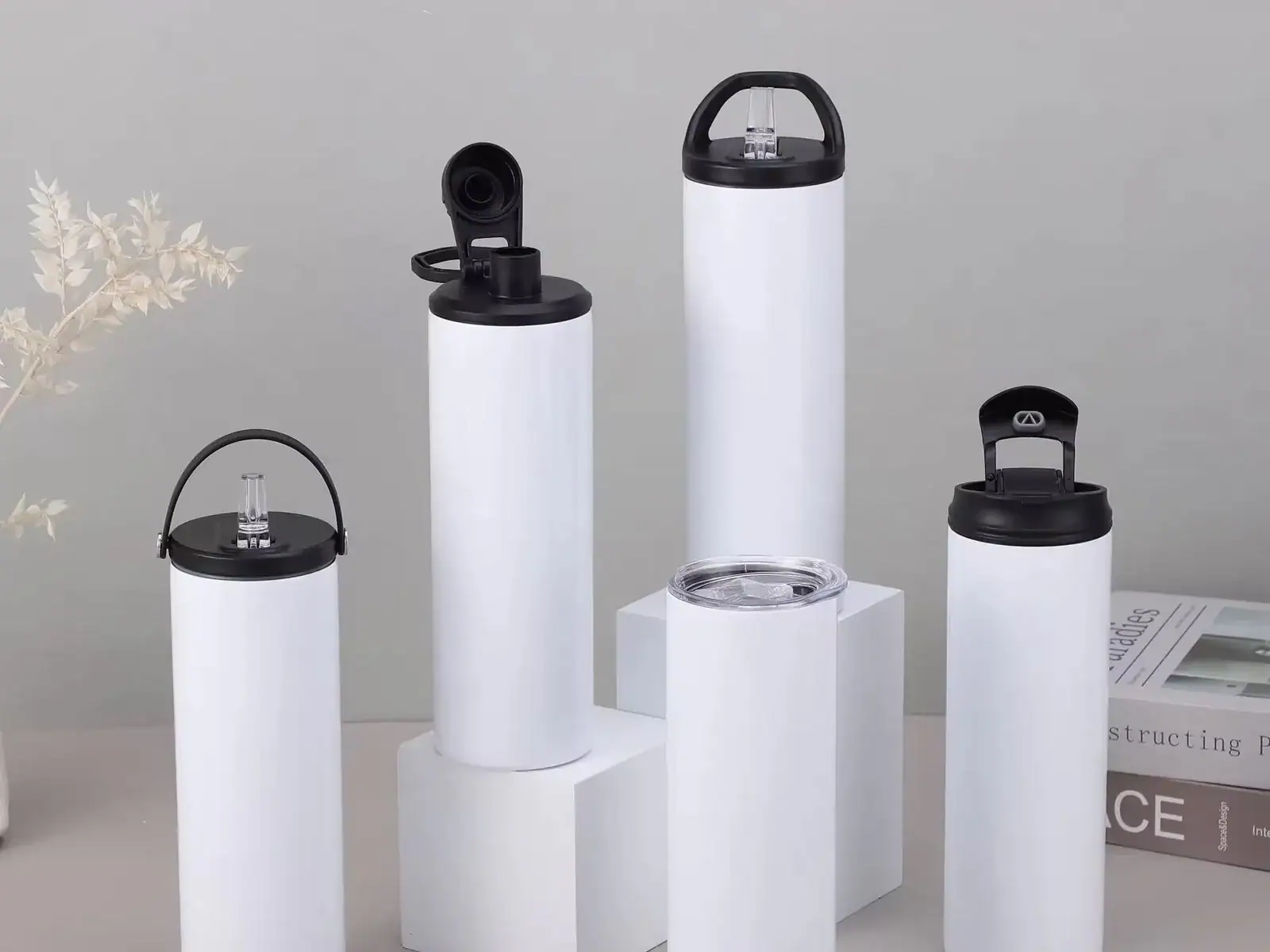
BG Drinkware reviews the vessel, coating, artwork coverage, seam position and sample checks as one project. Share what must stay exact and what can be adjusted before a production quotation is prepared.
BLANKS IN BULK
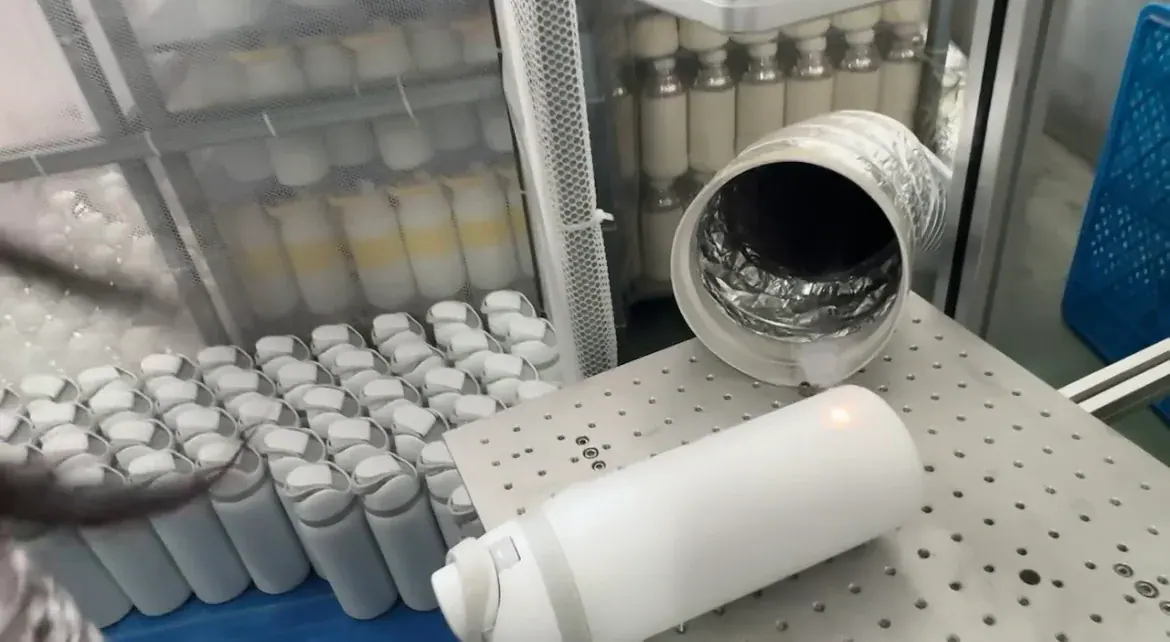
BG Drinkware supplies sublimation blanks for print shops and brands that print in-house. Any straight-bodied tumbler can take a sublimation coating, and the 20 oz straight tumbler is the most common blank. Sublimation water bottles are also available, with capacity largely following your range. The sublimation coating is applied by an outside partner; BG checks the coated bodies when they come back and picks out defective units.
Blanks start at 300 pieces. A blank sample is charged, and the charge is credited against the bulk order. A sample of an existing model takes up to 7 days, bulk production takes 7–12 days after sample approval, and packaging is set per order. For how the coating and heat work, see our guide to sublimation tumblers.
To quote, send the capacity, quantity, model, colour, blank surface, packaging, payment terms and trade terms. BG Drinkware is a drinkware manufacturer in Yongkang, China.
SHORT ANSWER
Choose dye sublimation when full-colour artwork and broad coverage matter, and when the selected drinkware has a compatible light-coloured coating. Choose another decoration route when the brief requires an uncoated metal look, a simple spot-colour logo or a finish that has not been qualified for sublimation.
BG Drinkware’s most common sublimation blank is the 20 oz straight tumbler, and any straight-bodied tumbler can be given a sublimation coating. Sublimation bottles can be made as well.
Full-colour graphics, gradients, photographic elements or repeating patterns on a qualified light coated body.
Critical brand colours, small details, demanding seam alignment or artwork that approaches the shoulder and base.
Bare-metal appearance, one simple logo colour, dark uncoated bodies or a project that cannot use a compatible coating.
Treat the method as one part of a complete product specification. Lid colour, accessories, packaging and the unprinted areas at the rim, base or seam can change how the finished range is perceived.
PRINT, WRAP, HEAT, REVIEW
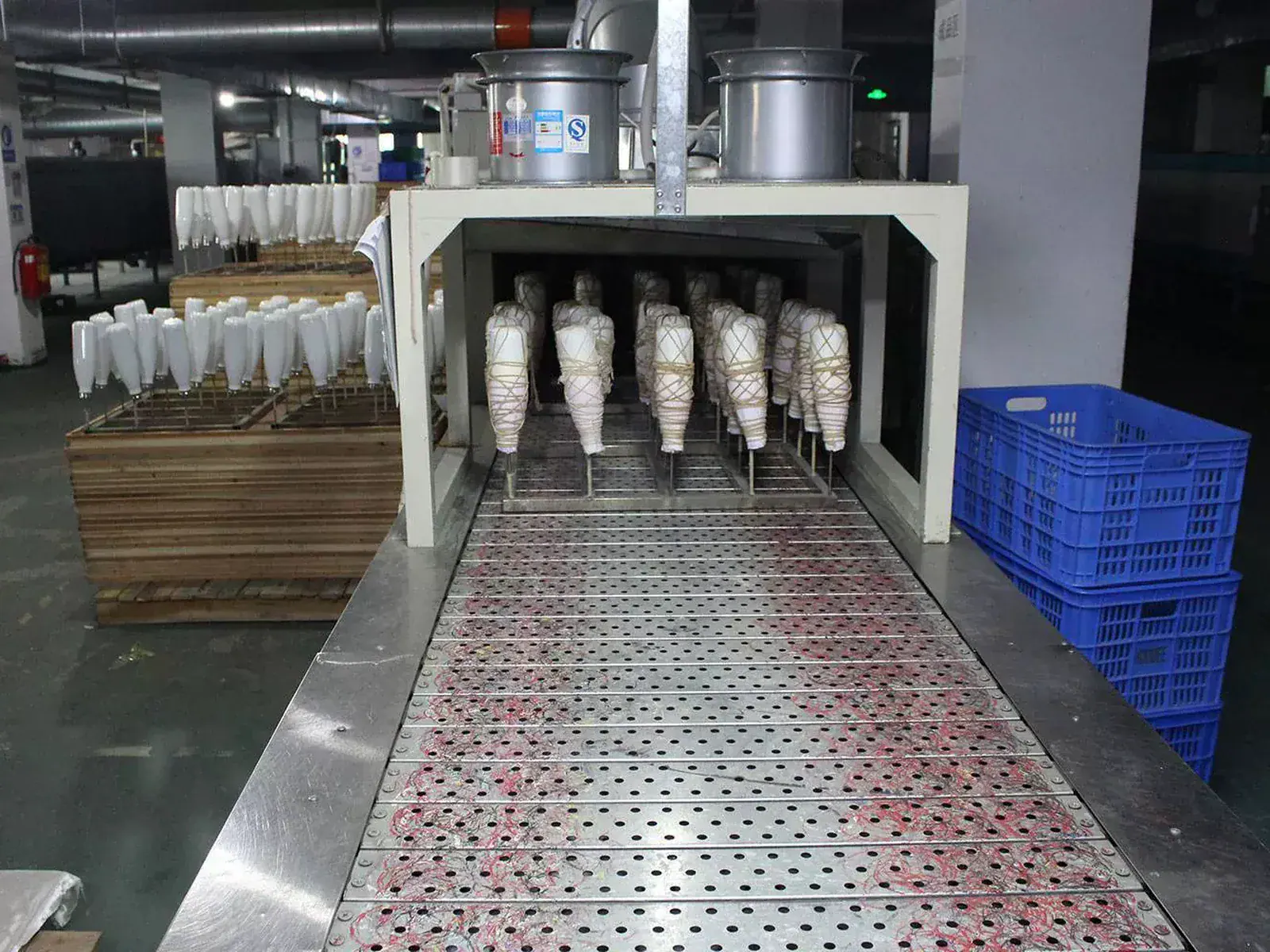
Artwork is printed in reverse onto transfer paper, positioned around the coated vessel and transferred with controlled heat. The coating and transfer system must be compatible so the colour enters the receptive surface instead of behaving like a separate sticker layer.
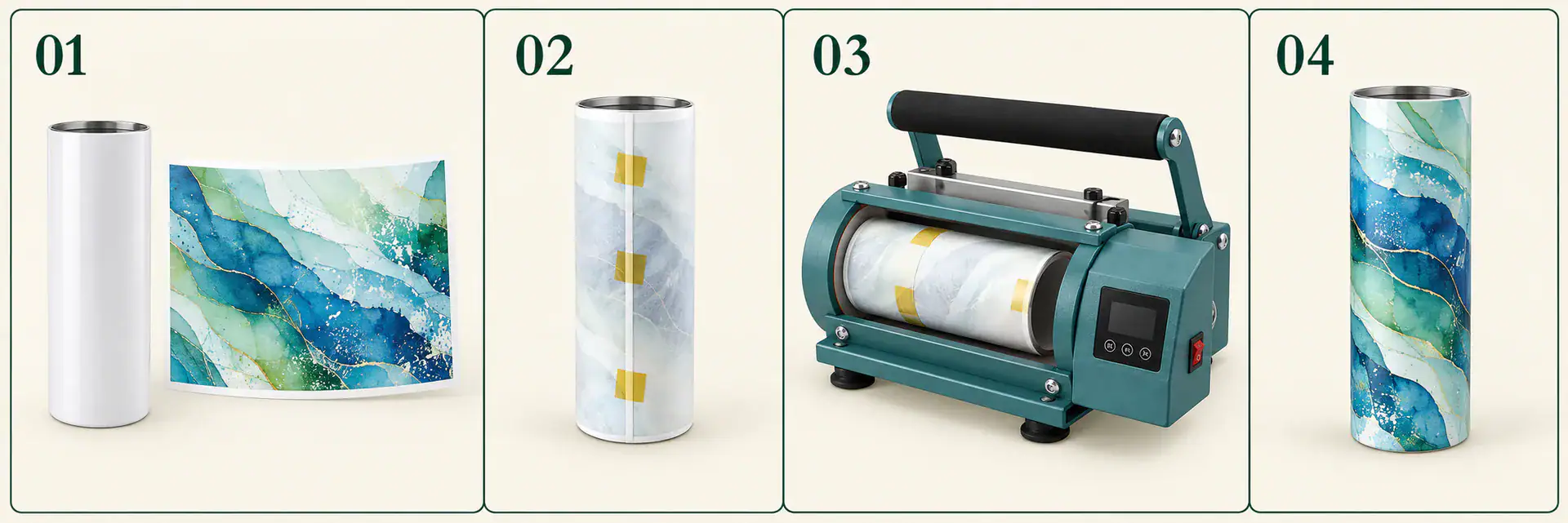
The ink only bonds to a sublimation coating, so the blank comes first: the coating is applied by BG Drinkware’s outside coating partner, and when the coated bodies come back BG Drinkware checks them and removes any defective pieces before they are printed or packed as blanks.
Sawgrass and Epson both describe hard-goods sublimation as a heat-transfer process for products made or coated for sublimation. Their guidance supports the general mechanism; it does not identify the equipment used for a BG Drinkware order.
General process references: Sawgrass on sublimation for coated hard goods (opens in a new tab) and Epson on printing, transfer and compatible blanks (opens in a new tab). These sources explain the method, not BG Drinkware equipment.
START WITH THE ACTUAL BLANK
For sublimation tumblers, a stainless steel body is not automatically a suitable blank. The relevant question is whether the selected outer surface includes a compatible coating and whether the body can receive even contact through the intended artwork area.
Straight cylindrical bodies are a practical starting point for broad wraps because the transfer can sit against a consistent surface. Shoulders, tapers, handles, pronounced curves and base transitions can reduce the usable area or require a different artwork strategy.
For sublimation water bottles, decide which zones are printed: front, back, full wrap, shoulder, neck and the area near the base. Mark any band left unprinted on purpose, so it is not mistaken for a missed area.
Before sampling, connect the blank reference to the coating description, body dimensions and artwork template. A photograph of a white cup does not establish coating chemistry, and a finished sample cannot be transferred to another blank without review.
Confirm diameter, straight-wall length, taper, shoulder and any handle or attachment that interrupts the wrap.
Sublimation needs a white or light sublimation coating; bare steel, powder coating and spray paint will not take the ink.
Choose the lid, handle, strap and packaging colours to go with the printed body.
BUILD FOR A CURVED SURFACE
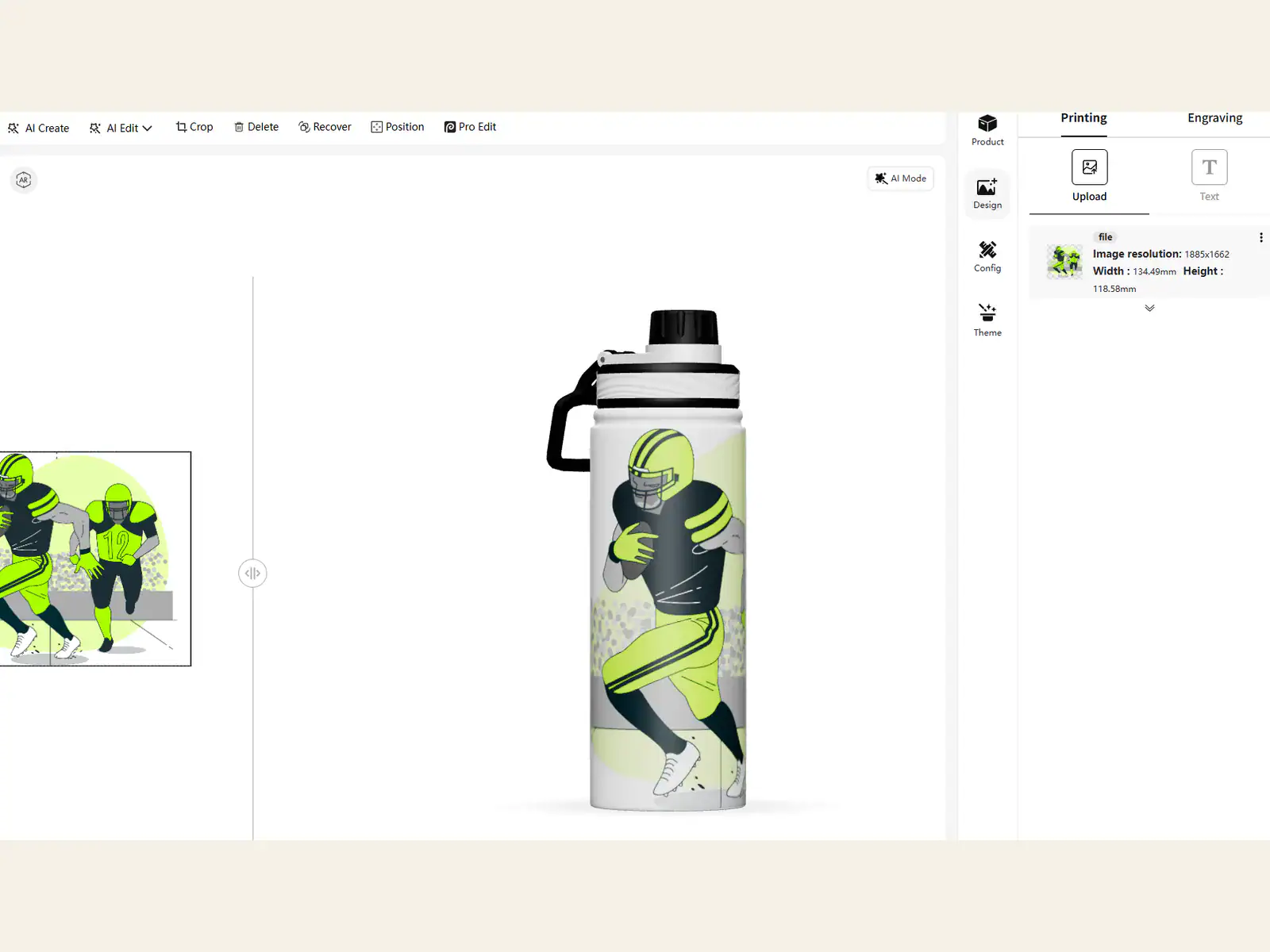
A flat rectangle becomes a cylindrical design, so the file needs a defined wrap width, height, orientation, seam treatment and safe areas near the rim and base.
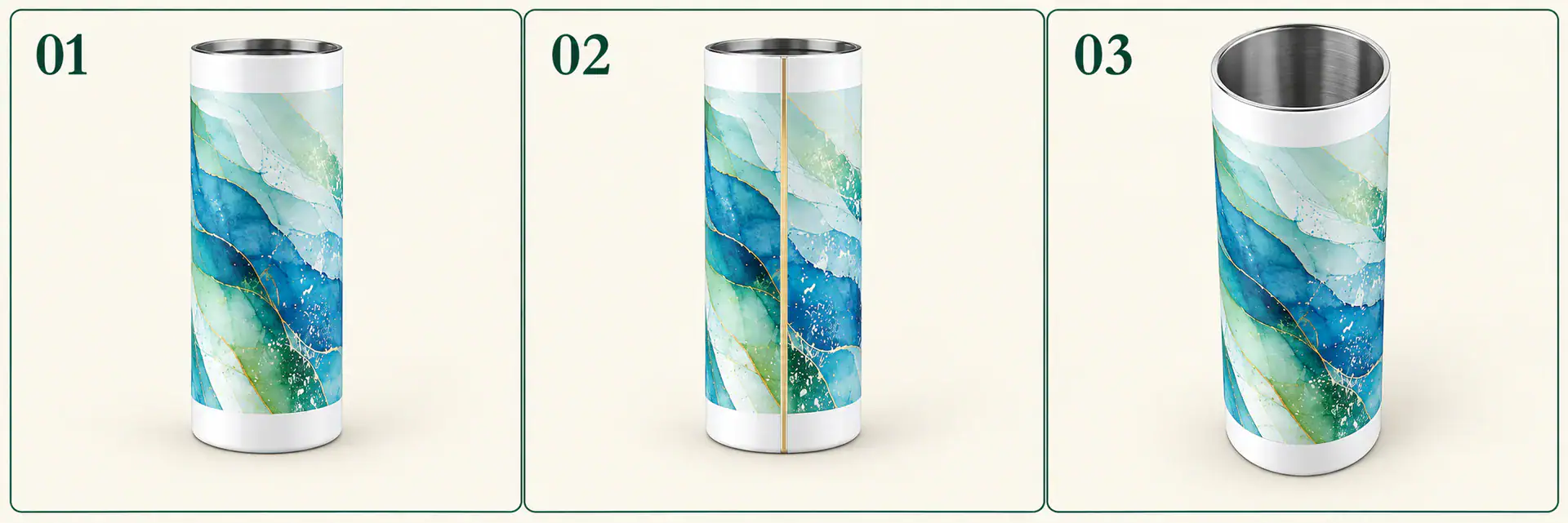
Place important logos, faces, small text and alignment-sensitive features away from the seam unless the layout deliberately uses it. Repeating patterns can make the join less dominant, while a continuous illustration may need a carefully chosen meeting point.
Supply the editable master artwork when available. Include colour references, linked images, outlined or packaged fonts, and a version name that also appears on the proof and sample record. If the source file is too small for the intended coverage, agree how it may be rebuilt before printing.
The digital preview helps confirm direction, scale and approximate placement. It does not prove final colour, gloss, seam appearance or edge transfer on the physical tumbler. Those decisions belong in the sample review.
State which view should face the user, a handle or a display panel, then mark the seam relative to that view.
Keep essential text and marks within the agreed safe area and away from unpredictable transitions.
Use one artwork file name and version number on the proof and the sample.
Colour, seam and edges are confirmed on a physical sample, which takes up to 7 days for an existing model; see sampling.
APPROVE THE PHYSICAL RESULT
For custom sublimation printing, approve more than a front-view photograph. Examine the complete circumference, the vertical join, the top and bottom edges and any area where the body shape changes.
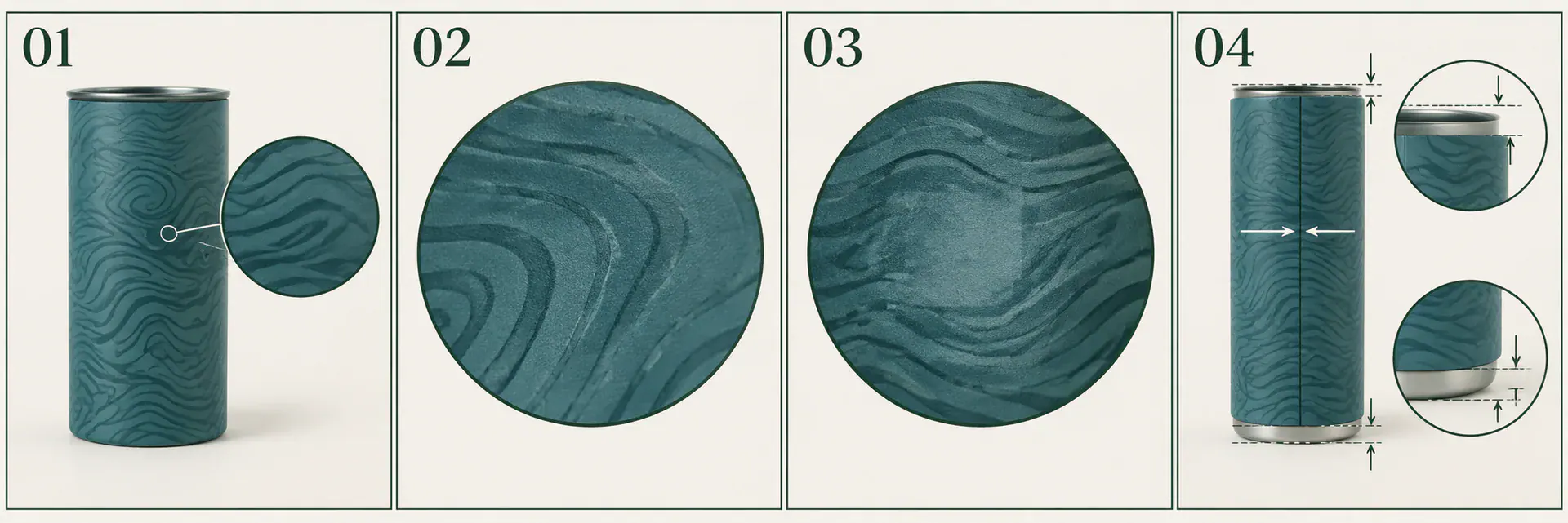
Ghosting can appear as a doubled or blurred edge when the transfer moves during pressing or removal. Pale or uneven areas may indicate incomplete contact, a challenging body zone or a mismatch within the transfer setup. Describe the location and visible symptom instead of assuming one cause from a photograph.
Review critical colours under agreed lighting and compare them with the approved physical reference or documented target. Screen previews and transfer-paper appearance are not final-colour standards. If colour tolerance matters commercially, agree the reference and acceptance method before the batch.
Look for unintended light areas, mottling and inconsistent colour around the full printable zone.
Check small text, lines, image sharpness and any doubled edge at the intended viewing distance and close-up.
Review the join, overlap or gap plus the unprinted bands at the rim and base against the approved layout.
Bulk orders are inspected to ISO 2859-1, general inspection level II, AQL 2.5 for major and 4.0 for minor defects; see quality control.
FROM ONE SAMPLE TO A BATCH
Bulk production takes 7–12 days after the sample is approved, using the same coated blank and artwork file as the approved sample.
Split quantities by body, lid colour, artwork and packaging configuration. For multiple designs, state whether each version has the same coverage and seam position. This makes the quotation and production review more reliable than a single total quantity.
Printed pieces are checked against the approved sample for colour, ghosting, pale areas and the seam before packing.
Review how decoration connects with the broader custom drinkware manufacturing process.
COMPARE BY THE REQUIRED RESULT
Compare methods on the same body, finish, artwork and use case. The best route is the one that can produce the required appearance and pass the agreed sample checks—not the one with the broadest generic claim.
Scroll sideways to compare all columns
| Method | When it may fit | What to confirm |
|---|---|---|
| Dye sublimation | Full-colour images, gradients and broad wraps on a compatible light coated body. | Coating and body compatibility, colour reference, seam, edge margins, ghosting and coverage. |
| Screen printing | Defined spot-colour logos or simpler artwork with practical coverage on the selected vessel. | Ink colour, registration, placement, edges and performance on the chosen surface. |
| UV printing | Detailed multi-colour graphics where the selected surface and product geometry suit direct printing. | Colour, surface feel, adhesion, curvature limits and the approved handling or cleaning conditions. |
| Laser marking | A contrasting mark created by changing or removing the selected surface without adding printed colour. | Visible contrast, fine detail, position and compatibility with the actual material and finish. |
For a finished example, see the ONVO sublimation tumbler.
Compare all drinkware customization optionsFor guide prices per piece, see custom drinkware costs.
BEFORE YOU APPROVE A WRAP
Start with the exact blank, then connect the artwork proof to a physical sample and a written production record.
No. A metal body alone is not enough. The selected exterior needs a coating designed and qualified for the intended sublimation system, and the body shape must allow practical transfer contact. Confirm the exact blank and coating before approving artwork or production.
Traditional hard-goods sublimation is normally planned around a light receptive surface because the dyes do not provide an opaque white layer. A dark or strongly coloured background can change the artwork. Review alternative finishes or printing methods if a dark body is essential.
A full wrap still has a meeting area. The seam may use a controlled gap, overlap or carefully aligned join depending on the artwork and process. Place important elements deliberately and approve the full circumference on a physical sample.
A monitor preview is not a physical colour standard. Ink, paper, profile, coating, transfer conditions and lighting influence the result. Identify critical colours, provide a usable reference and agree how the sample will be evaluated.
Send the best available editable artwork, linked images, fonts or outlined text, target dimensions and a marked front and seam position. Include colour references and one revision name. The production team should confirm the final template for the selected body.
Check the complete design for colour, coverage, sharpness, ghosting, pale areas, seam treatment, top and bottom margins and alignment to product features. Also review the full product configuration and any agreed handling or cleaning requirement.
The vessel, coating, artwork coverage, number of designs, quantity split, sample requirements, lid and accessory configuration, packaging, destination and timing can affect the quotation. Mark fixed requirements and acceptable alternatives.
PREPARE A REVIEWABLE PROJECT
To quote, send the capacity, quantity, model, colour, the number of designs, packaging, payment terms and trade terms.
MOQ, sampling scope and lead time are confirmed for the selected body, artwork, quantity and packaging. Do not treat an estimate from another cup or design as a commitment for the current project.
Your order contact coordinates the review. Confirm revised artwork and the accepted physical sample before production.
Fill in what you know, then copy it into your quote request. This box does not submit or store your details.
Need to compare finishes first? Return to drinkware customization.
Search BG Drinkware
Add us on WeChat

WeChat ID: +86 151 5891 9004
Open WeChat, tap + then Scan, and point it at the code.