UV printing, screen printing or laser engraving?
Start with the mark you want on the same cup: detailed colour graphics, a solid-colour logo or a contrasting laser mark. Then compare surface compatibility, feel and sample requirements. A process name alone does not establish usable coverage or cleaning performance.
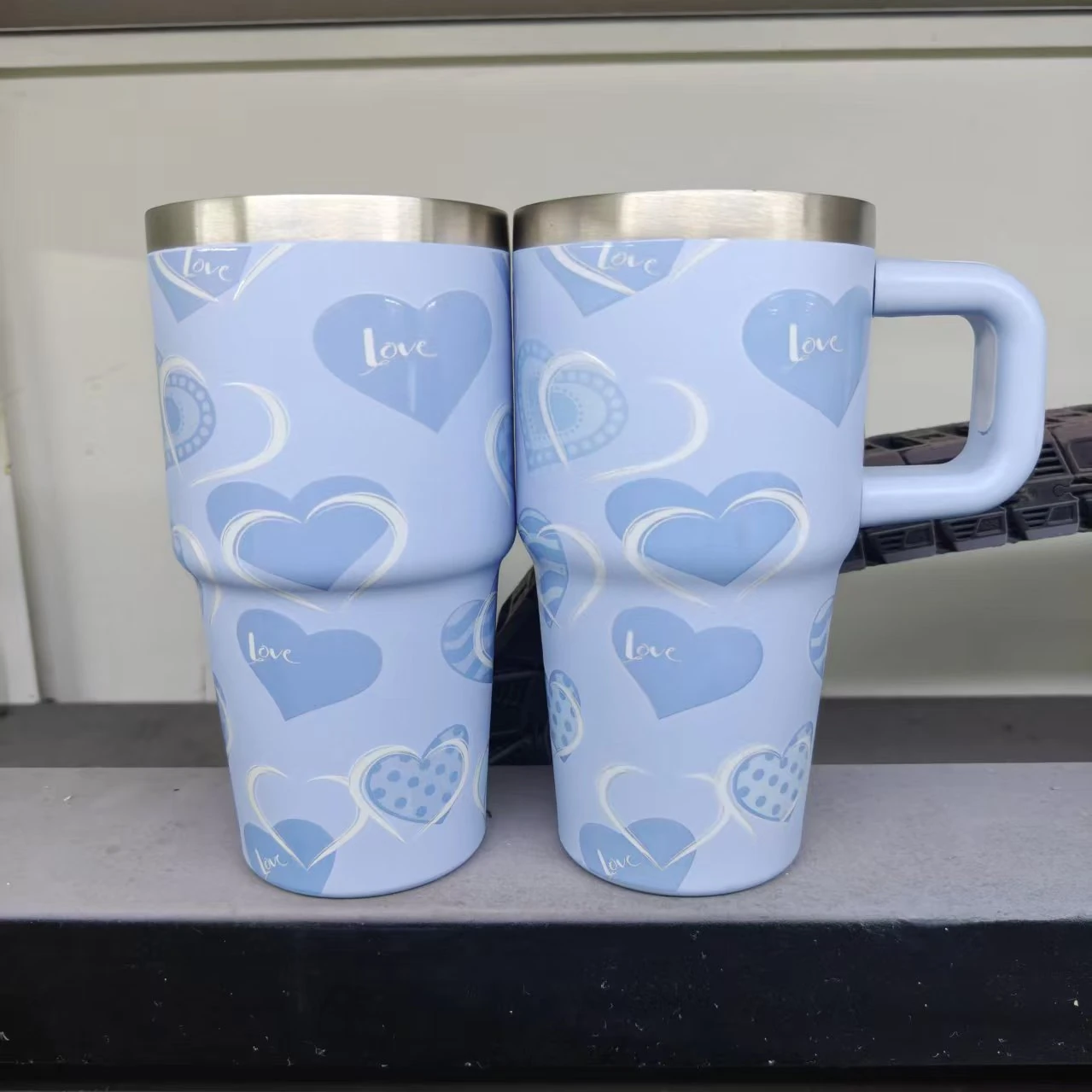
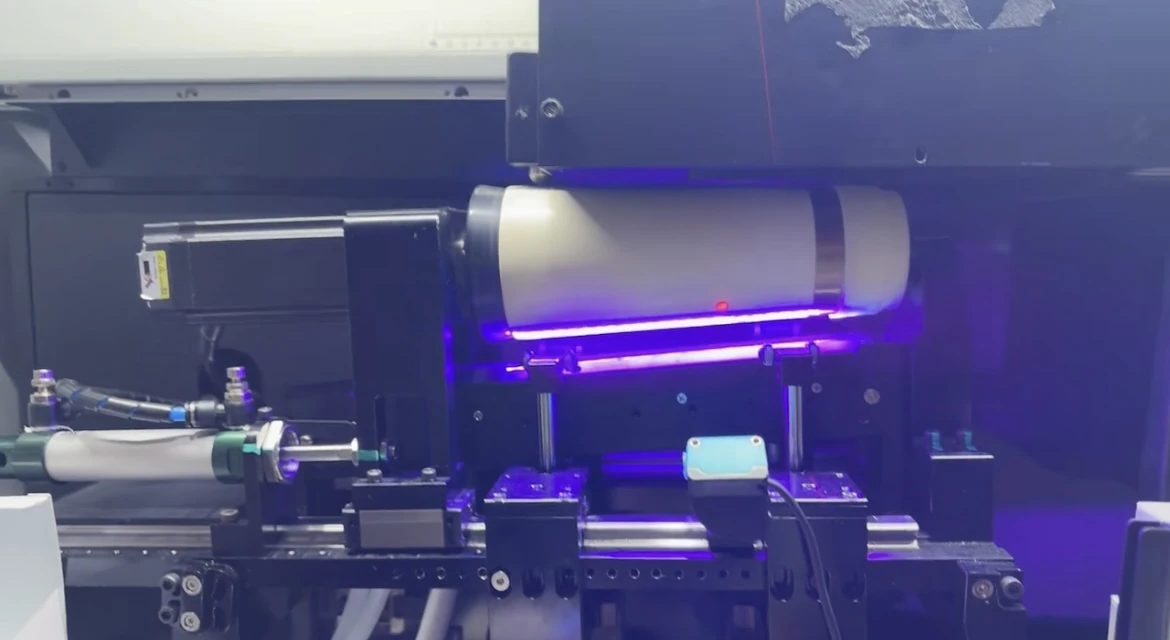
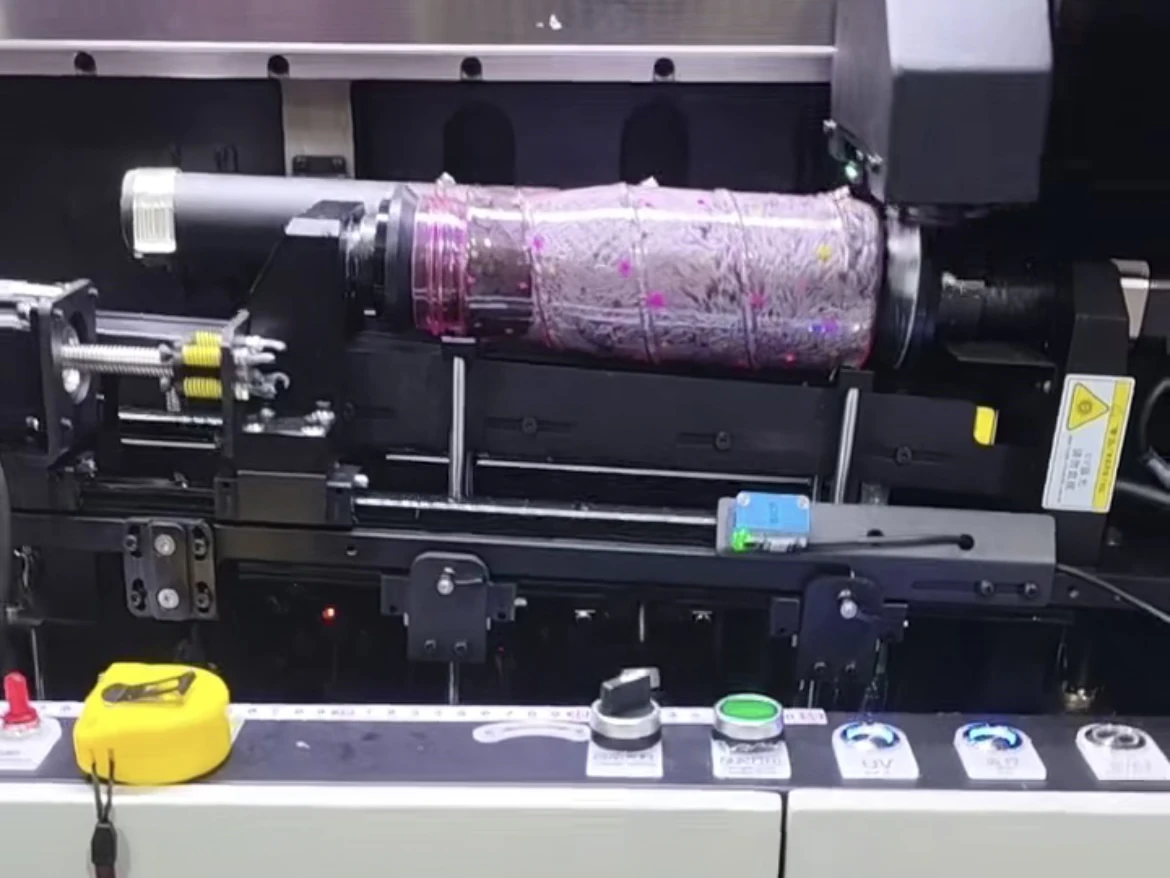
Direct UV printing
- Artwork and appearance
- A candidate for detailed graphics, multiple colours and gradients. White or clear layers depend on the proposed setup and design.
- Surface compatibility
- Trial the ink and any preparation on the actual exterior finish. A metal body underneath does not identify the coating being printed.
- Touch and finish
- The deposited ink and any clear layer can change the surface feel. Compare a physical sample when a smooth or textured finish matters.
- Sample decision
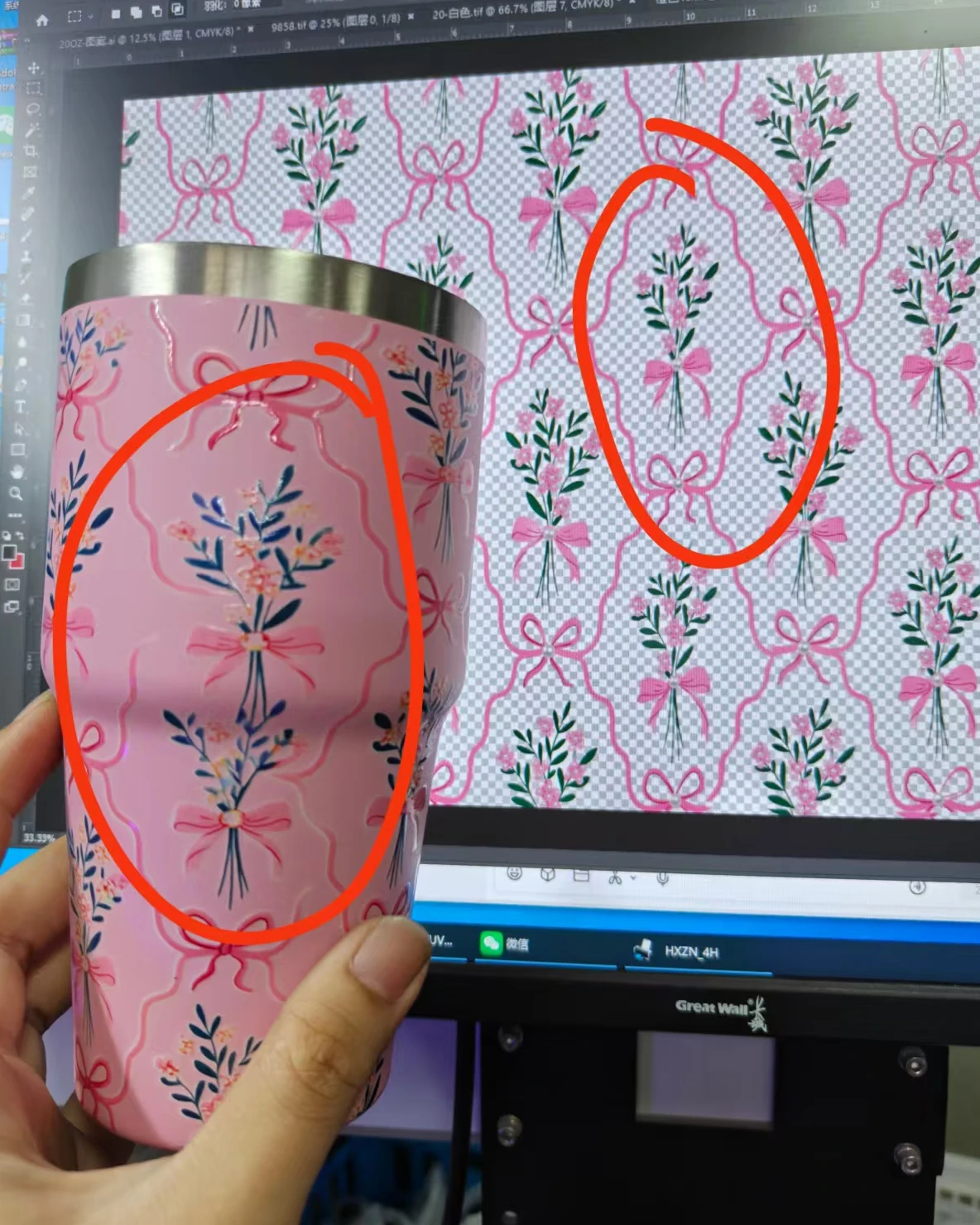
- Check colour density, fine detail, layer alignment, print boundaries and any wrap seam. Agree adhesion, rubbing and cleaning checks for that decorated cup.
Screen printing
- Artwork and appearance
- A candidate for solid-colour logos and lettering. Each printed colour uses a separate stencil, so closely aligned colours need a registration check (alignment between colours).
- Surface compatibility
- Confirm ink compatibility, cup positioning and the usable print area on the selected finish.
- Touch and finish
- Screen printing also leaves an ink layer. Its feel depends on the ink, deposit and cup surface; do not assume it will feel identical to a UV print.
- Sample decision
- Spot-colour logos from about USD 0.035 per piece; works on bare steel too.
Laser engraving
- Artwork and appearance
- A candidate for logos and lettering that use contrast from the material or coating. It is not a direct substitute for a full-colour printed illustration.
- Surface compatibility
- On a suitable coated cup, the laser can remove the coating to reveal the surface below. Bare-metal marking requires a compatible laser process; the resulting appearance depends on the material and settings.
- Touch and finish
- Coating removal does not add a printed ink layer, but the marked area can still feel different. Inspect the edges and finish on the actual cup.
- Sample decision
- Check contrast, small text, positioning, residue and surrounding coating. Confirm the finished cup’s care instructions. Explore laser engraving.
UV direct printing and UV DTF are different routes.
Direct printing applies ink to the cup. UV DTF prints a graphic onto film and transfers it to the object. Ask which route a quotation describes and inspect its edges, touch and performance on the intended finish. Roland’s UV DTF overview illustrates the film-transfer route; it is not confirmation that BG Drinkware supplies that service.
Trotec’s coated-bottle guidance illustrates coating removal. The coating, equipment and sample result still need confirmation for your cup.
Questions before a UV print sample.
Should I choose UV printing, screen printing or laser engraving?
Consider UV printing for detailed colour artwork, screen printing for solid-colour logos, and laser engraving for a contrasting mark produced through the material or coating. These are starting points, not universal rules. Compare your exact cup finish, print area, desired feel and sample checks before choosing. None of the three process names alone establishes dishwasher safety.
Can custom UV printing be used on powder-coated tumblers?
Yes. Powder-coated and spray-painted tumblers can both be UV printed; bare stainless steel cannot. The print is checked on a sample in your coating colour, with a cross-cut adhesion test on request.
Can UV printing wrap around the whole bottle?
Wraparound UV printing depends on the equipment, positioning fixture and bottle geometry. Straight cylindrical areas may be easier to access than shoulders, tapers or handles. Supply the intended print boundary and ask for confirmation on that body. Inspect where the design meets and record any excluded areas before approving the sample.
Do dark cups need white ink underneath?
Dark or clear cups may need a white underlayer to achieve the intended colour appearance. Whether it is needed depends on the artwork, surface and ink setup. Ask for the layer arrangement in the sample proposal. Check colour density and white edges on the actual cup rather than approving from a screen image alone.
Is a UV-printed cup dishwasher safe?
Not on its own. Durability depends on the coating and the ink, so a dishwasher test on the finished cup can be run on request before any care claim is made.
Is direct UV printing the same as UV DTF?
No. Direct UV printing deposits ink onto the cup; UV DTF transfers a graphic printed on film. The application route and finished surface differ. Confirm which process is quoted and assess the edges, feel, adhesion and intended care on a sample. Do not treat approval of one route as approval of the other.
What are the MOQ and lead time for custom UV printing?
MOQ and lead time need a quotation for the selected cup, design and quantity per version. Include print coverage, colour layers, finish, packaging, destination and delivery target. Ask for artwork preparation, sampling, bulk production and shipping assumptions separately. Use the written quotation to confirm timing and minimum quantities rather than a general process estimate.