Why Does My Water Bottle Smell? New Bottle Odour, Explained
You open a new bottle and it smells musty or stale. In BG Drinkware's experience, the cause is usually the packaging and damp picked up on the way. Here is where the smell comes from, how to get rid of it, and what a factory does before packing.
By Feng, Head of After-Sales Service & Online Marketing Lead
A new water bottle usually smells because of its packaging and damp. In BG Drinkware's experience, most odour on new bottles comes from moisture picked up in transit, when cartons, bags and bottles spend time in containers and warehouses. The smell goes once the bottle is deep cleaned and left to dry completely. Take the lid apart, remove the silicone seal, wash every part with warm, soapy water and a brush, rinse, then let all the parts air-dry with the lid off before you close it. BG Drinkware, a drinkware manufacturer in Yongkang, China, blows any dirt off its bottles with an air gun before they are packed. If a smell comes back after a few days of use, it can come from residue or damp in the lid and seal, so clean those parts and dry them open each time. Closing a bottle while it is still damp traps moisture inside.
Where does the smell in a new bottle come from?
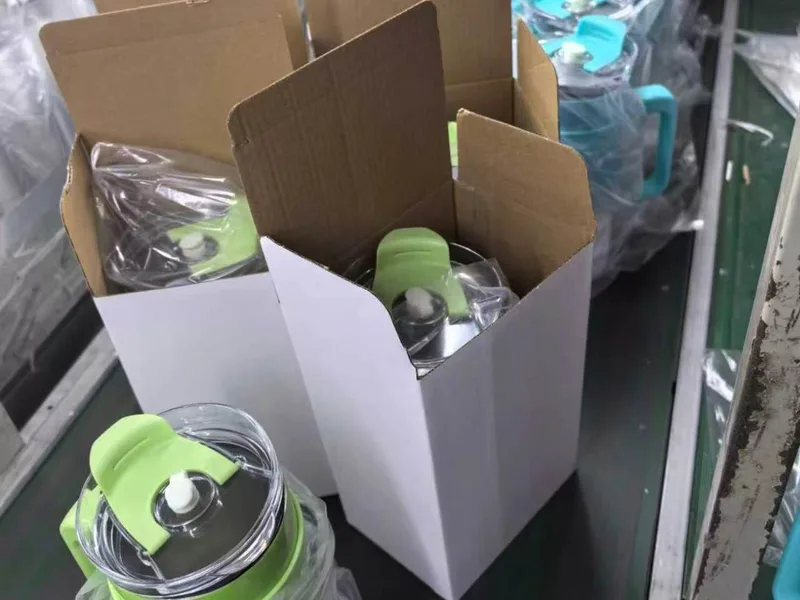
Mostly from packaging and damp. A new bottle travels inside a bag, a box and a carton, through containers and warehouses where humidity changes. In BG Drinkware's experience, damp picked up during that journey is the most common reason a new bottle smells when it is first opened.
Damp in transit
The most common cause. Moisture trapped in the packaging leaves a musty smell.
The packaging itself
Bags, boxes and cartons can pass their smell to a closed bottle.
Closed while damp
After use, a lid closed on a wet bottle traps moisture inside.
Residue in the lid
Drink residue collects in the seal groove and lid parts if they are not taken apart.
For lid designs that are easier to keep clean, see easy-to-clean water bottles.
How do you get rid of the smell?
Deep clean it, then dry it completely. In BG Drinkware's experience, an odour from packaging and damp goes once the bottle has been washed thoroughly and left to dry. The drying is the step that matters most: a bottle closed while still wet keeps the damp that caused the smell.
- Take everything apartRemove the lid, the silicone seal, the straw and any other removable parts.
- Wash every partUse warm, soapy water and a bottle brush inside the body and in the seal groove.
- Rinse wellRinse each part with clean water so no soap is left behind.
- Dry openStand the bottle upside down and leave the parts apart until they are fully dry.
- Then close itRefit the seal evenly in its groove and close the lid only when everything is dry.
For stubborn smells and coffee or tea stains, the full routine, and what never to use on stainless steel, see how to clean a stainless steel bottle.
What does a factory do before packing a bottle?
Clean off loose dirt and pack the bottle closed in its bag and box. At BG Drinkware, bottles are blown clean with an air gun before packing, to remove any possible dirt. After the carton is sealed, the main risk is damp picked up in transit.
| Symptom | Likely cause | How to confirm | What to do |
|---|---|---|---|
| Musty smell when a new bottle is first opened | Damp picked up in transit | The packaging feels damp or smells the same | Deep clean and dry fully with the lid off |
| Smell like the box or bag | Odour from the packaging | The smell matches the packaging | Deep clean and dry fully with the lid off |
| Smell comes back after days of use | Residue or damp in the lid and seal | Smell the seal and the lid parts on their own | Clean the seal and lid; dry them open each time |
How can a brand reduce odour complaints?
Keep the bottles dry from packing to delivery, and tell the end user how to clean and dry them. Agree the inner packaging and the carton with the factory, ship in sealed cartons, and print a short care note: wash before first use, and dry with the lid off before closing.
- Packaging: name the bag, box and carton, and how bottles are packed inside them.
- Before packing: ask the factory how bottles are cleaned; BG Drinkware blows them clean with an air gun.
- Care card: wash before first use, take the seal out to clean it, and dry open.
- On arrival: open a few cartons and check for damp before stock goes out.
The standard minimum order is 500 pieces, negotiable; a sample of an existing model takes up to 7 days, and bulk production takes 7–12 days after the sample is approved. For cartons and inner packs, see export packaging and cartons.
For bottle models and how parts are checked before packing, see custom water bottles and quality control.
Water bottle smell FAQ
Short answers to the questions people ask most about why new and used water bottles smell, how to get rid of the odour and how factories prepare bottles before packing. The answers come from BG Drinkware's production and after-sales records for stainless steel bottles and tumblers.
Why does my new water bottle smell?
Usually because of packaging and damp. In BG Drinkware's experience, most odour on new bottles comes from moisture picked up in transit, while the bottles sit in bags, boxes and cartons in containers and warehouses. A deep clean and complete drying with the lid off removes it.
Will the smell go away on its own?
Not reliably while the bottle stays closed, because the damp stays inside with it. Take the bottle apart, wash every part with warm, soapy water and a brush, rinse, and leave everything to dry fully with the lid off. In BG Drinkware's experience, the smell then goes.
Why does my bottle smell again after a few days?
It can come from residue or damp in the lid and seal. Drink residue collects in the seal groove and lid parts, and a lid closed on a wet bottle keeps the damp in. Take the seal out when you wash the bottle, and dry every part open before closing it.
Do factories clean bottles before packing them?
At BG Drinkware, bottles are blown clean with an air gun before packing, to remove any dirt left from earlier steps. Most odour appears later, from damp picked up in transit, so washing a new bottle before its first use is still the right step for any buyer.
This guide is based on BG Drinkware's production and after-sales records. Related guides: a lid that leaks after washing, a rattle inside an insulated bottle and rust and tea stains.
Planning bottles that arrive fresh?
Send the capacity, quantity, model, colour, logo method, packaging, payment terms and trade terms, and the care card you need.