Trade Show Giveaway Tumblers in Bulk: Plan Venue Delivery
When ordering trade show giveaway tumblers, work back from the venue’s receiving window. Identify the cartons the booth needs first and set a cutoff for switching to a backup delivery plan.
By Feng, Head of After-Sales Service & Online Marketing Lead
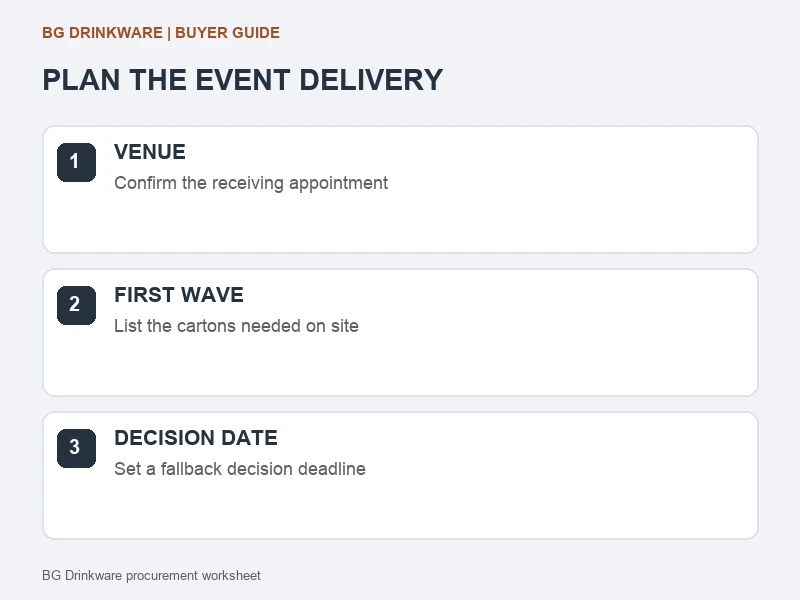
For trade show giveaway tumblers, start with the date and time someone can accept the cartons at the venue. Work backwards through the local delivery appointment, international transport, dispatch, production and sample approval. Give the event team a separate deadline for inspecting the first cartons before the giveaway begins. BG Drinkware, a drinkware manufacturer in Yongkang, China, counts production lead time from the deposit. Late artwork or packaging decisions can affect the schedule. Confirm the minimum for each model, colour and logo before you reserve stock for different groups. BG can pack and mark cartons by event batch or receiving point when agreed on the order. Give your supplier and forwarder the same delivery dates and carton allocation. If the first-day stock is critical, ask for a separately priced release with its own packing list and receiving contact. Set a decision date for any fallback while there is still time to arrange it.
Which date should anchor a giveaway order?
Use the earliest confirmed receiving appointment that leaves time to inspect and move the cartons to the booth. Ask the venue or warehouse when deliveries are accepted, who signs for them and where the driver should go. Keep that appointment separate from the day the show opens.
A venue may have several delivery addresses or loading points. Ask your event organiser which one applies to your stand and whether the carrier must book a time. Put the reference, access instructions and receiver’s phone number in the delivery brief after the organiser confirms them.
Count the time your staff need between signing for cartons and using the stock. A delivery on setup day may work if staff can unpack it promptly. If several exhibitors share a receiving desk, agree how the cartons will reach the person responsible for your booth.
How do you count backwards from that appointment?
Work backwards using the actual booking assumptions for each handover. Record who approves the sample and when. Do the same for the local team receiving the cartons. Compare the agreed schedule with the venue window before you announce a stock arrival date.
| Work backwards from | Confirm with | Record |
|---|---|---|
| Booth ready | Event lead | First cartons needed and time to inspect |
| Venue receiving | Venue and local carrier | Delivery address, slot and receiver |
| Freight and dispatch | Forwarder and supplier | Handover date, carton count and weight |
| Production and approval | Buyer and supplier | Order schedule, deposit and approval deadlines |
Ask which stages can overlap and which depend on a finished approval. BG counts production lead time from the deposit, and late confirmation or artwork changes can affect the schedule. Confirm the date for your order, the artwork decision deadline and what changes would require a new estimate.
Give the forwarder the intended handover date and receiving constraints. Request a routing plan with room for the order’s specific risks, such as an appointment that cannot move or cartons that need to go through a separate receiving site.
Related guide: Custom Drinkware Production Timeline: From Sample to Shipment.
How many cartons must be in the first release?
Allocate the giveaway stock by day, audience or receiving point before you decide on a shipment split. Identify the complete sets needed for the first session and keep any later replenishment separate. If the split uses different variants, check the quantities against the approved order lines.
For example, an exhibitor could send first-day stock to a staging warehouse and hold replenishment for a later release. This is a planning option. Compare the extra handling and paperwork with the value of having the first cartons in hand, then ask the forwarder to price the agreed split.
At BG, the standard minimum is 500 pieces per model and colour, with a different logo counted separately. A carton release can divide already ordered stock. Check the minimum before using a separate colour or logo to identify each group. Lower minimums for some start-up teams need an order-specific quotation.
Related guide: Drinkware split shipments: planning releases to several warehouses.
Related guide: Promotional drinkware quantity tolerance: agree the counts.
What goes on the carton mark and receiving list?
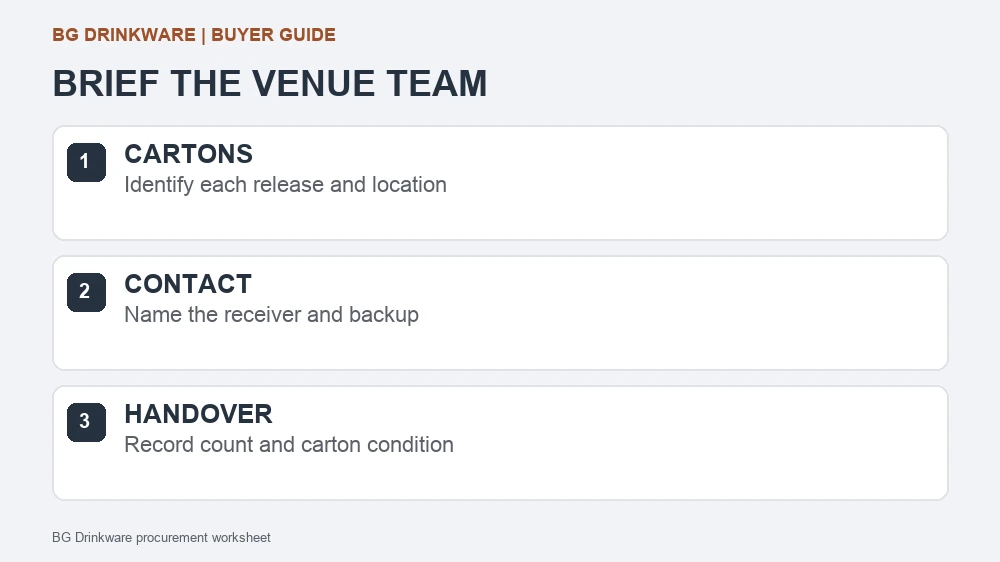
Use the same batch or site code on the carton mark and the corresponding packing record. BG can pack and mark cartons by batch or receiving point. Agree the wording, carton range and per-site quantities before dispatch so the team at the venue knows what to accept.
Ask for the site code, carton number or range, and event reference to be legible on the approved mark. For a mixed carton, put its detailed contents on the packing record so the receiver can check each item without interpreting a long label.
BG can provide packing lists or packing photographs by receiving point. Agree which record the venue team needs, when it should be shared and who will carry it on delivery day. Ask the team to report missing cartons and visible damage with the carton number.
When should you switch to a fallback?
Set the decision date while alternative arrangements are still available. Check what you could simplify in the order, which stock must arrive first and what the forwarder can still book. Agree who decides and what evidence will trigger the change, such as a missed artwork deadline.
- Confirm the receiving appointment and a named contact.
- List the pieces and cartons needed for the first session.
- Agree artwork and carton-mark approval deadlines.
- Decide when to confirm a fallback shipment.
Price any fallback against the same receiving window. A faster international leg still needs a local carrier and a receiver. If the fallback involves fewer pieces, confirm the allocation and share the updated carton numbers with the event team before dispatch.
Buyer questions
Should my tumblers arrive on the event opening day?
Choose an earlier receiving appointment that gives your team time to sign, check the cartons and move them to the booth. Ask the venue to confirm the address, delivery window and booking rules. Set the first-use date separately so the forwarder understands the time needed after the cartons arrive.
Can BG pack separate batches for one event?
Yes. BG can pack and mark cartons by event batch or receiving point when the arrangement is agreed for the order. Send the carton destinations, quantities and mark wording with the order instructions. Ask for the updated list if the carton arrangement changes before the goods are dispatched.
Does splitting delivery change the product minimum?
A release can divide stock already ordered. BG applies the standard minimum of 500 pieces per model and colour, with different logos counted separately. If the first release uses its own colour or artwork, confirm its order line before approving the allocation. Ask the forwarder about the cost of separate dispatches. Lower minimums for some start-up teams need an order-specific quotation.
What should I do if the artwork approval is late?
Tell the supplier and forwarder as soon as the date slips. Ask which stages will move, whether a simpler approved configuration is available and how much stock can still reach the first receiving window. Compare those options before committing to a new date or changing the giveaway plan.
Use the venue’s confirmed receiving window and an order-specific schedule when committing to an event.
Request a quote against your receiving date
Send the event date, receiving window, model, artwork, quantity by colour and logo, and the carton allocation for each location.
Choose promotional drinkware before sending your specifications.