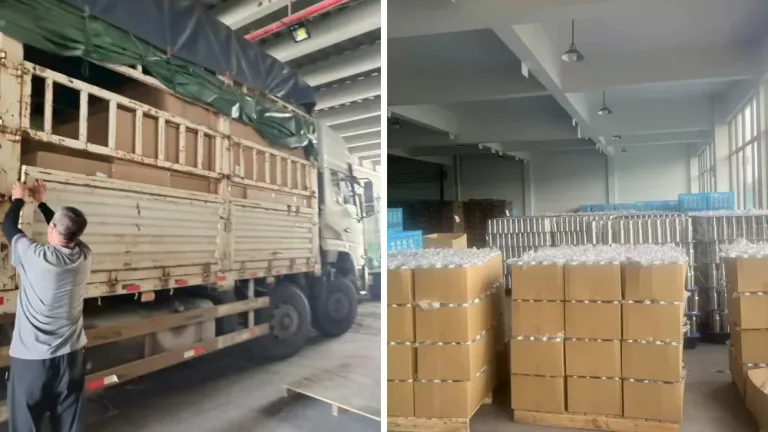
Drinkware Order Calendar: Plan Back from Your Delivery Date
For a wholesale drinkware order, start with the day stock needs to be available to sell. Record factory completion and warehouse arrival separately, then allow time for sample approval, payment, inspection and freight.
By Feng, Head of After-Sales Service & Online Marketing Lead
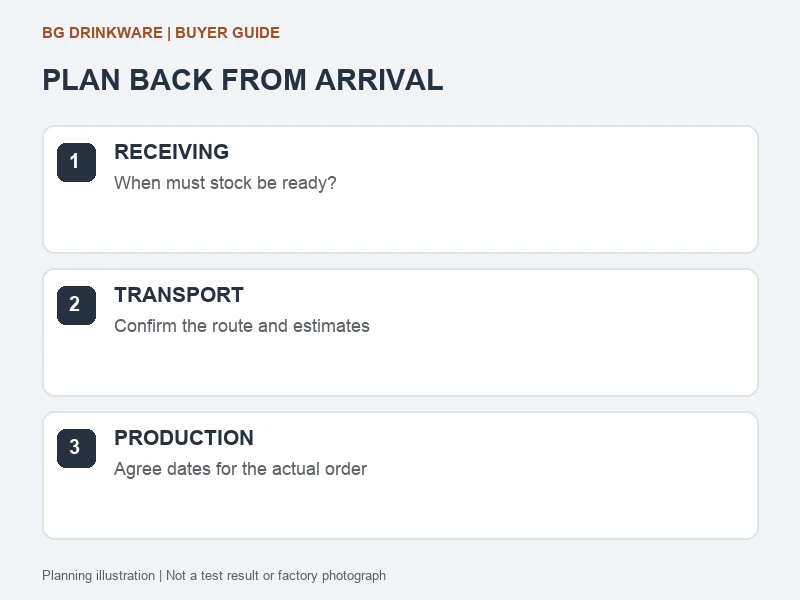
Start your drinkware order calendar with the date stock must be received and ready for sale, then work backwards through receiving, transport, shipment preparation, production and approvals. BG Drinkware, a drinkware manufacturer in Yongkang, China, counts production lead time from the deposit. Late customer confirmation or artwork changes can affect the schedule, so a deposit date should not be treated as a promise that unresolved details will cause no delay. Ask for the production period for your actual order and the assumptions behind it. Obtain transport estimates for the destination and service being considered, with time for receiving and any required checks after arrival. Keep approval owners and due dates beside each open item. When a deadline changes, update the affected dates and confirm the revised plan with the supplier before committing to your retail launch. Use this approach for seasonal ranges and events without relying on a universal number of production or freight days.
Which date should a retail order calendar start from?
Start from the date the stock must be ready for sale or distribution, then identify when the receiving warehouse needs it. An event date, factory completion date and delivery date describe different stages. Keeping them separate shows whether the order allows enough time for the work after manufacturing ends.
A retailer may need goods received, checked and allocated to stores before a promotion starts. A distributor may need time to split an order between end customers. Put those tasks into the plan rather than using the launch day as the delivery deadline.
For seasonal products, confirm the relevant selling period in the destination market. Do not reuse last year’s calendar without checking the customer’s current campaign and receiving arrangements. The useful starting fact is the buyer’s required stock date, not a generic list of holiday dates.
How do you work backwards from the required arrival date?
List every stage between production and availability for sale, then obtain an estimate from the party responsible for that stage. Work backwards using those order-specific estimates and an agreed allowance for uncertainty. Keep factory completion, shipment departure and warehouse receipt as separate milestones with their own owners.
| Work backwards from | Information to confirm | Responsible contact |
|---|---|---|
| Stock ready for sale | Receiving, checks and store allocation | Buyer or receiving warehouse |
| Warehouse arrival | Delivery arrangements and receiving appointment | Transport provider and warehouse |
| Shipment departure | Route, service and booking assumptions | Transport provider |
| Goods ready for shipment | Inspection, packing and documents | Supplier and buyer |
| Production completion | Order-specific production period and open approvals | Supplier |
| Deposit and approvals | Deposit date and each confirmation deadline | Buyer and supplier |
The table is a planning worksheet. It does not supply fixed durations or promise that every stage runs one after another. Ask the supplier and transport provider which activities can overlap and which depend on a completed approval, inspection or document.
Keep the assumptions next to the dates. A transport estimate for one service or destination does not establish the arrival date for another. If the plan depends on a particular departure, warehouse appointment or inspection slot, obtain confirmation from the responsible party before treating it as settled.
Related guide: Custom Drinkware Production Timeline: From Sample to Shipment.
When does BG’s production lead time start?
BG counts production lead time from the deposit. Ask for the quoted period for your order and confirm the deposit date used in the plan. Late approvals or design changes can affect the schedule, so record outstanding artwork, sample and packaging decisions alongside the production dates and follow them through.
The deposit trigger does not settle all the details of an individual schedule. Ask which confirmations are needed by which dates, whether any materials or samples remain outstanding, and when completion can be confirmed. Use the answer for that order rather than importing a fixed timeline from another project.
BG’s CRM automatically records orders and provides daily tracking and reminders. Those reminders support follow-up, but the buyer still needs to supply requested decisions. Assign one person to collect internal comments and return a clear response by the agreed date.
Related guide: Custom drinkware purchase order requirements: PO attachments.
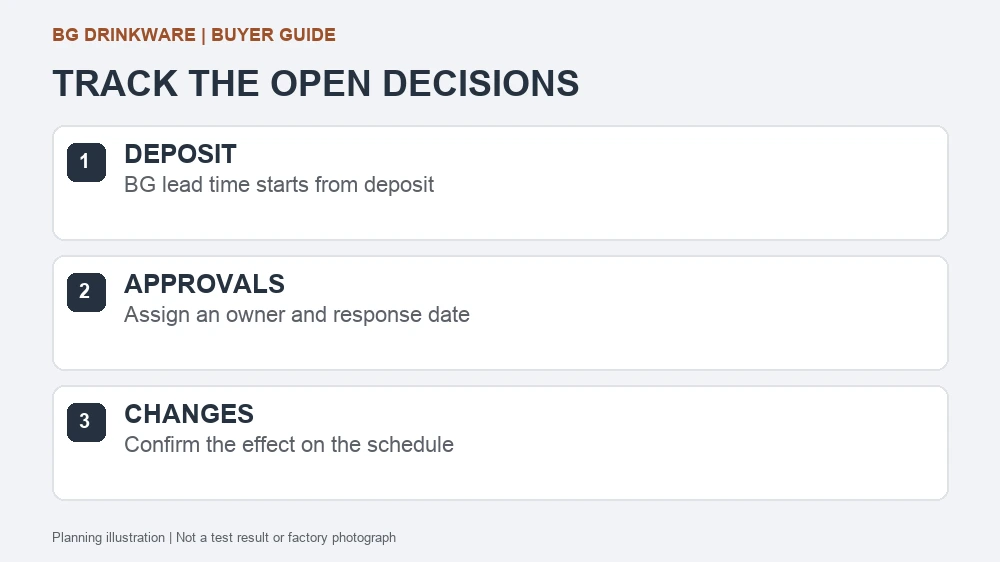
What should happen when an approval is late or artwork changes?
Tell the supplier what changed and ask which dates are affected before retaining the old delivery promise. BG confirms that late customer approval and revisions can affect scheduling. The effect depends on the order and its current stage; there is no confirmed universal rule that every change adds the same number of days.
- Identify the late approval or changed file.
- Ask what work is affected at the current stage.
- Confirm any additional cost and revised dates.
- Update the customer and transport plan.
- Keep the latest approved schedule with the order.
Keep a simple change entry showing the affected order line, file revision, decision date and person giving approval. Ask the supplier whether the change requires another sample, additional work or a different production arrangement. Record the revised completion estimate and revisit transport dates if necessary.
For example, if packaging approval remains open after the intended response date, ask what work can still proceed and what is waiting. This is a planning situation, not a reported BG order. Avoid solving it by silently assuming that packing and shipment will absorb the delay.
Related guide: Drinkware order changes after approval: a buyer's record.
What can you review when the target date is too tight?
Review the order configuration and delivery plan with the supplier before accepting a date that the current schedule cannot support. Ask about simpler specifications, fewer variants or a different shipment plan where relevant. Each option needs its own availability, cost and timing confirmation; none should be assumed to solve the shortfall.
Check whether every variant is needed for the first selling date. BG’s usual minimum is 500 pieces per model and colour, with different logos counted separately, so reducing the number of variants is a different decision from splitting every line into smaller quantities. Lower minimums for some start-up teams need an order-specific quotation.
If a partial shipment is worth exploring, identify exactly which order lines would leave first and ask for a revised quotation and delivery plan. Compare the full extra cost with the value of meeting the earlier date. Keep later quantities visible in the calendar so the first shipment does not obscure the remaining obligation.
Related guide: Drinkware split shipments: planning releases to several warehouses.
Buyer questions
How many days should I allow for a custom drinkware order?
Ask for a schedule based on your model, quantities, decoration, packaging and destination. BG counts production lead time from the deposit, and late approvals or changes can affect that schedule. Add transport and receiving estimates separately. Confirm the dates for each stage with the supplier and transport provider before committing to the customer.
Does paying the deposit prevent later delays?
No. The deposit is BG’s starting point for production lead time, but late confirmation and changes can still affect the schedule. Agree deadlines for artwork, samples and packaging, and track any open decisions. If a deadline is missed, ask for the effect on the current order before repeating the earlier delivery date.
Can I use the factory completion date as my launch date?
Factory completion is only one milestone before stock becomes available to sell. Allow for any remaining inspection, shipment preparation, transport and warehouse receiving work. Obtain estimates from the parties handling those stages. Plan the retail launch against the date goods are received and ready, with the assumptions recorded beside it.
How does BG follow up on orders?
BG’s CRM automatically records orders and provides daily tracking and reminders. Buyers should still agree who will respond to approval requests and how schedule changes will be confirmed. A reminder does not constitute approval, guarantee completion on a particular date or replace the order-specific production and transport plan.
Use current quotations and confirmed order dates to complete the calendar. Production time and transport time are separate.
Plan from your required stock date
Send the required warehouse arrival date, destination, models, quantity split, artwork and packaging requirements. Tell us which approvals remain open so we can discuss a workable order schedule.
Plan a wholesale drinkware order before sending your specifications.