

Solid colour
Send a colour code or physical reference. Evaluate the body beside its lid and handle: different materials and finishes can look different even when they share a colour target.
Spray painting for drinkware applies a liquid coating to the cup exterior. Explore solid colours and gradients with BG Drinkware, then set the gloss, feel and logo against a physical sample before production.
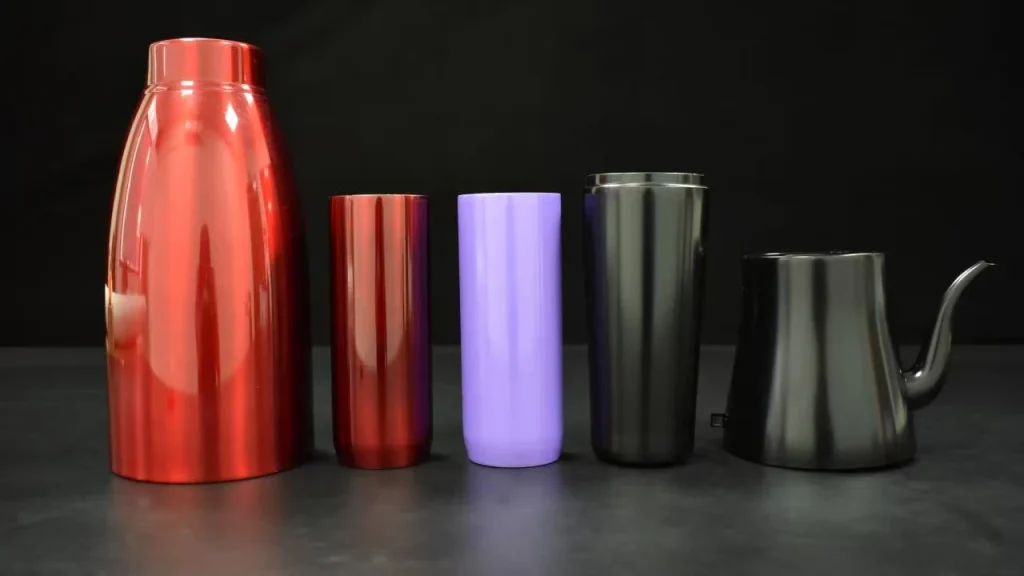
Colour is only part of a spray-painted finish. Specify whether the cup should look uniform or graduated, how much light it should reflect and how it should feel in the hand. Use the actual cup to define these details. For a reflective-particle effect, compare the glitter finish sample and approval requirements.
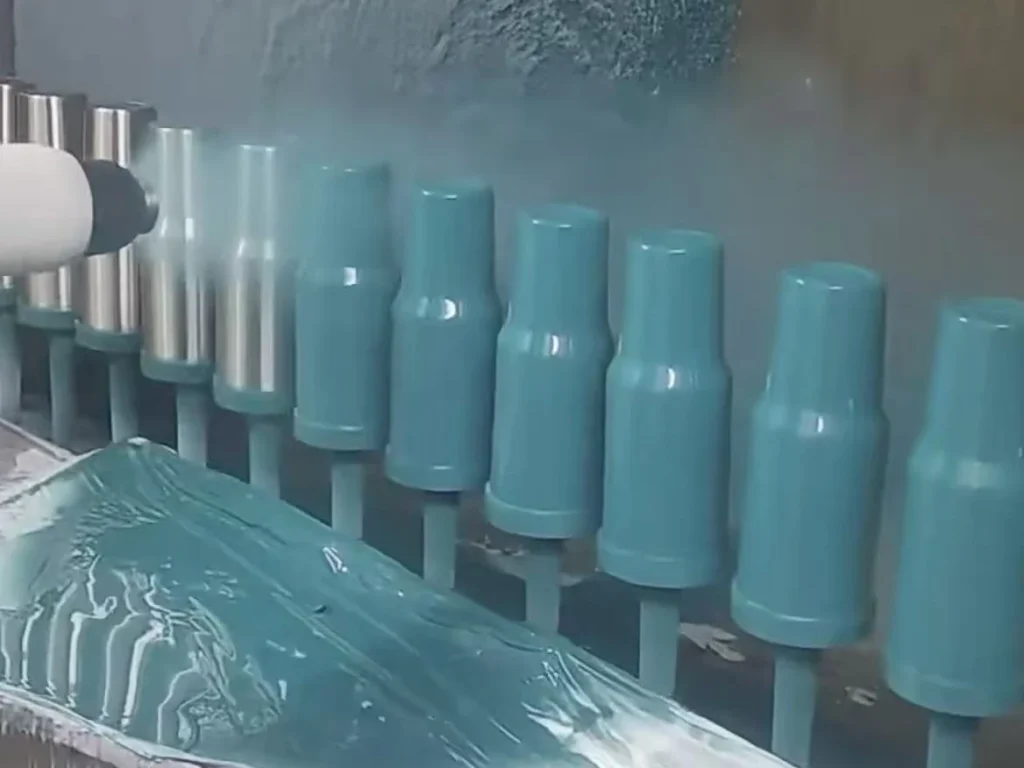
Send a colour code or physical reference. Evaluate the body beside its lid and handle: different materials and finishes can look different even when they share a colour target.
Mark the top and bottom colours, the direction of the fade and the transition area. Inspect the complete cup from several angles, including the boundary near the base and rim.
State your preferred gloss and describe the feel, ideally with a physical sample. A matte appearance does not automatically mean a soft-touch coating. Specify soft touch separately when it matters.
For colour approval, keep the reference, lighting and viewing conditions consistent. BYK-Gardner’s coating QC guidance treats colour, gloss and surface appearance as distinct assessment topics.
The preparation, coating layers and drying or curing conditions must suit the actual cup and coating system—the selected primer, colour coat and protective layer, where applicable. Set the sequence before sampling, including which parts are fitted before or after painting.
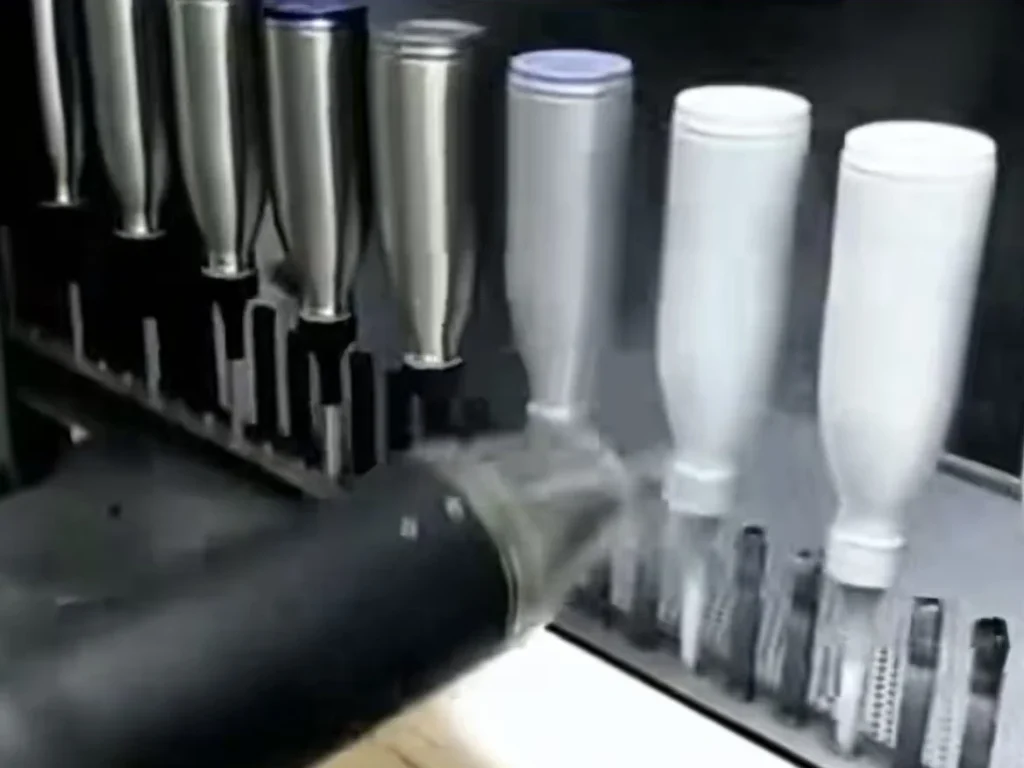
Identify the metal, existing finish and areas that must remain uncoated. Set boundaries at the rim, threads, base and attachment points so the coating does not interfere with assembly or the intended drinking surfaces.
Check the cleaning and preparation steps required by the selected coating. A previously coated cup may need a different route from an unfinished body.
Document before sampling: cup model, starting surface and masking drawing.
Specify whether the proposal includes a primer, colour coat or clear coat, and the order in which they are applied. These layers are not automatically required for every design; they depend on the selected system and finish.
For a gradient, record colour placement and transition width. For a single colour, check coverage around shoulders, curves and edges rather than judging only the broad front face.
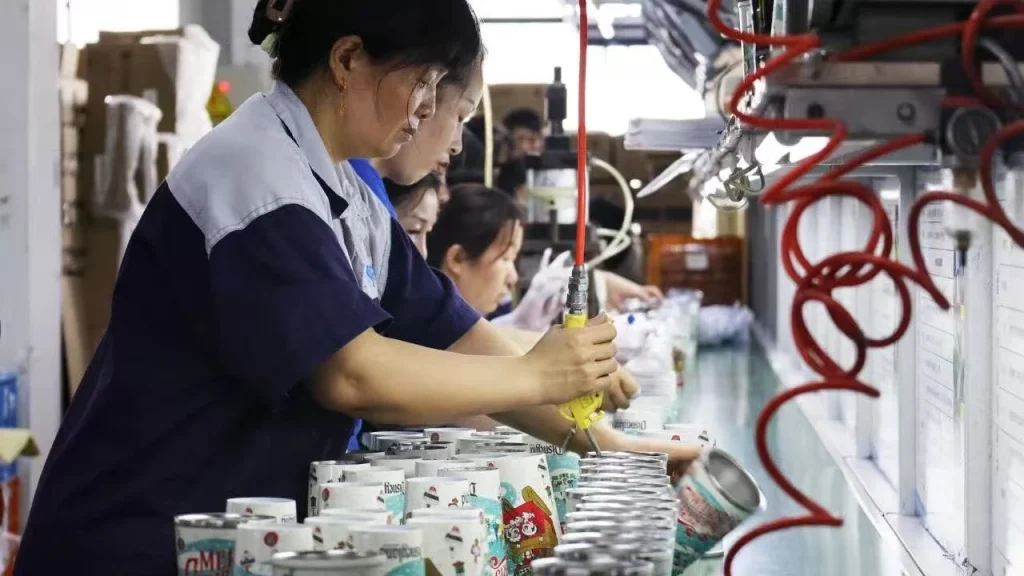
Spray paint is applied by BG Drinkware’s outside coating partner, and the colour is matched to a Pantone reference or a colour card.
Request the coating supplier’s technical data sheet and the conditions proposed for the cup. Drying and curing depend on the paint chemistry; a surface that feels dry does not prove it is ready for logo application or packing.
Check the production sequence against any attached heat-sensitive parts. Do not substitute a generic oven temperature or waiting time for the selected coating’s instructions.
Bubbling usually comes from the curing temperature. In BG Drinkware’s experience spray paint has more finish problems than powder coating, so the painted bodies are checked when they come back.
Look for runs, thin areas, dust inclusions and uneven appearance. Match the coating boundaries and finish to the reference sample, then assess the intended logo and handling requirements.
Log coating or decoration changes so the correct sample remains tied to the order. Determine which checks must be repeated when a material, colour or process changes.
Before production: retain the reference sample and written acceptance criteria—the conditions both parties use to decide whether a result is acceptable.
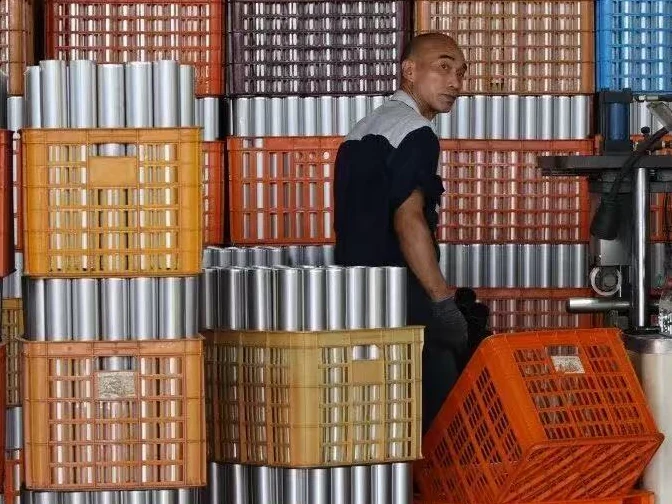


Liquid coatings can use different formulations and carriers, as described in PPG’s industrial liquid coatings overview. Ask which system is proposed for your cup; the process name does not identify its chemistry.
Compare both routes against the same appearance and use requirements. Spray painting applies a liquid coating; powder coating starts with dry powder. Neither process name alone guarantees the preferred hand feel, scratch resistance or cleaning performance.
Swipe across the table to compare both finishes.
| Decision | Spray painting | Powder coating |
|---|---|---|
| Colour and appearance | Assess the selected liquid coating, colour coverage and any gradient transition. | Assess the selected powder, colour, gloss and available surface texture. |
| Production sequence | Document preparation, coating layers and their drying or curing requirements. | Document preparation, powder application and the curing conditions for the part. |
| Logo and hand feel | Try the logo on the chosen painted finish and handle the complete sample. | Try the logo on the chosen powder-coated finish and handle the complete sample. |
| Cleaning and handling | Use the same agreed test conditions and acceptance criteria. Compare results for the complete decorated cup, not just the coating name. | |
If a specific gradient or hand feel is your priority, send that reference with the enquiry. Ask for a proposed finish in each route before comparing samples and quotations. Explore powder coating for drinkware.
The logo goes on after the paint. UV printing, screen printing and laser engraving all work on spray-painted bodies; send the artwork, size and position early, and the result is checked on the painted sample.
Discuss stencil detail, colour coverage and alignment. Verify that the ink and curing requirements suit the painted surface, then inspect the actual logo and define any adhesion checks. Explore screen printing.
Check the proposed ink layers, edges and surface feel on the actual finish. A colour match alone does not settle whether the raised or smooth feel is right for the product. Discuss the UV printing trial with your order contact.
Define the intended contrast and whether the trial removes the coloured coating to expose the metal. Inspect fine details and the edges of the mark on the actual cup. Explore laser engraving.
Prepare a decorated sample for each proposed method. The process and assembly photographs on this page do not establish logo compatibility or passed adhesion results.
A colour sample shows a mismatch before bulk production starts, as in this case.
BG Drinkware · colour review
How it was compared: the same light, a neutral background, the same viewing distance and colorimeter readings at the same points.
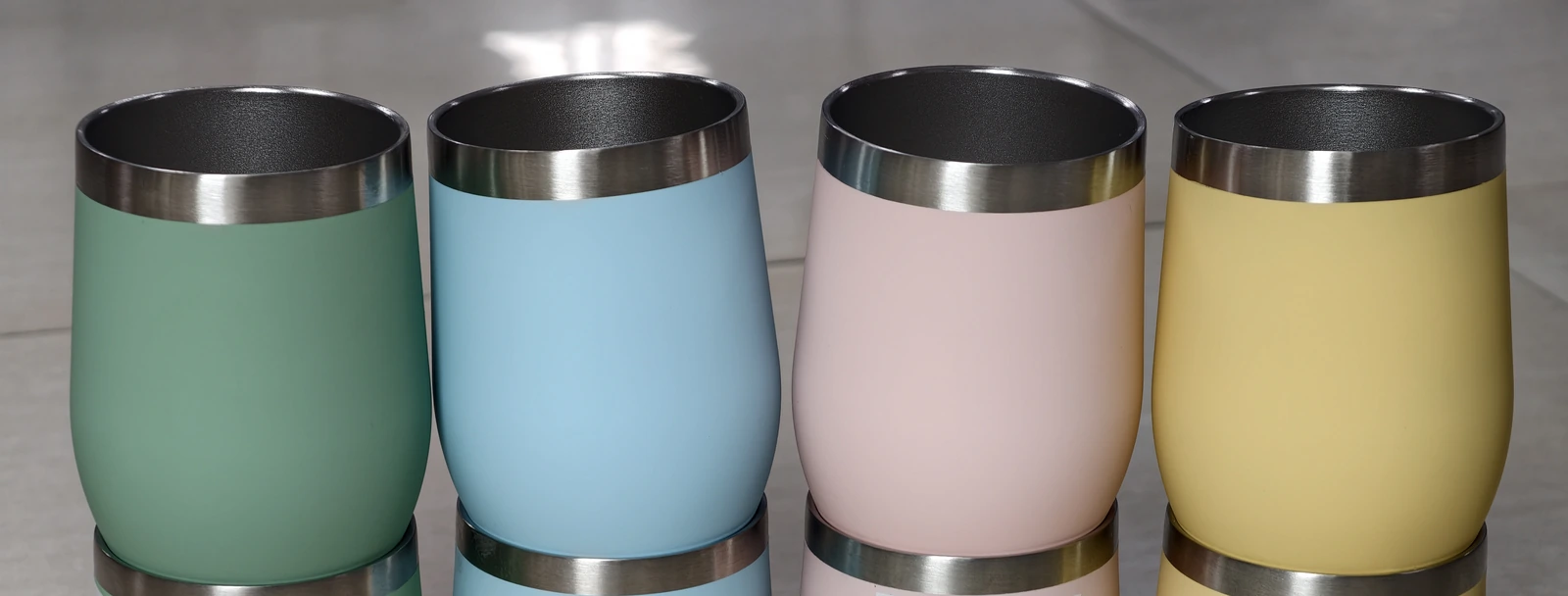
The case covers the green colour only, not the blue, pink or yellow samples, or adhesion and cleaning.
Selections are discussion items, not passed test results.
0 of 4 discussion items selected.
Cross-cut and dishwasher tests can be run on the sample on request. See quality control and sampling.
Spray painting for drinkware applies a liquid coating to the exterior of a cup or bottle. The coating system and application determine the colour and finish. For an order, define the surface, coating boundaries, gloss and any gradient, then inspect the actual decorated sample before authorising production.
A gradient can be requested. Send the intended colours, fade direction and transition position as inspection references. Document feasibility and final appearance on your cup model with a physical sample and an acceptable variation, rather than a screen image alone.
A logo can be considered on a spray-painted bottle, but the decoration must be trialled with the selected coating. Screen printing, UV printing and laser engraving need different checks. Provide the artwork, position and intended effect, then inspect detail, surface feel and relevant adhesion or handling results on the finished sample.
Not necessarily. Spray painting describes how a liquid coating is applied; it does not specify the hand feel. A smooth or matte appearance is not proof of a soft-touch finish. If touch matters, provide a physical reference and assess the proposed coating on the complete cup, including its logo.
Those properties cannot be established from the process name or a photograph. Specify the intended cleaning and handling conditions, tests and acceptance criteria for the complete decorated cup. Obtain the relevant results before making dishwasher or durability claims. Changes to the paint, logo or cup may require another inspection.
The standard minimum order is 500 pieces, negotiable, and some models start from 100 pieces per colour. A sample of an existing model takes up to 7 days, and bulk production takes 7–12 days after approval. To quote, send the quantity per model and colour, a colour reference, the logo, packaging, payment terms and trade terms.
For custom drinkware spray painting, send the details below to BG Drinkware. Mark undecided items so the finish, sample scope and quotation stay aligned.
Ask for the price of colour matching, the sample and any masking or logo work.
Your BG Drinkware salesperson handles the coating, the logo and the sample for the whole order.
Search BG Drinkware
Add us on WeChat

WeChat ID: +86 151 5891 9004
Open WeChat, tap + then Scan, and point it at the code.