HS Codes for Water Bottles and Tumblers: How Drinkware Is Classified
Whether a bottle is vacuum insulated, single wall or plastic changes where it sits in the Harmonized System, and that changes the duty you pay. Here is how the main headings divide drinkware, so you can brief your customs broker.
By Feng, Head of After-Sales Service & Online Marketing Lead
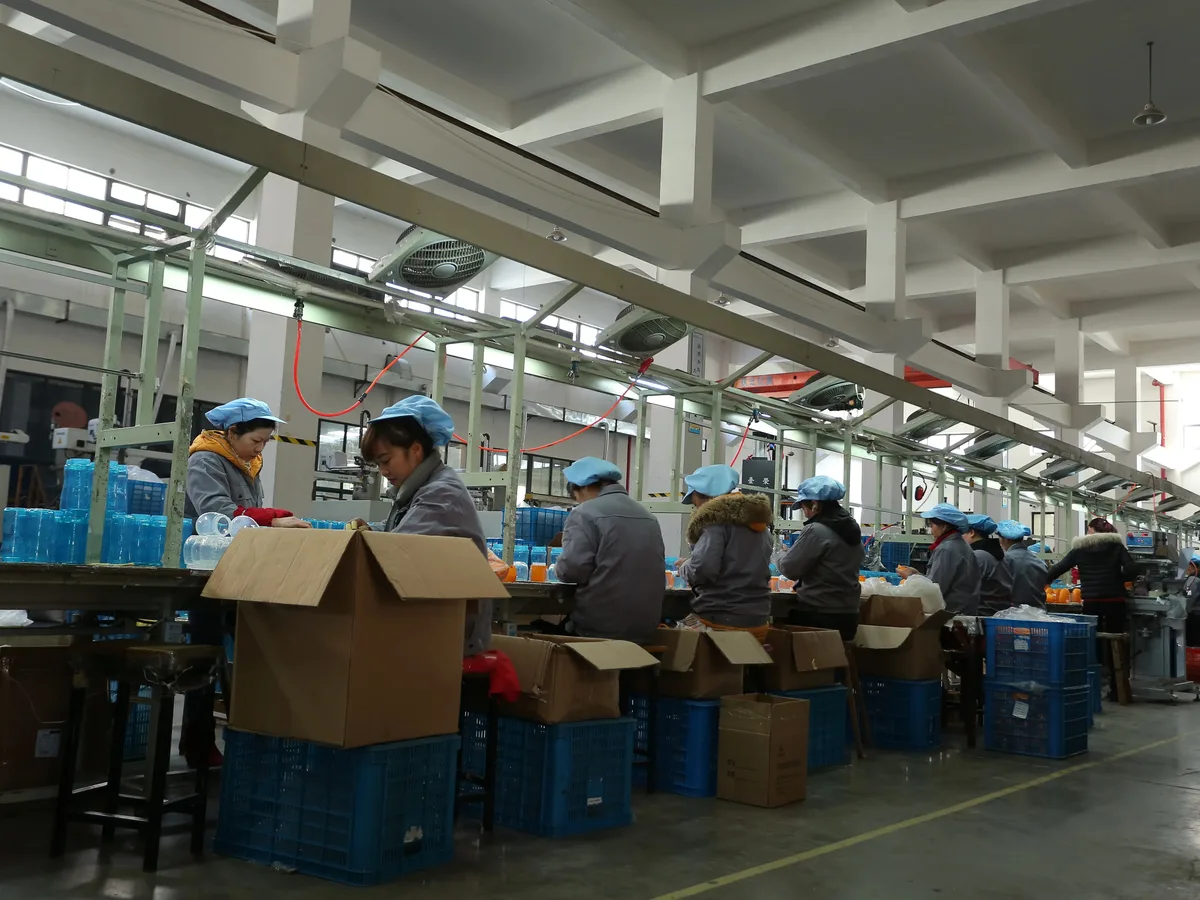
In the Harmonized System, a vacuum insulated water bottle or tumbler usually falls under heading 9617, "vacuum flasks and other vacuum vessels, complete", whatever its metal. In the United States, 9617.00 is split by capacity: up to 1 litre, over 1 litre up to 2 litres, and over 2 litres. Drinkware without a vacuum layer is usually classified by its material instead: stainless steel household articles under 7323.93, aluminium under 7615.10, and plastic tableware and kitchenware under 3924.10. The first six digits are shared internationally; each country adds its own digits and duty rates. BG Drinkware, a drinkware manufacturer in Yongkang, China, makes vacuum and single-wall drinkware from 120 ml to 4,000 ml in stainless steel, titanium, aluminium and plastic, so one order can span several headings. This guide explains the structure only. Your broker can advise on the full import code and duty. The importing country's customs authority makes the final determination.
How does an HS code work for drinkware?
An HS code is a product number used by customs worldwide. The first two digits are the chapter, four digits the heading and six digits the subheading, which are the same in every country that uses the system. Each country then adds its own digits for statistics and duty rates.
| Digits | Level | Example |
|---|---|---|
| 96 | Chapter | Miscellaneous manufactured articles |
| 9617 | Heading | Vacuum flasks and other vacuum vessels, complete |
| 9617.00 | International subheading | Same six digits in every HS country |
| 9617.00.10 | National tariff line | US line for vessels up to 1 litre |
Because the national digits differ, the same bottle can carry a different full code in the United States, the European Union and the United Kingdom.
Where do vacuum insulated bottles and tumblers go?
Usually under heading 9617, which covers vacuum flasks and other vacuum vessels, complete with their lid or stopper. The heading is defined by the vacuum construction, not the metal, so a stainless steel or titanium vacuum bottle is normally treated the same way. Parts other than glass inners have their own line.
| US line | Description |
|---|---|
| 9617.00.10 | Vessels with a capacity not exceeding 1 litre |
| 9617.00.30 | Vessels over 1 litre, not exceeding 2 litres |
| 9617.00.40 | Vessels over 2 litres |
| 9617.00.60 | Parts |
Use the six-digit heading as a starting point for the import review, and ask your broker to confirm the destination country's full code. State each model's capacity and vacuum construction in the product description. For construction details, see how vacuum insulated bottles are made.
How is drinkware without a vacuum layer classified?
Usually by its material. A single-wall stainless steel bottle, or a double-wall cup with no vacuum, is commonly classified as a stainless steel household article. Aluminium and plastic drinkware have their own headings. Titanium articles without a vacuum layer also fall under the material chapter, so ask your broker.
| Drinkware | Usual heading |
|---|---|
| Single-wall stainless steel bottle or cup | 7323.93, household articles of stainless steel |
| Aluminium water bottle | 7615.10, household articles of aluminium |
| Reusable plastic bottle or cup | 3924.10, tableware and kitchenware of plastics |
For how single and double wall differ, see double wall vs single wall water bottles; for aluminium bottles, see aluminium water bottles.
What about gift sets and mixed orders?
A gift set or a mixed shipment may contain items from several headings. Sets put up for retail sale have their own classification rules, and a mixed order normally lists each product on its own invoice line. Give your broker a clear product list with materials, construction and capacity for every item.
- Construction. Vacuum, double wall without vacuum, or single wall.
- Materials. Body, lid, straw and any sleeve.
- Capacity. In millilitres, for each model.
- Set contents. Every item in a gift box or set.
- Quantity and value. Per model and colour.
For gift sets and cups, browse our gift cups and sets.
What product details should you send to your customs broker?
Prepare one row per model with its capacity, body material, vacuum or non-vacuum construction, lid and accessories. Add the destination country and whether items are sold separately or as a retail set. The broker needs the actual product details to review the code.
- Choose the model and confirm its construction. A double wall alone does not establish that the space is a vacuum.
- Record capacity in millilitres. Compare labelled sizes in the tumbler size chart, then confirm the chosen model's specification.
- Send product photos and the contents of each set to the broker. BG provides a PI and detailed product photos and videos before shipment; agree any additional document requirements for the order.
- Ask the broker to check the full national code and applicable charges before the entry. Keep their review with the final product description.
Who decides the final HS code?
The import country's customs authority has the final say. Your customs broker can advise on classification and filing, while the importer remains responsible for the declaration. A manufacturer supplies the product description. For certainty on a proposed US classification, ask about a binding ruling before shipment.
In the United States, check the current USITC Harmonized Tariff Schedule. The 9617 capacity divisions below were checked against 2026 HTS Revision 23 on 11 November 2026. This guide does not quote a total duty rate: origin, entry date and additional measures can affect what is due. For export packing and order planning, see packaging and wholesale drinkware.
For country-of-origin marking, see where are YETI tumblers made?
Drinkware HS code FAQ
Short answers to the questions importers ask most about HS codes for water bottles and tumblers: which heading a vacuum bottle uses, whether material matters, how capacity affects the code and who confirms it. These answers explain the structure; your broker confirms the final code and duty.
What is the HS code for a vacuum insulated water bottle?
Usually heading 9617, vacuum flasks and other vacuum vessels, complete. In the United States, the line depends on capacity: 9617.00.10 up to 1 litre, 9617.00.30 over 1 litre up to 2 litres, and 9617.00.40 over 2 litres. Confirm the final code and duty with your customs broker.
Is a stainless steel tumbler classified as steel or as a vacuum vessel?
It depends on the construction. A vacuum insulated tumbler is usually classified under 9617 as a vacuum vessel. A single-wall tumbler, or a double-wall one without a vacuum, is usually classified by material, under 7323.93 for stainless steel household articles. State the construction clearly on the invoice.
Does capacity change the HS code?
In some countries, yes. The United States splits 9617.00 vacuum vessels into lines up to 1 litre, over 1 up to 2 litres, and over 2 litres, each with its own duty rate. List the capacity of every model on the commercial invoice so the broker can choose the right line.
Who confirms the HS code for my import?
The import country's customs authority makes the final determination. A broker advises and assists with the entry, and the importer is responsible for the declaration. Give the broker the model's construction, materials, capacity and set contents. For a proposed US classification, a CBP binding ruling can provide a decision before importing.
CBP Binding Ruling Program: pre-entry classification decisions for US imports.
Sources
Need product details for customs?
Send the destination country, model, capacity, construction and set contents. Ask for the product details your broker needs alongside the quotation.