Kids water bottle lid usability testing: record tasks before sample approval
Kids water bottle lid usability testing should produce a task-by-task sample record: what the reviewer tried, what happened without help, which instruction was needed, and what must change before approval. Tie the approval decision to a named bottle-and-lid version, with unresolved observations visible to reviewers.
Kids water bottle lid usability testing should end in a task-by-task record tied to one named bottle-and-lid version. Before reviewing, record the bottle model, lid version, supplied parts, sample date and instruction revision, and assign each task to the person expected to perform it. Observe opening, closing, locking, straw assembly and reassembly after cleaning as separate tasks, noting the prompt used, any help given and whether instructions were read first. Keep observations apart from suspected causes, and retest only against an identified revision. Adult reviews document adult handling; they do not establish that children can use the lid, or product safety and compliance, which need separate plans. BG Drinkware, a drinkware manufacturer in Yongkang, China, considers lid operation and parts assembly during design. Samples of existing models take up to 7 days, so plan the review and any retest before bulk approval.
Use the workflow below as a proposed buyer review. Initial handling and parts checks are for adult reviewers, and their findings must be labeled as adult observations. They do not establish suitability for children, product safety, or regulatory compliance. Intended-user research requires a separate plan and appropriate oversight; children must not perform small-parts, misuse, or destructive checks.
Define the sample and the task owner
Start by identifying exactly what is being reviewed. Record the bottle model, lid version, supplied parts, sample date and instruction revision. Photograph the assembled sample and the parts permitted to be removed. If the supplier cannot identify the lid version, resolve that gap before comparing observations or approving a change.
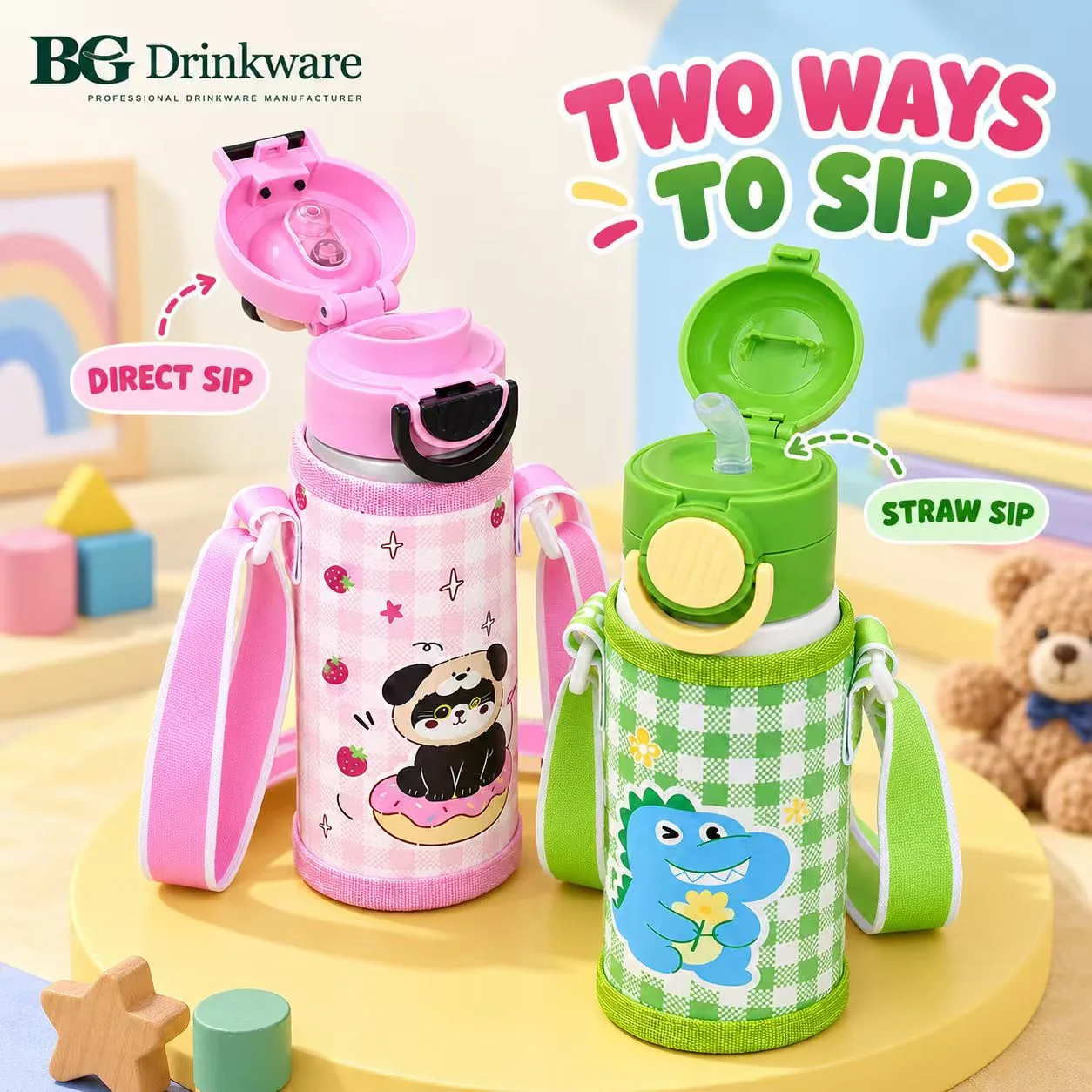
Assign each task to the person expected to perform it. Opening and closing belong on a different line from an adult's cleaning and reassembly tasks. Do not treat successful adult handling as proof that the intended child user can operate the lid. Review candidate structures in the kids water bottles and cups range, then agree the specific configuration through sampling.
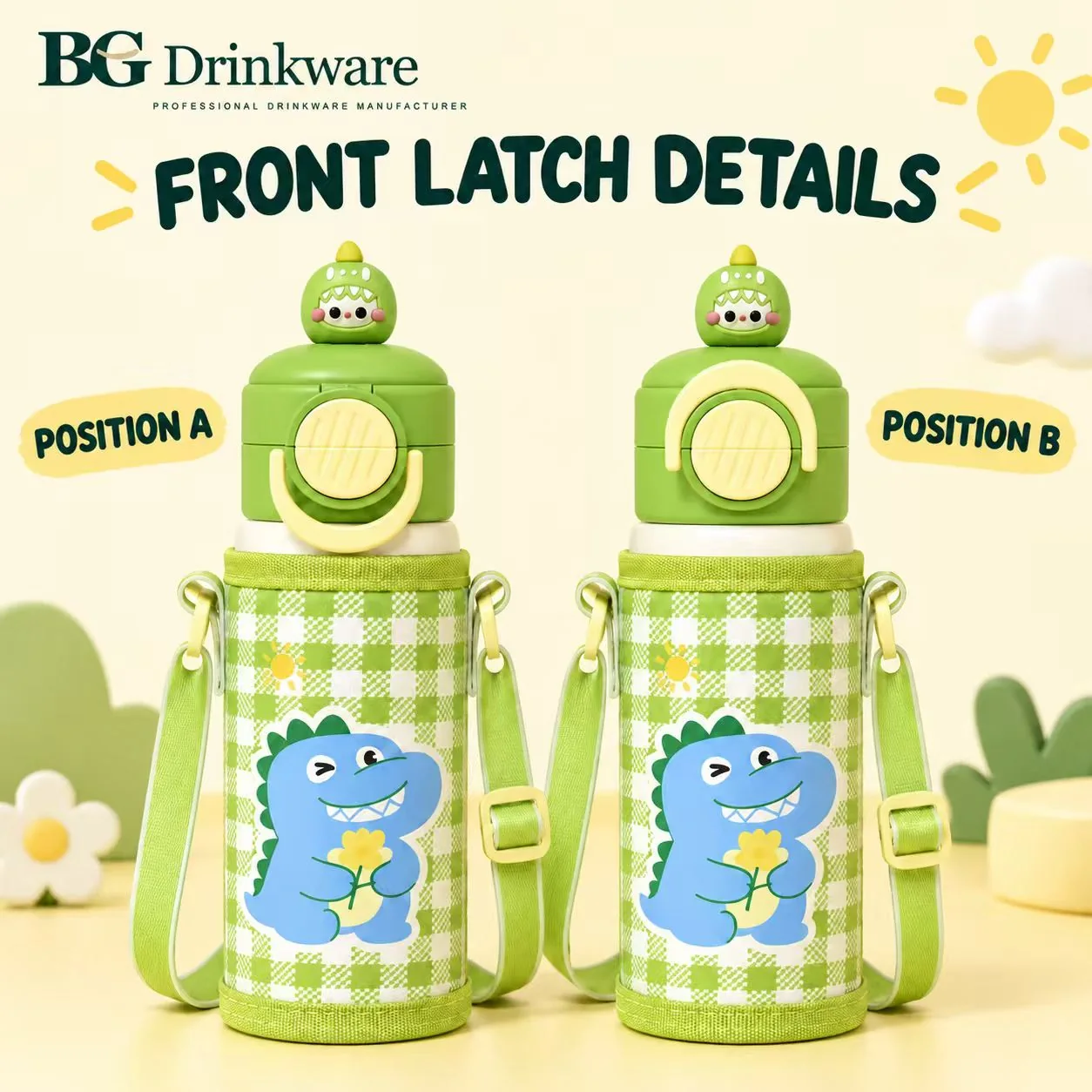
At BG Drinkware, we consider lid operation and parts assembly during design. We have not received customer feedback about hard-to-press buttons, locks that are difficult to open, reversed straws or parts that cannot be reassembled after cleaning. Review the selected sample against your project's tasks.
Observe separate lid tasks
For opening, closing and locking, record whether instructions were read before the attempt. Use a neutral prompt and record help provided. Record later explanations as separate assisted attempts. Follow model-specific instructions for all parts handling, and keep assembly observations separate.
The following table is a proposed recording template, not a test standard or a report of completed testing.
| Task | What the adult reviewer does | What to record |
|---|---|---|
| Open | Follow a neutral opening prompt at the recorded instruction stage | Grip changes, hesitation, help provided and opening action |
| Close | Close the lid at the recorded instruction stage | Incomplete closure, help provided and the cue used to judge closure |
| Operate the lock | Move the lock through its intended positions | Whether positions are distinguishable, any extra explanation, and the final observed position |
| Assemble the straw | Fit only the parts intended for routine assembly | Part orientation, uncertainty about seating, instructions consulted and help provided |
| Reassemble after cleaning | Follow the supplier's model-specific removal, cleaning and assembly instructions | Parts accounted for, sequence followed, uncertain placement and the final assembly check |
Swipe or scroll to view the full table.
Mark a task as not applicable when the chosen lid has no such feature. Do not invent a removable part or force a component out because another model comes apart. Agree separate methods and records for sealing or performance checks.
Make the observation record reusable
A useful record lets another reviewer understand the event without guessing what “difficult” meant. Include the sample and task IDs, starting configuration, exact prompt, reviewer role, observation, assistance given, photo or video reference, issue owner and next action. Note whether the observation occurred before or after the instructions were explained.
Separate what happened from the proposed cause. “Reviewer repositioned the bottle before reaching the latch” is an observation. “Latch position caused the problem” is a hypothesis until the team examines it. Keep the original entry when adding a supplier response or proposed correction.
For illustration only, an entry might read: “After reassembly, the adult reviewer asked which way the straw connector faced. The reviewer continued after consulting the diagram. Product team to review the diagram and assembly sequence before retest.” This is a fictional recording example, not a BG Drinkware customer result.
Use the finding to choose the retest
For kids water bottle lid usability testing, retest the unresolved task against an identified revision. State what changed, what stayed the same and which observation the new review must address. Preserve the earlier sample and record so a different part, instruction or starting condition cannot silently replace the original comparison.
Use these proposed decision routes:
- An instruction gap needs a revised instruction review, with the revised document attached to the record.
- An uncertain part fit needs the supplier to confirm the intended assembly before further handling.
- A changed component needs a revised sample identity and a review of affected tasks, including reassembly where relevant.
- A possible safety concern means stop the handling session, hold approval and refer the issue to the responsible product or compliance specialist.
Agree the retest scope and acceptance criteria before reviewing the revision. This guide sets no opening-force limits, cycle counts, pass rates or age bands. Adult comments alone cannot establish child usability or define a universal acceptance threshold. Coordinate any separate inspection requirements with the supplier through the quality control review.
Record a bounded approval decision
Close the review with a written disposition: accept the reviewed tasks for the stated sample, request revision and retest, or hold for further investigation. Include the approving roles, remaining questions and any limits on the decision. Keep child-user validation and required compliance work visible as separate items when they remain outstanding.
A lid revision may resolve one observation while creating work elsewhere. Ask whether the change affects assembly instructions, spare parts or the quoted sample schedule and cost. Confirm those effects before accepting the revision. For broader sourcing decisions, use the personalized kids water bottle buying guide; keep the task record attached to this specific model.
Buyer questions
Buyers reviewing a kids bottle lid usually ask these questions before approving a sample, covering adult reviews, supplier changes, opening actions and the sample request itself.
Can adult reviewers approve a lid for children?
Adult reviewers can document their own handling observations and identify questions for further review. Their results do not establish children's ability to use the lid. Keep any intended-user research, safety assessment and required compliance verification under separately agreed plans. State precisely which tasks and sample version the adult review covered.
What should happen when the supplier changes the lid?
Identify the revised lid and preserve the earlier record. Ask the supplier to describe the change, then agree which tasks need repeating and whether the instructions or supplied parts also changed. Approve the identified revision only after the assigned reviewers resolve the relevant observations; a new photograph alone does not close an operating issue.
Does an easier opening action mean the sample is ready?
An easier opening action addresses only that observation. Review the agreed closing and locking tasks, plus adult assembly and cleaning instructions where applicable. Record unresolved concerns and the limits of the review. A handling preference does not replace the separate safety, performance or compliance work required for the project.
What should a kids bottle lid sample request include?
Send the selected model, lid and parts photos, your task record, instruction files and any unresolved observations, together with the intended use, destination market and separate testing requirements. Ask which sample configuration and revisions can be supplied and what the quotation covers. At BG Drinkware, samples of existing models take up to 7 days.
Prepare a model-specific sample request
Send BG Drinkware your sample brief with the selected model, lid and parts photos, task record, instruction files and unresolved observations. Include the intended use, destination market and any separate testing requirements. Ask which sample configuration and revisions can be supplied, what the quotation covers, and what must be agreed before sample approval.