Water Bottle Lid Types for Bulk Orders: Compare Opening, Fit and Sealing
By Feng, Head of After-Sales Service & Online Marketing Lead
A bottle lid is more than the part a buyer opens to drink. It also determines how the user carries the bottle, how the closure meets the neck, which parts must be cleaned or replaced, and what the finished product can reasonably claim. A photograph of a cap is therefore a starting point for a bulk specification, not an approved lid design.
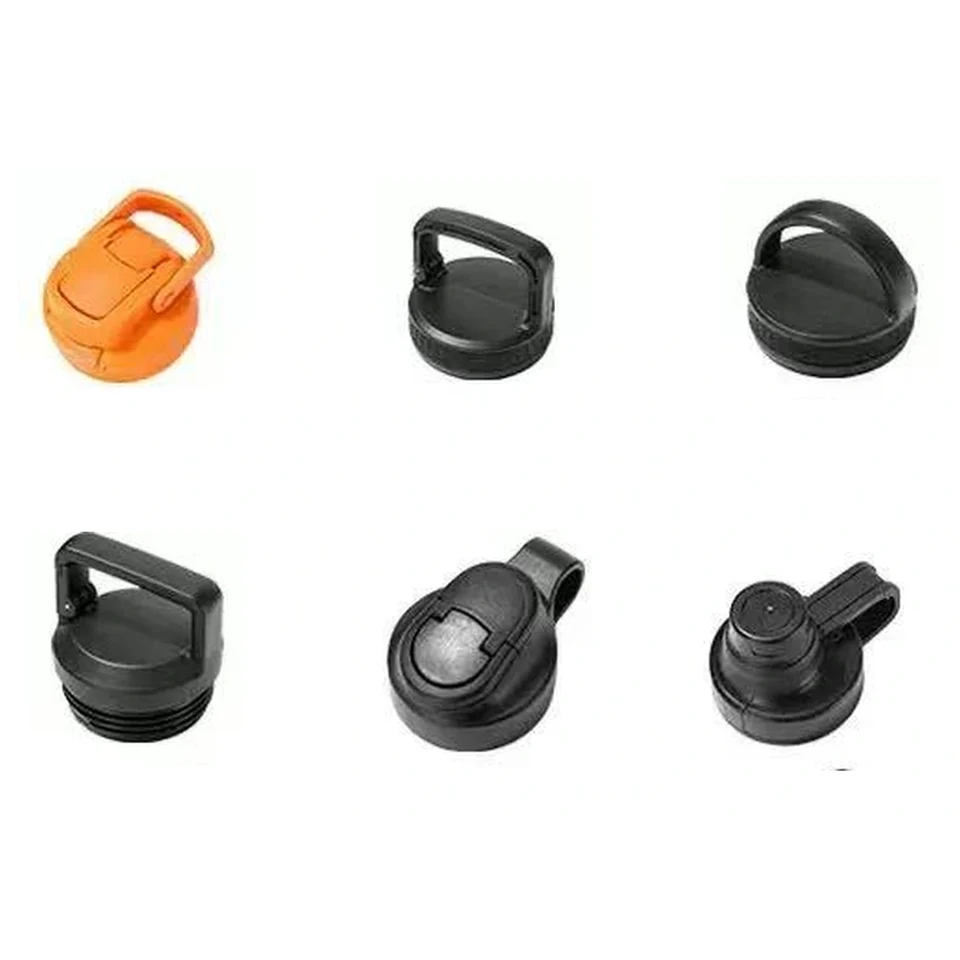
A water bottle lid type is defined by how the user opens the bottle and drinks from it, so buyers should compare the opening action first and the style name last. Four common options—a screw cap, a flip spout, a straw lid and a one-touch quick-open lid—can sit on similar necks (4 opening styles). Below the visible top, they can still use different seals, threads and drinking paths. BG Drinkware handles a broad range of lid models, some made in-house and some from outside suppliers, and rechecks diameter and thread whenever a lid changes. The dual-drink bottle with a sliding straw and the 600 ml quick-open bottle with straw and handle are product-specific examples. Their fit and care instructions should not be transferred to another body by appearance. Confirm four points on the assembled sample: neck diameter and thread, gasket and seal layout, permitted drinks and cleaning method, and carry-loop clearance. A change of lid can also change the quotation, the MOQ (standard 500 pieces) and the delivery plan.
Manufacturer-review basis: This guide reflects BG Drinkware product and order practices supplied for this article. Lid availability, inspection methods, material documents and final acceptance criteria remain model- and order-specific.
Which lid features should buyers compare first?
Start with the user's action rather than a style name. Does the user need to open the bottle with one hand, drink through a spout or straw, pour from a wider opening, or carry it by a built-in loop? Even two caps that look similar may use different parts below the visible top.
BG Drinkware handles a broad range of lid models. Some are made in-house and some come from outside suppliers, depending on the product. Buyers should ask which exact lid is included with the proposed bottle rather than assume every lid pictured in a catalogue is available for every body. The dual-drink water bottle with a sliding straw and the 600ml quick-open bottle with straw and handle are product-specific examples; their drinking mechanisms, fit and care instructions should not be transferred to another bottle by appearance alone.
Each row pairs a requirement with the detail to verify.
| Lid configuration to discuss | What it changes for the user | What to check on the actual sample |
|---|---|---|
| One-touch quick-open | Button or latch access | Release direction, accidental opening risk and whether the user can close it fully. |
| Screw-on or wide-opening cap | A removable closure and larger access opening | Neck and thread match, gasket seating and grip when opening. |
| Covered spout or flip lid | A protected drinking opening | Hinge, latch, drinking angle and cleaning access. |
| Straw lid, if offered on the chosen model | Drinking without tipping the bottle | Straw fit, removable parts, cleaning and permitted drink temperature. |
| Dual-drink lid, if offered on the chosen model | More than one drinking path | Both openings, their closures and all additional parts. |
This is a comparison framework, not a claim that every listed opening is offered on every BG Drinkware model. The buyer's selected sample and purchase order establish the actual configuration. Whatever the style, check carry-loop clearance, the seal layout and the care instructions for that exact version. For flip-top lids in detail, see flip-top water bottles.
Can two lids fit the same bottle mouth?
Sometimes they can, but a shared nominal mouth size does not prove a safe or reliable fit. BG Drinkware checks the mouth diameter and thread again when a customer changes lids. The assembled sample also needs to show whether the cap seats correctly, the gasket sits in its intended position and the lid closes without interference.
For a sourcing team, the practical rule is to record the bottle body and lid as one approved pair. Keep the model reference, neck drawing or measured mouth size, thread details, gasket specification and signed sample together. The water bottle sizes and dimensions guide explains which measurements to record for the complete bottle. If the body supplier, cap supplier or material changes, check the mating parts again before treating the new combination as equivalent. A cap that can be screwed on is not automatically a cap that passes the order's leak or opening requirements.
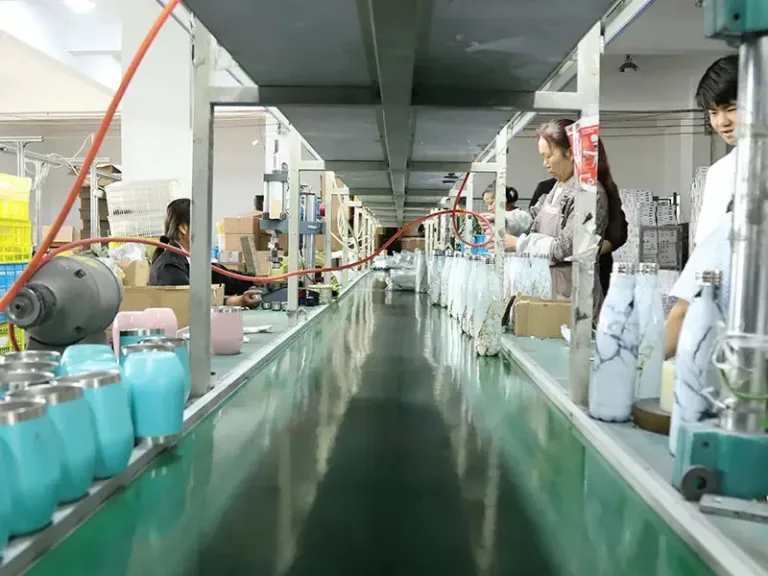
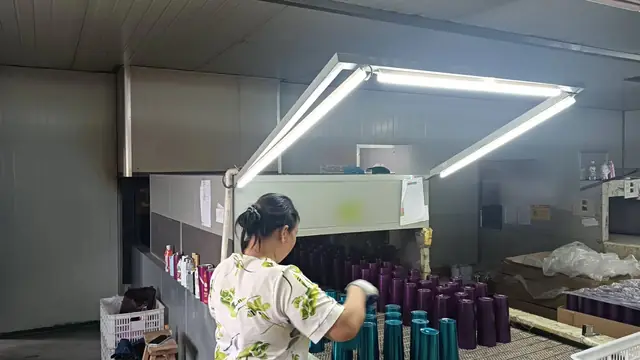
At the factory, lid parts are handled and assembled by model.
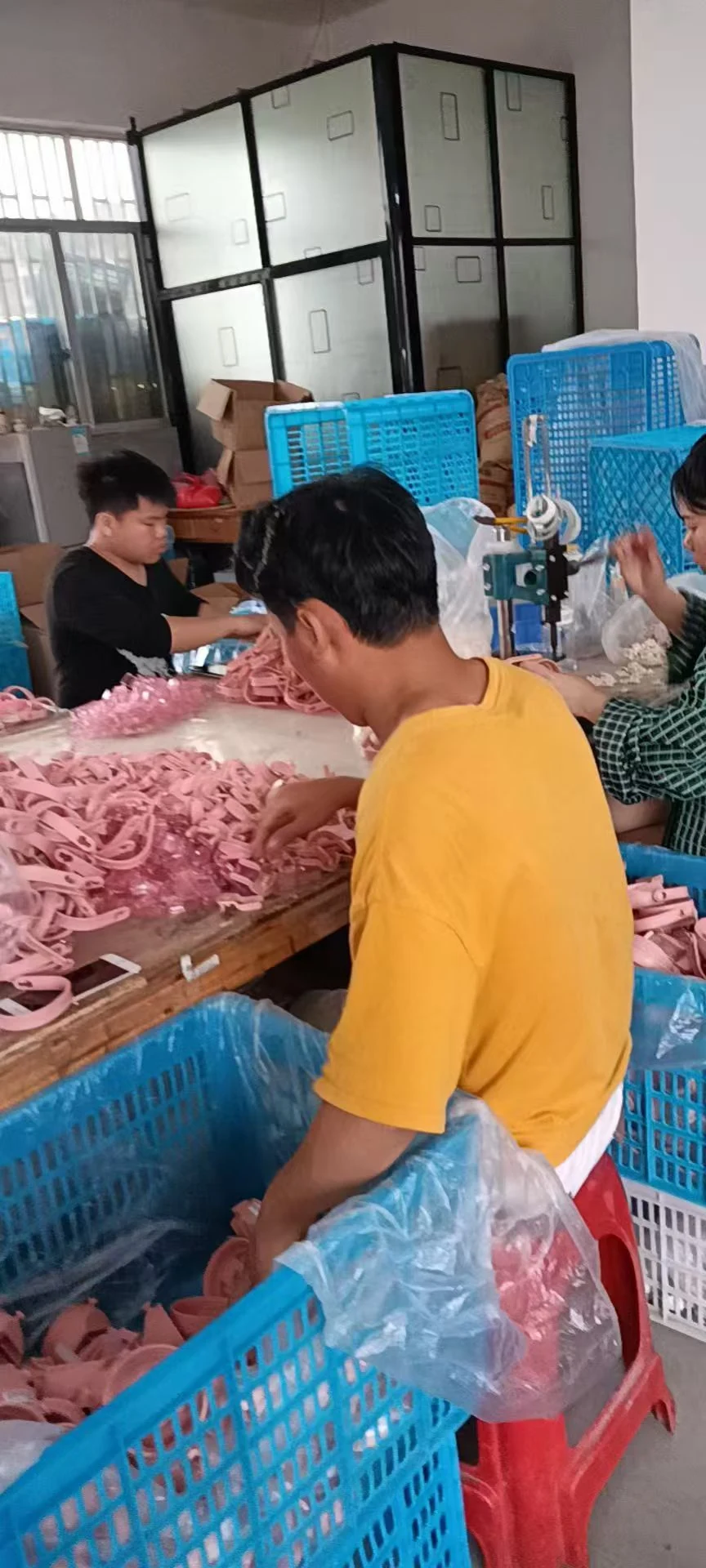
In the BG Drinkware product range, buyers can compare bottle formats before asking which lid-body combinations are available for a particular project.
Which materials and components belong in the lid specification?
Write the material against each component, not just against the lid as a whole. According to BG Drinkware's production experience, selected lid bodies may use PP, Tritan or AS, while many smaller accessories use PP. These are model-dependent choices, not a blanket declaration that every cap has the same material. Ask for the actual resin grade, supplier document and material description for the drinking surface, cap body, spout, straw if included, seal and carry part.
Material identity also has to match the intended conditions of use. The US FDA explains that food-contact status depends on the substances in an article and their authorized use conditions. For an order headed to a particular market, specify which documents or finished-product reports are needed and have the factory confirm their availability and quotation for the selected components. A generic “food-grade lid” label is not a substitute for a component-level record.
If the customer wants spare straws, seals or other parts, list their exact model references and quantities. BG Drinkware can arrange accessories with the order, but a spare part from a different cap version should not be assumed to fit.
How should leakage and splash risk be addressed?
Leakage and liquid spray are design questions to address before production, not problems to leave for final inspection. BG Drinkware considers these risks during lid design and selection. The buyer should still define the intended use. Will the bottle be carried in a bag or shaken in transport? Could it be opened after filling with a warm drink, or used by someone who may press the button accidentally?
Agree on a sample that includes the actual closure, gasket and drinking components. Then set any inversion, shaking, opening or other inspection procedure in the order: sample size, fill condition, closure method, test duration if relevant, and what counts as a failure. BG Drinkware arranges testing according to the order; this article does not imply a fixed test is performed on every model or every unit. The broader quality-control process can help frame the discussion, but the purchase specification must name the exact lid and acceptance criteria.
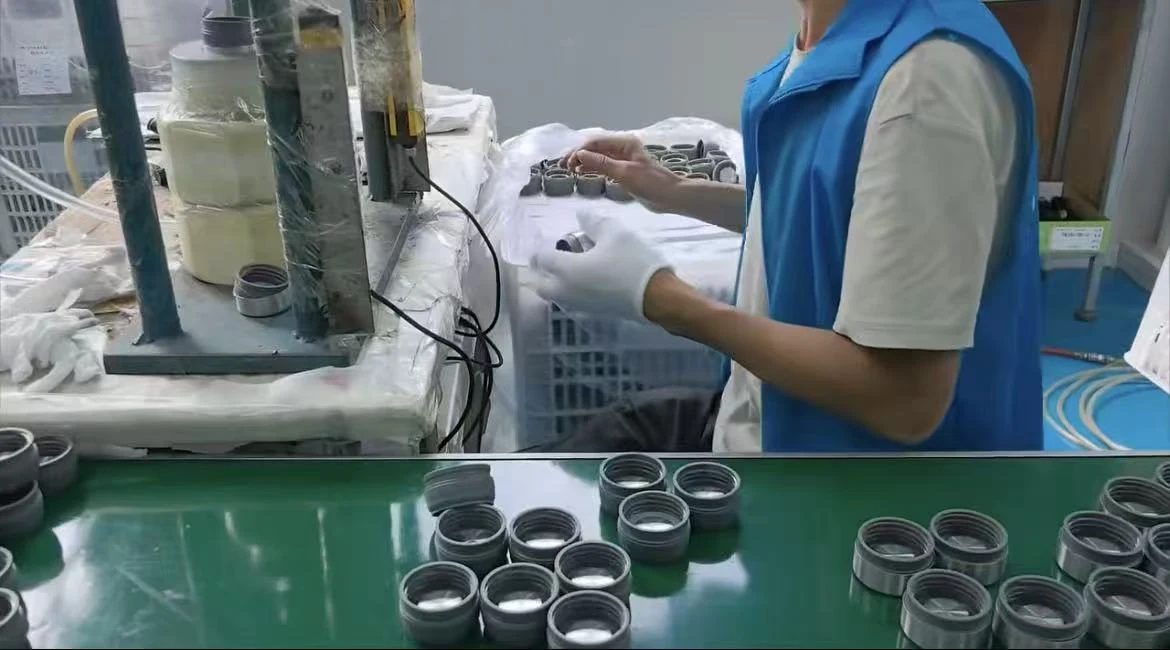
Assembly photographs help identify a work step, while inspection criteria and results must be recorded against the selected bottle-and-lid combination.
Can the same lid be used for hot drinks or put in a dishwasher?
Do not decide either point from the bottle body alone. BG Drinkware says many bottle projects can be configured for hot beverages, but the permitted use of a specific lid depends on its drinking path, opening behavior, materials and approved test plan. Ask what fill temperature and handling conditions the chosen model is designed for, especially if the lid has a spout or a one-touch release. A hot-drink statement belongs to the approved complete product and its care instructions, not to all lids in a range.
Dishwasher suitability is also model-dependent. Some configurations can support it; others may require different cleaning instructions. If the claim matters to the retailer, state whether it covers the cap alone or the whole bottle, what can be disassembled, and which wash cycle and appearance criteria will be used. Do not carry one model's cleaning claim into another order without checking the new parts and finish.
What changes in the quotation when the buyer changes lids?
A different cap may change component cost, assembly work, tooling or supplier arrangements, testing, minimum order quantity and lead time. BG Drinkware confirms those effects by order rather than using one universal lid surcharge or MOQ. This is why buyers should compare quotes that name the same lid version and accessory bundle.
Ask the supplier to separate the base bottle from selectable lid and spare-part options where the project calls for more than one configuration. If a new cap is requested after sampling, recheck the neck and thread as well as the pricing assumptions. An apparent “same bottle, different lid” request can still be a different finished product for quality approval.
What should a water bottle lid request for quotation include?
Send a single brief for the bottle and lid, with open decisions clearly marked. The goal is not to prescribe a test the factory has not agreed to perform; it is to make every comparison and quotation refer to the same product.
Each row pairs a requirement with the detail to verify.
| RFQ field | Buyer input to provide |
|---|---|
| Bottle and lid reference | Bottle model, capacity, selected cap photo or drawing, and approved sample reference |
| Fit | Mouth diameter, thread details and whether an alternative lid is requested |
| User experience | Opening method, drinking path, handle or loop, intended user and use setting |
| Components | Material by part, seals, spout or straw if included, and requested spare-part quantities |
| Use and care | Intended drinks, hot-use limit if relevant, disassembly and dishwasher requirement |
| Inspection | Agreed leak, splash, opening and other checks, with sample plan and acceptance criteria |
| Commercial terms | Quantity by lid version, color, packaging, target timing and required documents |
If the final lid has not been chosen, ask for alternative sample-and-quote options. BG Drinkware can review the actual project through a request for quotation, including which specifications must be fixed before a reliable bulk price and production plan can be given.
Water bottle lid FAQ: interchangeability, quick-open lids and spares
Are water bottle lids interchangeable if they have the same diameter?
Not automatically. Some models share a mouth size, but BG Drinkware rechecks the diameter and thread when changing lids. Gasket seating, closure and the order's performance requirements must also be reviewed on the assembled bottle.
Is a one-touch quick-open lid always leakproof?
No absolute claim follows from the opening mechanism. The design addresses leakage and accidental spray, but the buyer should approve the selected sample and agree on any order-specific inspection and pass criteria.
Can buyers order spare lid parts with a bulk bottle order?
Yes, BG Drinkware can arrange accessories with an order. Specify the exact lid version and the quantity of each spare part; do not assume parts from another version will fit.
Does a dishwasher-safe bottle mean its lid is dishwasher-safe too?
No. Confirm the care instructions for the chosen cap and body separately, then define any required dishwasher test for the complete product. Some configurations can support dishwasher use, but it is not a blanket claim for the full lid range.
Approve the lid and bottle as one product.
Send the bottle model, chosen opening, neck and thread details, target use, quantity, accessories and inspection expectations. BG Drinkware can review the feasible configuration before quoting.