Metal Water Bottles: Stainless Steel, Aluminium or Titanium?
“Metal water bottle” covers three quite different products. A stainless steel bottle can be vacuum insulated, an aluminium bottle is a light single-wall bottle with a lining, and a titanium bottle is a premium, lightweight option. Here is how they compare and what to put in an order.
By Feng, Head of After-Sales Service & Online Marketing Lead
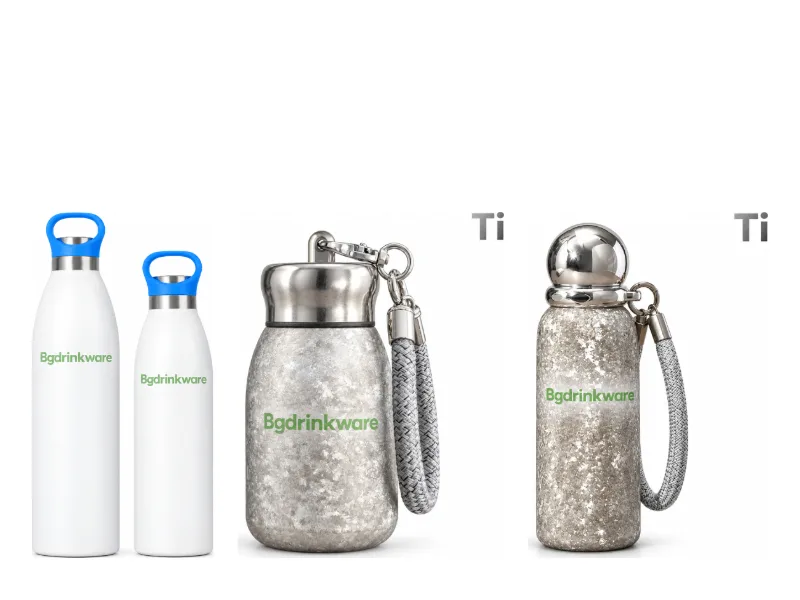
A metal water bottle is usually made of stainless steel, aluminium or titanium, and the three behave differently. Stainless steel is the most common: it can be double-walled with a vacuum to keep drinks hot or cold, and it takes coatings and most logo methods. Aluminium is light but single-walled, so it does not insulate, and it needs a lining inside. Titanium is light and strong and is used for premium gifts, at a higher price. BG Drinkware, a drinkware manufacturer in Yongkang, China, makes all three: insulated stainless steel bottles with a 304 inner wall and a 201 outer wall as standard, single-wall aluminium bottles with a resin inner coating in 500 ml and 750 ml, and pure titanium bottles from 150 to 800 ml. For any metal bottle, ask which material touches the drink, what the lining or coating is, and which parts a test report covers. The standard minimum order is 500 pieces per colour, negotiable.
What are metal water bottles made of?
Three metals cover almost every metal bottle: stainless steel, aluminium and titanium. Stainless steel is used in single-wall and vacuum-insulated bottles; aluminium in light single-wall bottles with an inner lining; titanium in premium single-wall and double-wall bottles. The lid is usually plastic or silicone, whatever the body.
| Stainless steel | Aluminium | Titanium | |
|---|---|---|---|
| Walls | Single or double with vacuum | Single | Single or double |
| Keeps drinks hot or cold | Yes, when vacuum insulated | No | Yes, on vacuum models |
| Inside the bottle | Bare steel, or a ceramic lining on some models | A lining over the metal | Bare titanium |
| Weight | Heaviest of the three | Light | Light |
| At BG Drinkware | 304 inner, 201 outer as standard; 316 inner, 304 outer on request | Single-wall, resin inner coating, 500 and 750 ml | Pure titanium, single and double wall, 10 models from 150 to 800 ml |
For each material in depth, see stainless steel drinkware, aluminium water bottles and titanium drinkware.
Is stainless steel or aluminium better for a water bottle?
For keeping drinks hot or cold, stainless steel, because it can be built with two walls and a vacuum between them; an aluminium bottle has one wall and does not insulate. Aluminium is lighter and suits cold water on the move. Stainless steel is the more versatile choice for most branded bottles.
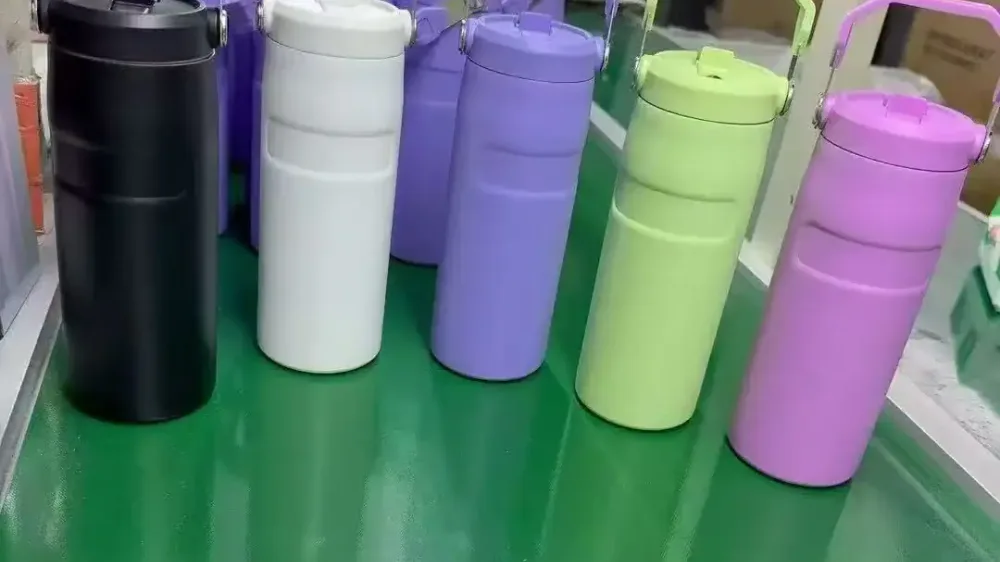
An aluminium bottle needs a lining because the drink should not sit on bare aluminium; at BG Drinkware the aluminium bottles have a resin inner coating. A stainless steel bottle can be bare inside. If the lining matters to your customers, ask for its material and test it on the sample. See double-wall vs single-wall bottles and how insulated bottles work.
When is a titanium water bottle worth the price?
When a light, strong bottle and a premium feel matter more than price. Titanium bottles are lighter than steel ones and suit gift sets, tea bottles and outdoor kits. They cost more than steel, so most brands use titanium for a premium line rather than as a standard bottle. Vacuum titanium models also insulate.
BG Drinkware makes pure titanium drinkware in single-wall and double-wall versions: 10 models from 150 to 800 ml, including a 360 ml vacuum flask and 480 ml tea-filter bottles. The minimum order is 500 pieces per colour, negotiable. Examples: the 360 ml titanium vacuum flask and the 280 ml titanium bottle with a braided strap. See titanium vs stainless steel.
Are metal water bottles safe to drink from?
A well-made metal bottle is safe when the part touching the drink is a suitable food-contact material and the bottle passes the tests your market requires. Check three things: which material touches the drink, what the lining or coating is, and which parts a test report actually covers, because reports often exclude lids.
- Inner wall: at BG Drinkware the standard inner wall is 304 stainless steel, with 316 as an upgrade.
- Vacuum seal: BG Drinkware seals the vacuum with lead-free sealing beads in a vacuum furnace.
- Test reports: BG Drinkware’s 2025 food-contact reports from Ningbo GIG Testing cover the 304 inner wall of two tumbler models; they are not FDA reports and do not cover lids, straws, seals or coatings.
- New tests: run them on the finished bottle for your order, including the lid, if your market needs it.
See non-toxic water bottles, lead-free tumblers and certifications.
Which logo methods work on a metal water bottle?
It depends on the surface. Bare stainless steel takes screen printing and laser engraving. A soft-touch coated bottle takes UV printing, screen printing and laser engraving. A full-wrap photo print needs a sublimation coating. Laser engraving on a coated bottle removes the coating to show the metal underneath.
Logo prices start from about US$0.035 per piece for screen printing or laser engraving, about US$0.20 for UV printing and about US$0.15 for sublimation, depending on the design. See customisation and engraved water bottles.
What should you specify when ordering metal water bottles?
Name the material of each wall, the lining if there is one, the capacity, the lid, the colour, the logo method, the packaging, the payment terms and the trade terms. Ask which parts any test report covers, and for insulated bottles, how the bottles are checked before shipping.
- Material by wallFor example 304 inner and 201 outer, or 316 inner and 304 outer.
- Capacity and lidCapacity in millilitres and the lid model.
- Finish and logoCoating, colour reference and logo method.
- ChecksEvery vacuum bottle is temperature-checked on BG Drinkware’s testing machine; heat-retention tests at 95°C for 6 hours run on samples and as spot checks on bulk.
- TermsQuantity, packaging, payment terms and trade terms.
A sample of an existing model takes up to 7 days, and bulk production takes 7–12 days after the sample is approved. See water bottles.
Metal water bottle FAQ
Short answers to the questions buyers ask most about metal water bottles: whether they keep drinks cold, how to clean them, and whether they can be frozen or put in a dishwasher. The answers come from BG Drinkware’s production practice and after-sales experience.
Do metal water bottles keep water cold?
Only if they are vacuum insulated. A double-wall stainless steel or titanium bottle with a vacuum between the walls keeps drinks cold or hot. A single-wall bottle, including every aluminium bottle, does not insulate, and the outside will feel the temperature of the drink and may sweat with cold water.
Can metal water bottles go in the dishwasher?
Stainless steel and most surface coatings can generally go in a dishwasher, in BG Drinkware’s experience. Special builds with a steel outside and a plastic inside held by glue may come apart. For a dishwasher claim on a branded bottle, run a dishwasher test on the finished sample, including the lid and print.
Can you put a metal water bottle in the freezer?
Not a vacuum-insulated one. Freezing can break the vacuum, which cannot be repaired, and the temperature change can harden seals or deform the inner wall. The vacuum also blocks the cold, so the drink barely cools. Chill drinks in the fridge before filling, or add ice instead.
Which metal water bottle is lightest?
Aluminium and titanium bottles are both lighter than stainless steel ones. Aluminium is the lighter metal, while titanium is stronger and is used in premium designs, so the lightest bottle depends on the wall thickness and the design. Compare the weights listed for the exact models, and remember that an insulated bottle has two walls.
This guide is based on BG Drinkware’s production practice and product range. Related guides: stainless steel vs plastic bottles, metal water bottles on a plane and freezing a stainless steel bottle.
Choosing a metal bottle?
Send the material, capacity, quantity, model, colour, logo method, packaging, payment terms and trade terms.