Lead-Free Tumblers: Where Lead Can Hide in a Vacuum Tumbler and How Buyers Check It
Stainless steel itself is not the usual lead question in an insulated tumbler. The question sits under the base, in the material some factories use to seal the vacuum, and on the coatings and parts added after it.
Some vacuum insulated tumblers contain lead because their design closes the vacuum opening in the outer base with a lead-bearing sealing material hidden under a stainless steel cap. In the US, accessible components of children’s products face a 100 ppm total lead limit under the applicable CPSC rules cited in this article. In one long-used method, the air is removed from the gap between the inner and outer walls in a furnace, and a sealing material melts and sets to close the opening. Stanley states that its vacuum-sealing pellet contains lead and is covered by a stainless steel layer, while its consumer-contact and drink-contact surfaces do not contain lead; that describes one manufacturer’s construction, not every tumbler. A body specification such as 304 or 18/8 stainless steel does not identify the sealing material. BG Drinkware confirms that its process uses lead-free melt-sealing material with a compatible vacuum-furnace process. For a complete lead-free order, buyers should also specify the coating, printed decoration and accessories, then agree the test method and limits.
Why do some vacuum insulated tumblers contain lead?
Some vacuum tumbler designs use a lead-bearing seal beneath the outer base cap. A stainless steel body specification alone does not identify that sealing material.
A double-wall tumbler needs the air removed from the gap between its inner and outer walls. One long-used method leaves a small opening in the outer base, evacuates the body in a furnace, and closes the opening with a sealing material that melts and sets. Some sealing materials contain lead. The seal is then hidden under a stainless steel button or cap.
Stanley states that its vacuum-sealing pellet contains lead and is covered by a stainless steel layer; it also states that consumer-contact and drink-contact surfaces do not contain lead. This describes that manufacturer’s construction, not every tumbler (Stanley product FAQ).
Does lead in a tumbler’s base seal touch the drink?
In a sealing-dot design, the lead-bearing seal sits on the outer wall, outside the liquid path, and is normally covered by a cap.
The seal is separate from the intended liquid path, but a damaged or missing cover changes accessibility. Do not remove a base cap to inspect a cup at home. If it is damaged, stop using the product and ask the manufacturer for its product-specific guidance.
For a brand buying in bulk, the practical question is different from a consumer’s. Ask whether the design needs a lead-bearing seal at all. Avoiding lead in the seal addresses that component, but it does not settle coating, accessory or finished-product compliance questions.
For the Stanley case specifically, see do Stanley cups have lead?
How does BG Drinkware seal a vacuum tumbler without lead?
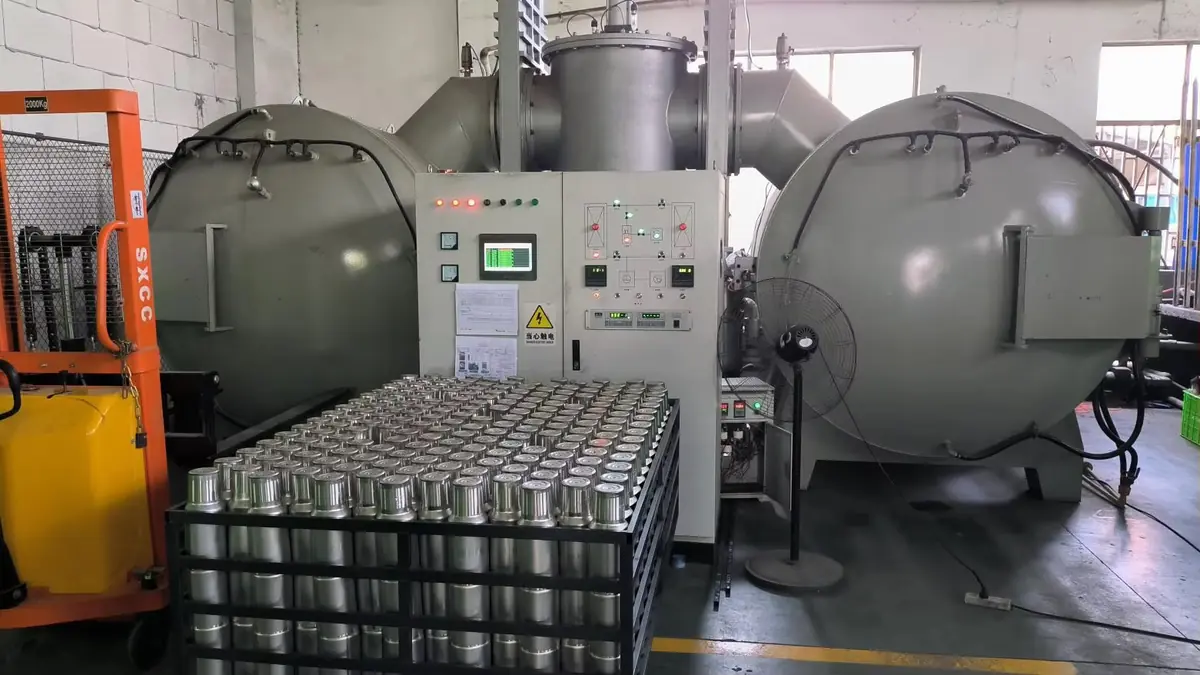
BG Drinkware confirms that its process uses lead-free sealing material that melts to close the vacuum opening, together with a vacuum furnace capable of meeting that material’s processing requirements. Buyers should request the material specification and the approved processing conditions for the selected model. A furnace that does not meet the material’s processing requirements may fail to produce the intended joint or vacuum performance; that is not, by itself, a measurement of lead content.
A getter, if used, captures residual gas; it is not the melt-sealing material discussed here.
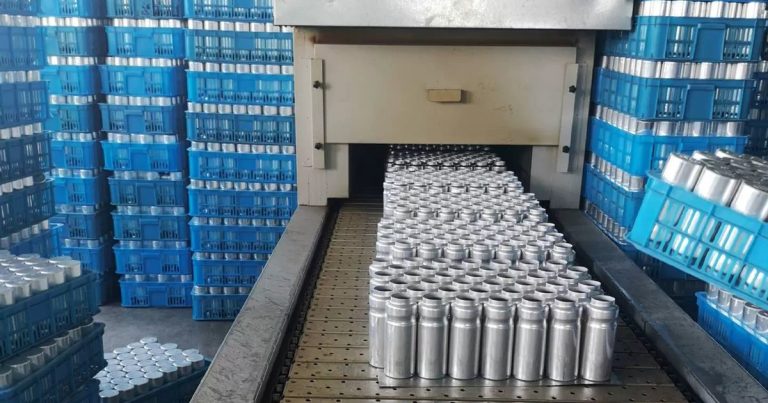
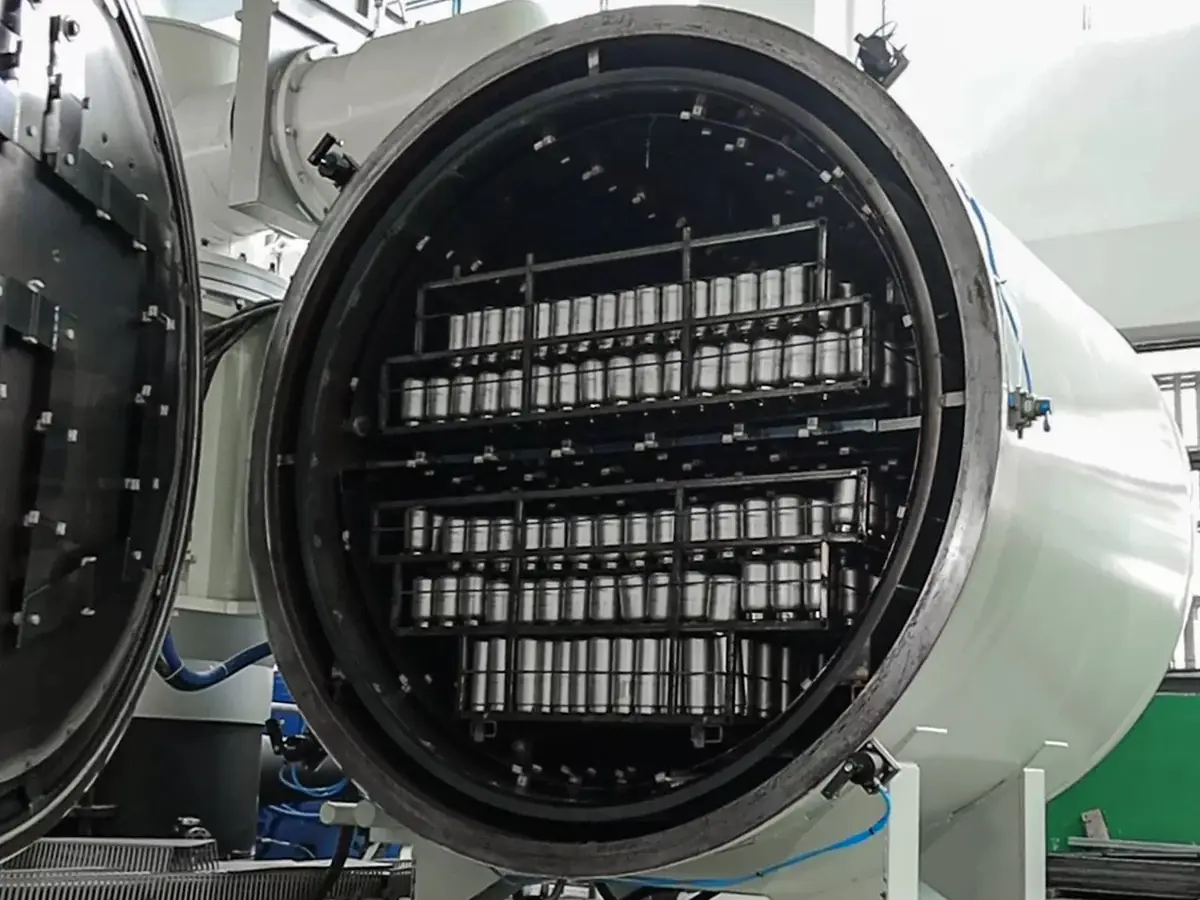
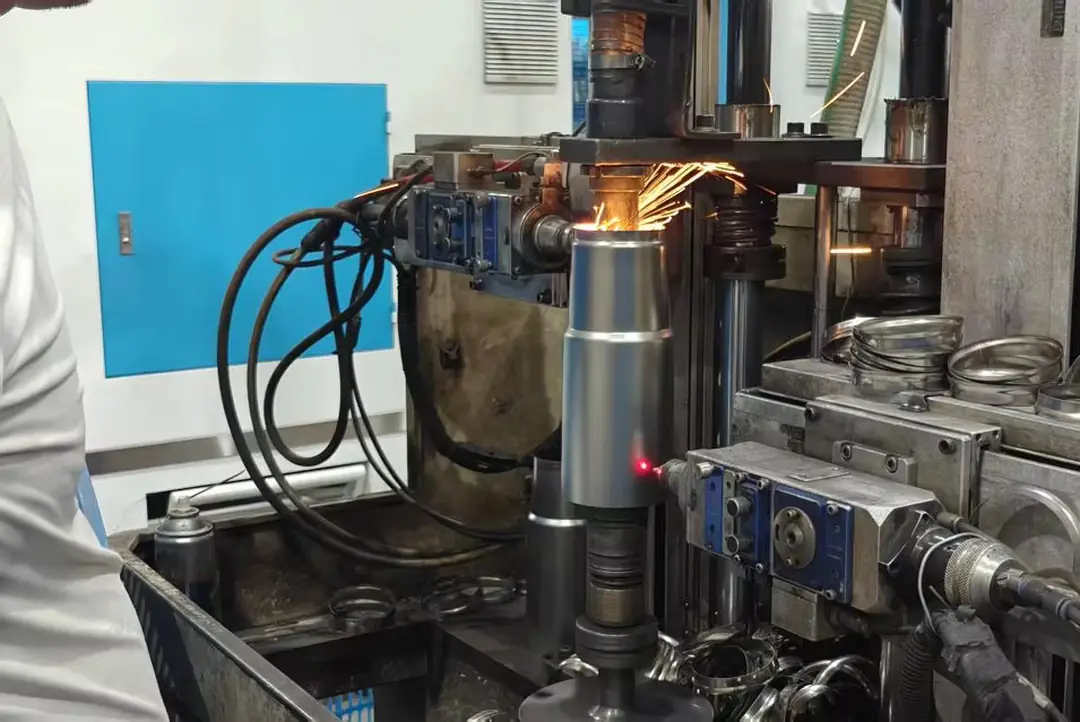
Material selection and furnace processing are parts of the vacuum route. BG Drinkware’s supplied manufacturing notes describe forming and welding the stainless steel bodies in-house, then evacuating them in vacuum furnaces like the ones below. Temperature checks follow after vacuum processing and again after polishing, as described in our guide to how insulated water bottles work. A body that fails the vacuum check is scrapped, not patched.
Is a lead-free tumbler body enough to make the whole tumbler lead-free?
No. A lead-free vacuum seal covers one component. Paint, powder coating, printing ink, solder on fittings and the lid’s materials each need their own answer.
A tumbler is an assembly. A stainless steel body specification is not a specification for its coatings or fittings. Define what the lead-free claim covers and agree the test method, component scope, acceptance limits and reporting limits; a non-detect result does not mean an absolute zero concentration.
Ask how the vacuum opening is closed, which sealing material is used and how the process is validated for that material.
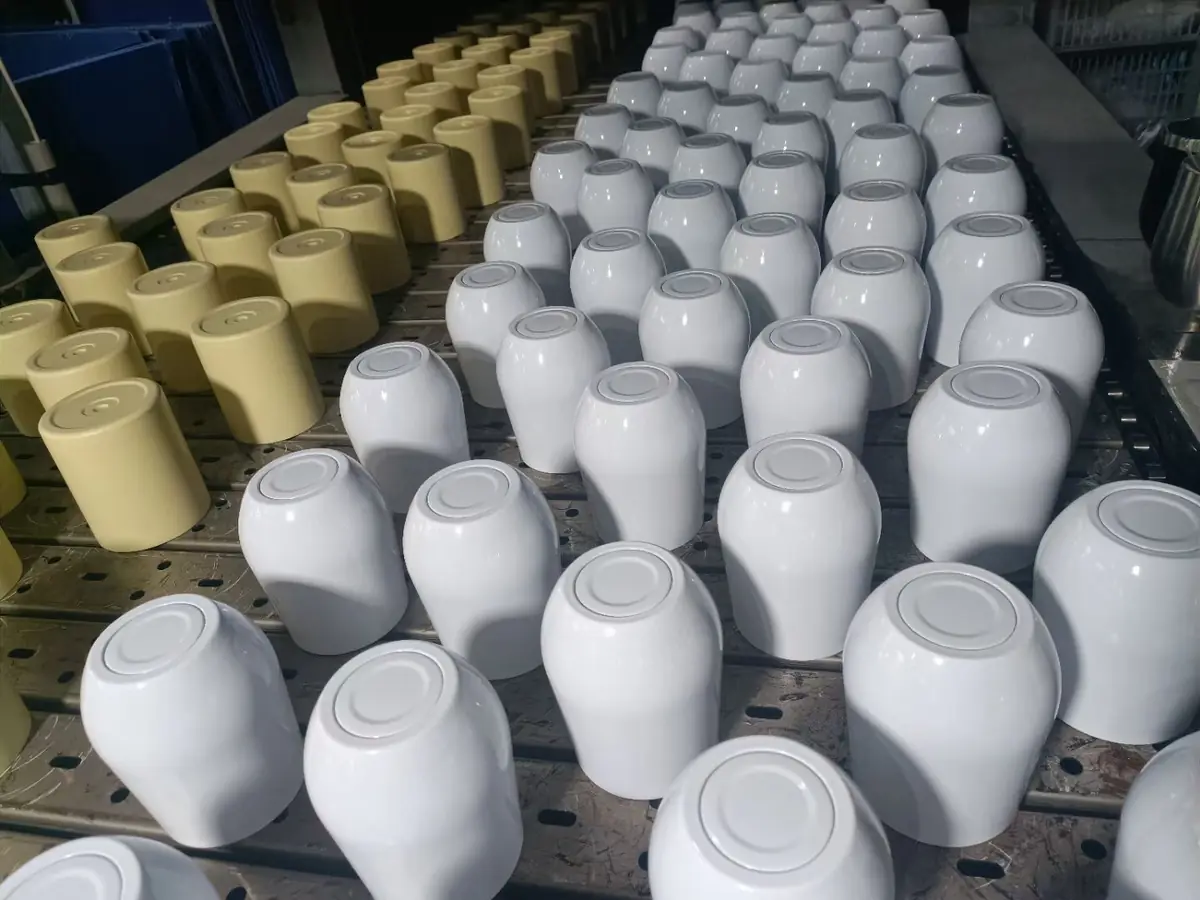
Pigments and coatings are separate materials from the steel. Name the coating system in the specification.
Screen-printing and UV inks have their own formulations. A laser-engraved logo adds no ink at all.
Plastic and silicone parts have their own material documents. See our BPA-free bottle guide for how to match a report to a part.
Which lead rules apply to tumblers sold in the US?
US lead rules depend on who the product is for and which part is tested, so a tumbler can be covered by different limits than a child’s cup.
| Rule | What it says | Why it matters for a tumbler order |
|---|---|---|
| CPSIA total lead content | Accessible components of children’s products are subject to a 100 ppm total lead limit. Accessibility must be assessed under the applicable rules, not assumed from the presence of a cap (CPSC total lead guidance). | Relevant if the tumbler is designed or marketed for children. Confirm whether a capped base seal counts as accessible for your product. |
| 16 CFR 1303 lead paint | Paint and similar surface coatings above 0.009 percent lead are banned on toys and other articles intended for children, and on consumer furniture (CPSC lead-in-paint guidance). | The coating on a kids’ tumbler falls under this limit. Do not automatically apply this children’s-product rule to every adult tumbler; confirm the product scope with your compliance team. |
| California Proposition 65 | Lead is listed because it can cause cancer and birth defects or other reproductive harm. Businesses must determine whether a warning is required (OEHHA fact sheet). | Warning decisions concern exposure and applicable exemptions, not a universal product-content pass mark. Replacing a lead-bearing seal does not automatically resolve every Proposition 65 obligation. |
Swipe the table sideways to see all columns.
This table is a starting point for discussion with your compliance team, not legal advice. Destination market, product category and intended user decide which rules apply.
What should buyers ask a factory to prove a tumbler is lead-free?
Ask for evidence that matches your exact model and order, from the sealing method up to a report on the finished parts.
- A written sealing methodHow the vacuum is created and sealed, the sealing material specification, any getter used and the processing conditions for the selected model.
- A component listBody steel, base cap, coating, ink, lid, straw and gasket, each with its material. The water bottle lid guide shows how to list lid parts.
- A screening check on the sampleAsk a qualified laboratory whether XRF screening is suitable for the material and test question. A surface reading cannot establish the composition of a hidden seal behind a cap; sampling and the required test method must cover the actual component.
- A third-party test for your marketName the standard, parts, acceptance limits and laboratory requirements in the order. The report should identify the tested model and colour. Screening alone does not replace required compliance testing or certification.
- Change controlAgree that any change to the sealing method, coating or lid material is notified and re-checked before bulk production continues.
Can you tell if a tumbler is lead-free by looking at its base?
Not reliably. A cap can hide a sealing dot, and a clean-looking base says nothing about the coating or lid.
Visual checks help only to spot damage, such as a missing or loose base cap. Lead content is confirmed by the factory’s process documentation and by testing, not by appearance. That is why the evidence list above starts with the sealing method rather than a photo of the base.
Lead-free tumbler FAQ
Is stainless steel itself a lead risk in tumblers?
A steel grade alone does not establish the lead content of the assembled tumbler. Check the base seal, coatings and printed decoration as well as the body material. Ask about each component, not just the steel grade.
How should a BG Drinkware lead-free order be specified?
BG Drinkware confirms the use of lead-free melt-sealing material and a compatible vacuum-furnace process. Confirm the selected model’s seal, coating, decoration and lid components in writing, together with the evidence and acceptance criteria for the intended market. The process description is not a test report for every configuration.
Does furnace temperature prove that a tumbler is lead-free?
No. The furnace must meet the sealing material’s processing requirements, but temperature is a process parameter, not a lead-content test. Verify the material specification and agreed test evidence separately.
Does one report cover every colour and accessory?
Do not assume so. Match the report’s sample identification and tested components to the ordered configuration. Ask the laboratory whether changes in coatings, decoration or accessories require additional evidence.
Do lead-free water bottles use the same process as lead-free tumblers?
The vacuum-sealing question is the same for any double-wall stainless steel bottle or tumbler. Ask the same questions about the base seal, coating and lid whichever shape you are buying.
Can BG Drinkware provide a lead test report?
Testing is arranged per order. Many buyers test samples or production units through their own lab. If you need testing as part of the order, tell us the destination market, the standard and the parts to test, and we will confirm it with the quotation.
Sources
Specify a lead-free tumbler before you sample it
Send the tumbler model, coating, logo method, lid, destination market and any test standard you need. BG Drinkware will review the material and process requirements, the evidence available for the configuration and any order-specific testing needed.