Drinkware Manufacturer vs Trading Company: How to Tell and Choose
Many drinkware suppliers describe themselves as manufacturers. Some make the core of the product themselves, some buy finished goods from several plants, and many sit in between. Here is what the difference means for a brand, how to check it, and when each kind of supplier is the better fit.
By Feng, Head of After-Sales Service & Online Marketing Lead
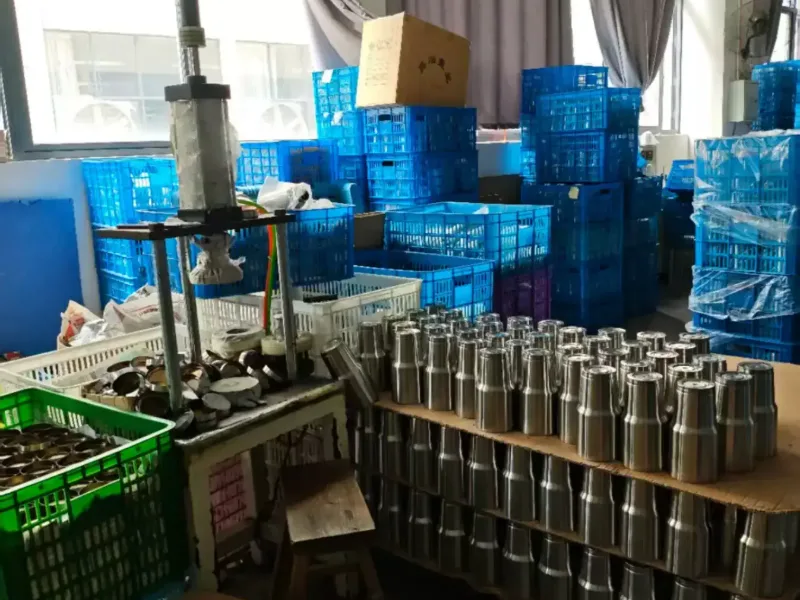
A drinkware manufacturer makes the core of the product itself: for an insulated bottle, that means forming the steel bodies, welding the walls, sealing the vacuum and testing it. A trading company buys finished or part-finished goods from one or more plants and resells them, often with its own sourcing, quality and export service. Many suppliers sit in between, making the body in-house and using partners for some finishes, lids or packaging. The useful question is not the label but which steps the supplier controls and who answers for a fault. BG Drinkware, a drinkware manufacturer in Yongkang, China, forms, welds, vacuum-seals, temperature-tests and powder-coats in-house, and uses coating partners for spray paint, sublimation and soft-touch finishes, checking their work on return. Ask any supplier the same question, which processes are yours, and check the answer on a production video call or a site visit.
What is the difference between a manufacturer and a trading company?
A manufacturer owns the main production steps and the equipment for them; a trading company owns the customer relationship and buys the product from plants. Both can supply good drinkware. The difference shows in price build-up, in how directly you can change the product, and in who controls quality at each step.
| Manufacturer | Trading company | |
|---|---|---|
| Core production | In-house | Bought from plants |
| Product changes | Discussed with the people who make it | Passed on to the plant |
| Range | Deep in its own categories | Wide, across many plants |
| Quality control | In-process and before shipping | Usually before shipping |
| Best for | Repeat lines, custom builds | Mixed baskets of many product types |
Which steps does a drinkware manufacturer do in-house?
For insulated stainless steel drinkware, the core steps are forming the bodies, welding the inner and outer walls at the mouth, removing the air and sealing the vacuum, and testing each piece. Finishing, printing, lids and packaging may be in-house or with partners. Ask which steps sit under the supplier’s own roof.
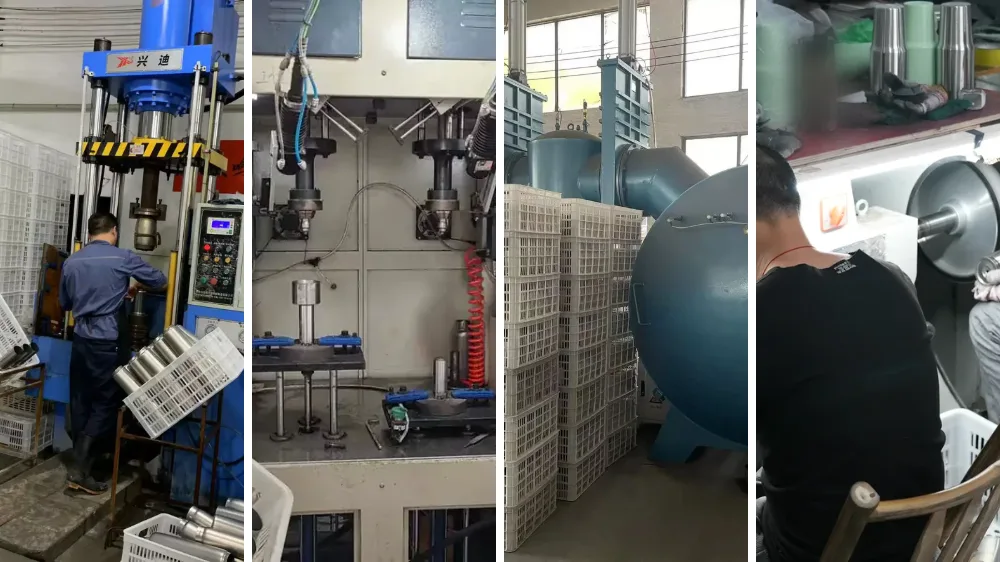
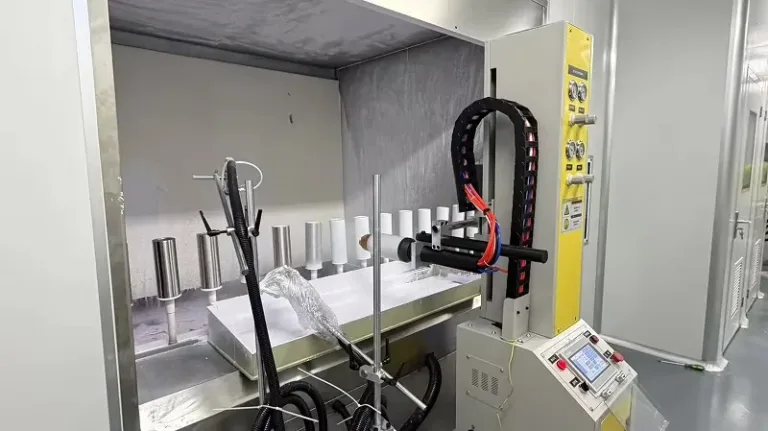
At BG Drinkware, bodies are formed by stretching or hydroforming, the walls are welded at the mouth, the vacuum is sealed in a vacuum brazing furnace with lead-free sealing material, and every vacuum bottle is temperature-tested. Powder coating, laser engraving, screen printing and UV printing are done in-house. See manufacturing and how vacuum bottles are made.
How can you tell whether a supplier is a manufacturer?
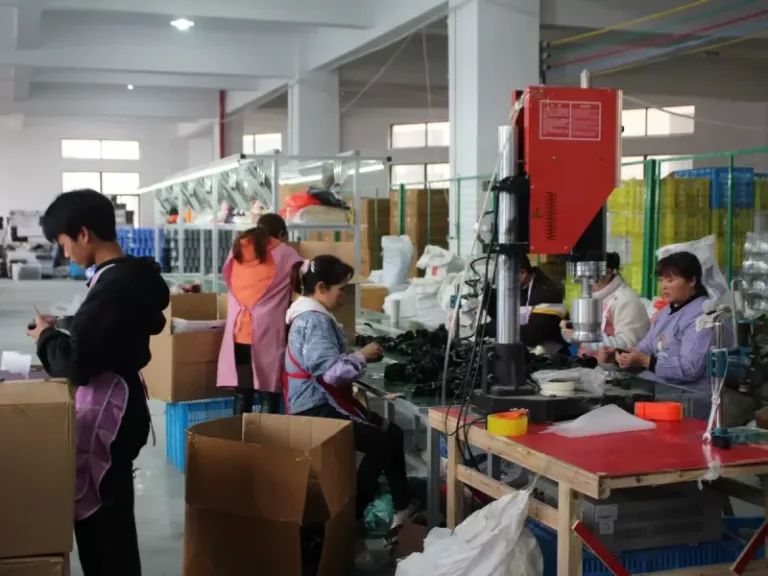
Ask questions that only a maker can answer in detail, and ask to see the steps rather than the showroom. A manufacturer can explain how its bodies are formed, how the vacuum is sealed, which tests run on every piece and which processes it sends out. A video call on the production floor answers most of it.
- Process questions: how are bodies formed, welded and vacuum-sealed, and what is the vacuum test?
- Outsourcing: which processes are done by partners, and how are they checked on return?
- Audit and reports: who is the audited site, and do the test reports name the same company?
- Visit: a site visit or live video of the production floor, not only finished goods.
- Company name: do not judge by the word “trading” alone; many Chinese manufacturers register as an industry and trade company.
When is a trading company the better choice?
When you need many unrelated product types in one shipment, such as bottles, bags and textiles for an event kit, and no single maker covers them all. A good trading company consolidates suppliers, inspections and shipping. For a repeat drinkware line or a custom build, working closer to the maker usually gives more control.
Either way, the checks are the same: an approved sample, an agreed inspection standard and clear payment and trade terms. BG Drinkware inspects to ISO 2859-1 general level II, AQL 2.5 and 4.0, and welcomes third-party inspection such as SGS or QIMA. See golden samples.
Is buying from a manufacturer always cheaper?
Often, but not always. A manufacturer has no reseller margin on its own products, but a trading company may buy at volume, combine freight or quote a simpler product. Compare like for like: the same model, steel grade, lid, finish, logo, packaging, inspection standard and trade terms. A cheaper quote on a different build is not a saving.
What should you ask a drinkware supplier before ordering?
Ask which processes are in-house, which are outsourced and how outsourced work is checked; which inspection standard applies; which parts the test reports cover; and who your contact is for artwork, samples and production. Then confirm the minimum order, sample time, lead time, payment terms and trade terms in writing.
- ProcessesIn-house steps and partner steps, by name.
- QualityInspection standard, tests on every piece and tests on samples.
- ReportsWhich company, model and parts each report covers.
- ContactBG Drinkware gives each order a dedicated salesperson for artwork, process review and samples.
- TermsMinimum order, timeline, payment and trade terms; BG Drinkware usually quotes EXW Ningbo with a 30% deposit.
See about BG Drinkware and certifications.
Many insulated drinkware manufacturers are based in one city; see Yongkang drinkware manufacturers.
Manufacturer vs trading company FAQ
Short answers to the questions buyers ask most when checking whether a drinkware supplier makes its own products: outsourcing, company names, minimum orders and audits. The answers draw on how BG Drinkware works and what buyers usually check.
Do drinkware manufacturers outsource anything?
Usually, yes. Few makers do every step in-house. A typical split is bodies, welding, vacuum sealing and testing in-house, with some coatings, prints, lids or packaging from partners. BG Drinkware uses partners for spray paint, sublimation coating and soft-touch paint and checks their work on return. What matters is that outsourced work is named and checked.
Is a company with “trading” in its name always a trading company?
No. Many manufacturers in China are registered as an industry and trade company, because the licence covers both making and exporting. Judge the supplier by its processes, its site and its audit, not by the words in its registered name. Ask which site the audit and the test reports cover.
Do manufacturers have higher minimum orders than trading companies?
Not necessarily. Minimums depend on the product and the process. At BG Drinkware the standard minimum is 500 pieces per colour, negotiable, with some models from 100 pieces per colour. A trading company may offer lower minimums on stock items, but custom builds usually carry the plant’s minimum either way.
Can a site audit tell you whether a supplier makes the product?
An audit such as amfori BSCI covers a named site and its working conditions, so it shows that the site exists and operates, not that it makes your specific model. Check that the audited site, the company on your contract and the company on the test reports are the same, and ask to see your product in production.
This guide draws on BG Drinkware’s own production set-up and the checks buyers commonly run. Related guides: stainless steel vacuum flasks, wholesale drinkware and tumblers in bulk.
Want to see how your drinkware is made?
Send the model, capacity, quantity, finish, logo method, packaging, payment terms and trade terms, and ask which processes are made in-house.