Colour & gloss
Send a Pantone reference or a physical colour card and say whether you want matte, satin or gloss. The colour is confirmed on the coated sample, not on a screen image.
Tumbler powder coating gives metal drinkware an exterior colour and finish using applied powder and heat. Start with the colour, gloss and feel you want; then review the cup, logo and cleaning requirements together with BG Drinkware.
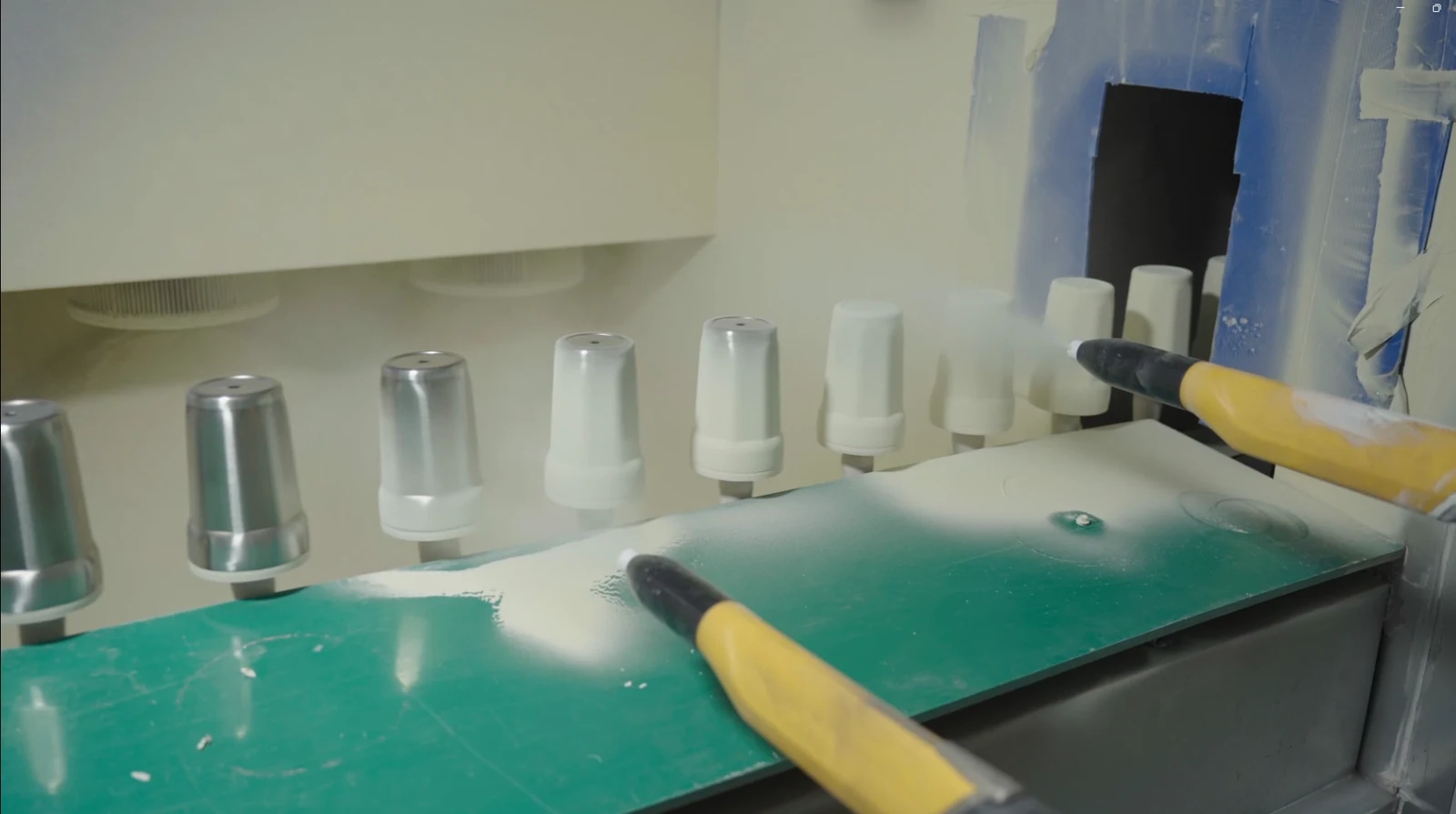
Choose a physical finish reference as well as a colour reference. Two cups can look similar in a photograph while feeling different in the hand. Decide which differences would matter to your customer before requesting a sample.
Send a Pantone reference or a physical colour card and say whether you want matte, satin or gloss. The colour is confirmed on the coated sample, not on a screen image.
Describe the intended feel and provide a physical reference when possible. Handle the complete sample, including its logo. Terms such as “soft” or “fine texture” need a shared reference to become a useful production requirement.
Mark the coating limits around the rim, base and any fitted components. Identify areas that must remain uncoated. Ask how masking—the protection of areas during coating—and later assembly will preserve those boundaries.
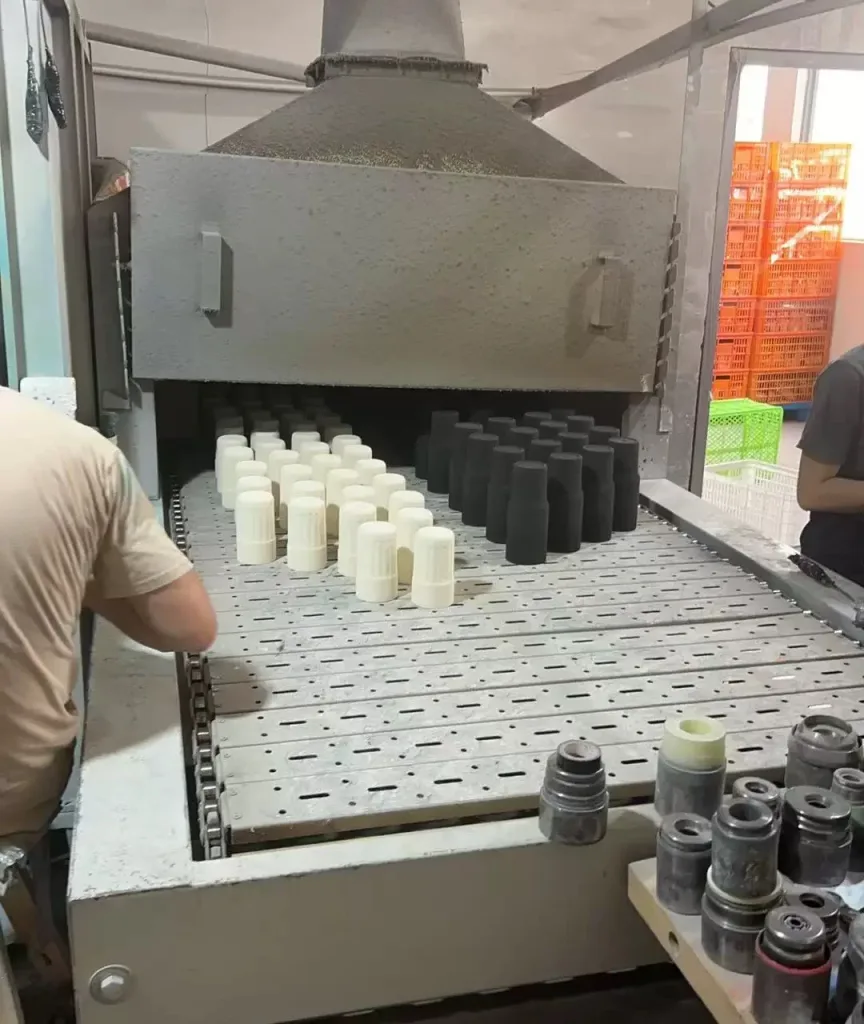
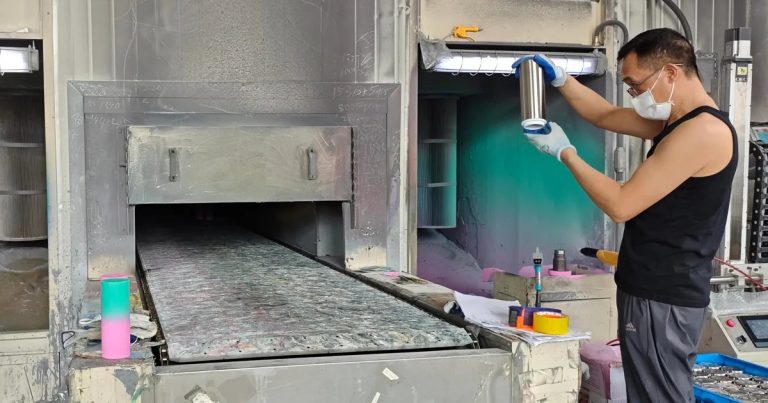
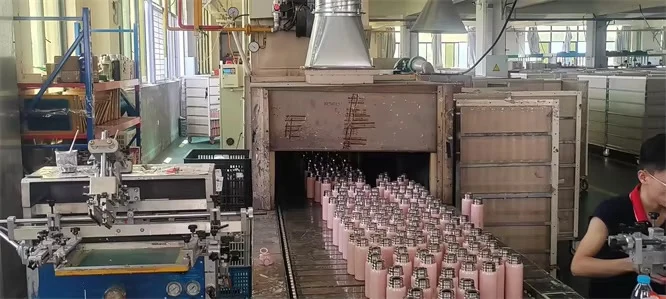
Powder coating involves surface preparation, powder application and curing. In electrostatic application, charged powder is attracted to a grounded metal part. Heating then forms the coating. AMPP describes these stages in its powder coating overview.
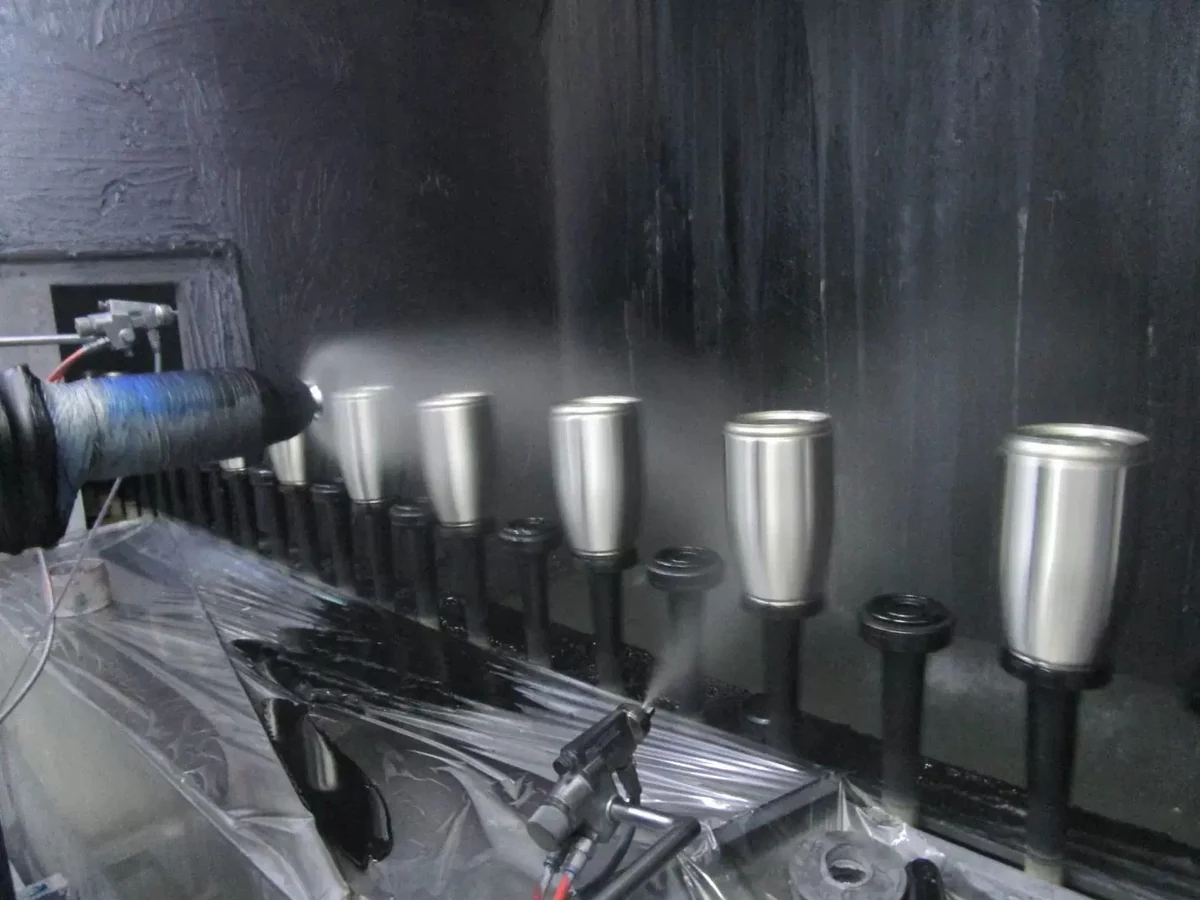
Explore the four stages
Confirm the metal, starting surface and areas to mask. Surface preparation must suit the coating system. Agree the production sequence before treating a body that has heat-sensitive components attached.
Define coverage around curves, recesses and coating boundaries. The fixture position and application setup should be reviewed for the specific cup shape, rather than copied from a different model.
Ask for the selected powder’s technical data sheet and the curing conditions used for the part. The oven setting alone does not describe the full heat exposure of a cup. Time, part temperature and line conditions need to be considered together.
Interpon’s curing guidance explains why metal thickness and line speed affect oven adjustments. It does not specify BG Drinkware’s operating settings.
Check the cooled finish and the agreed boundaries before adding a logo. Keep the completed decorated sample as the reference for the final review, including handling and packaging contact points.
Compare both routes on the same cup and finish brief. Powder coating uses dry powder; spray painting applies a liquid coating. The useful choice depends on the requested appearance, the cup’s production sequence and the finished sample—not the process name alone.
Powder coating: start here when the cup brief calls for an overall colour with a defined gloss or texture. Ask to see a sample of the proposed powder on your cup shape.
Spray painting: include this route when you have a painted reference or an effect that the proposed powder cannot reproduce. Ask for a liquid-coating sample against the same reference.
Powder coating: confirm that the cup body and any attached components suit the proposed curing cycle. Agree which components are fitted afterwards.
Spray painting: confirm the selected paint’s drying or curing requirements. Do not assume a liquid coating avoids heat or allows the cup to be coated fully assembled.
If an assembled component cannot tolerate a proposed cycle, review the assembly order or another coating system first.
Request the same cup quantity, colour allocation, logo, packing and sample checks for both routes. List colour changes, masking and decoration separately when they change the scope. A lower coating price is not a useful comparison if the sample or finishing work differs.
In BG Drinkware’s experience powder coating gives fewer finish problems than spray paint; bubbling on either usually comes from the curing temperature.
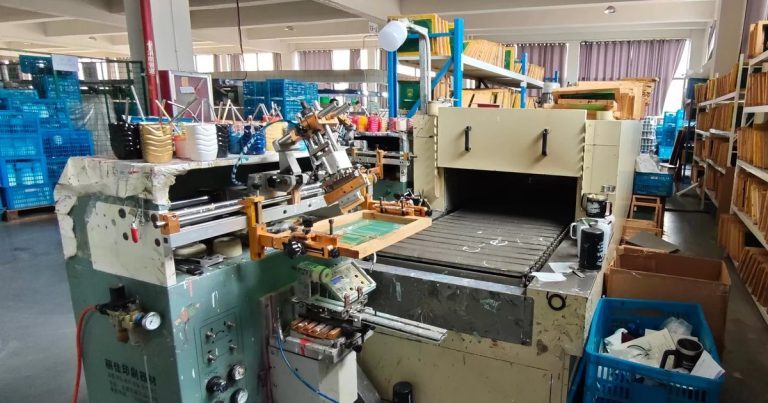
Consider laser engraving, screen printing or UV printing for your logo. Compare the look you want, then trial the chosen method on your actual powder-coated cup. Check the artwork, finish and intended cleaning conditions together.
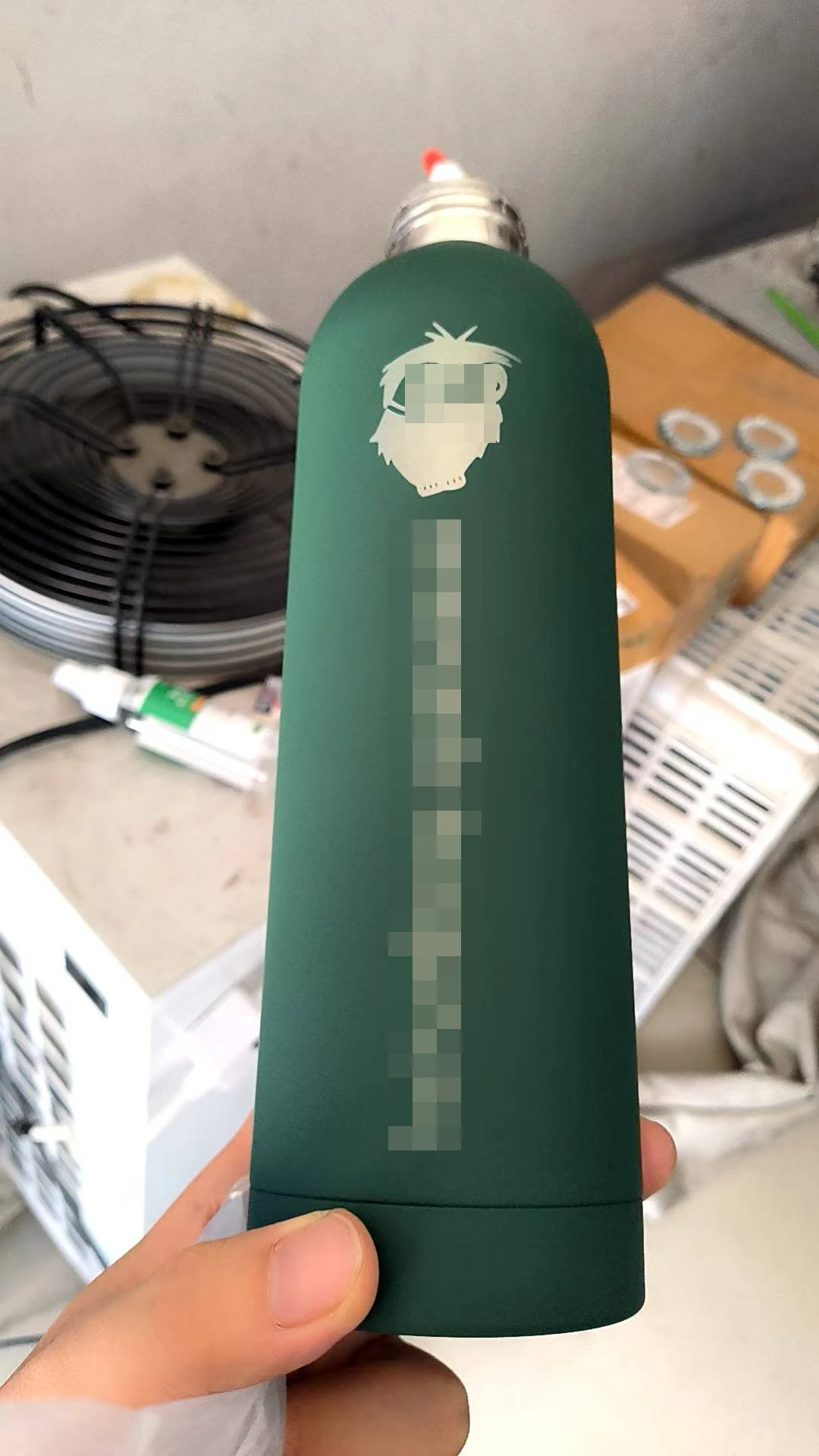
A contrasting mark without adding an ink colour. On a suitable coated cup, the intended effect may involve removing the coloured coating.
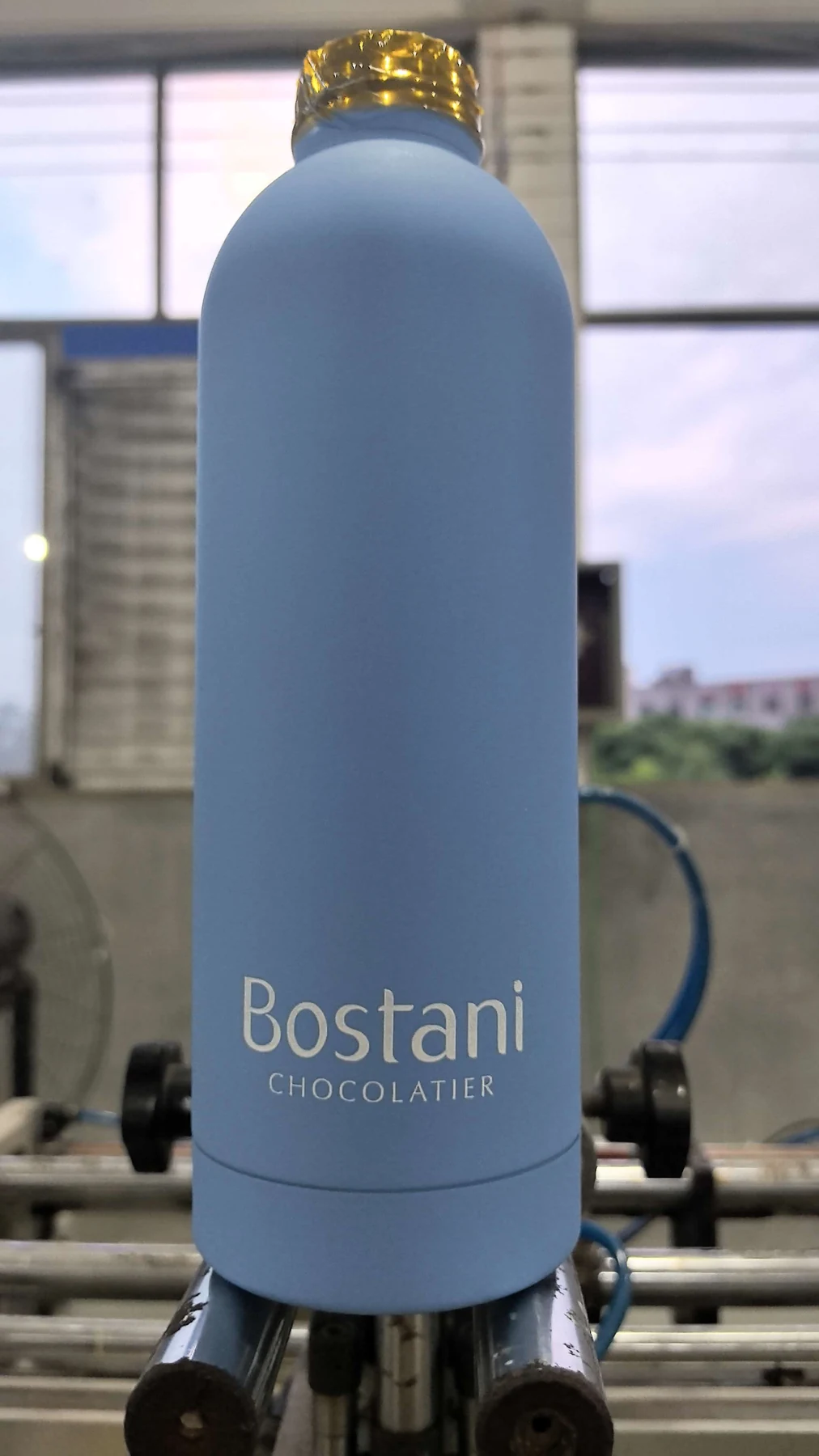
Solid-colour lettering and logos, as shown by the white print on this blue bottle.
Agree the ink preparation, curing and acceptance criteria for the actual powder-coated surface.
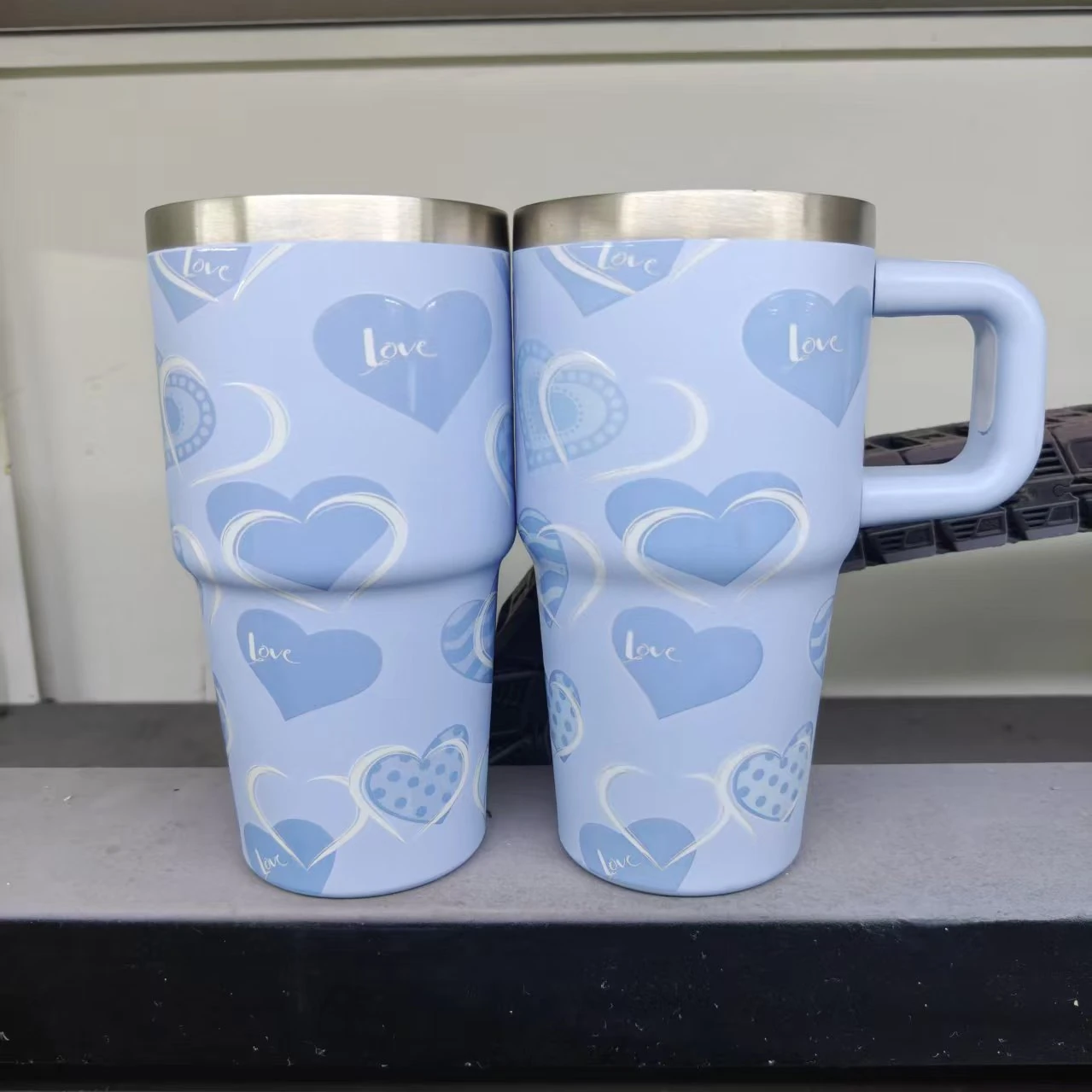
Detailed graphics and colour combinations. This pattern example shows a broader graphic treatment rather than a standalone logo.
Trial the proposed ink and powder-coated finish together; a change to either may require another review.
These photos show decoration effects. Their underlying coating specifications have not been confirmed; approve your chosen method on your own powder-coated sample.
Powder coating is applied in-house at BG Drinkware, after the body is formed, sealed, polished and temperature-tested, and before the logo goes on. These are the checks made on the sample and in bulk.
Select the checks to include in your brief.
Selections plan the review; they do not certify that a sample has passed.
Colour, gloss and texture are compared with the approved sample, including the rim and base, where the coating stops.
A cross-cut test checks how well the coating and the logo stick. It is run on request, to your method.
Stainless steel and its coatings can generally go in the dishwasher. A dishwasher test on the finished, decorated cup can be run on request.
Sleeves and dividers are chosen so the coated surface is not scuffed in transit. Most chipped paint BG Drinkware sees comes from knocks, not from the coating itself.
Bulk orders are inspected to ISO 2859-1, general inspection level II, AQL 2.5 for major and 4.0 for minor defects. See quality control and sampling.
Share what is already decided and mark the rest as open. Quantity per colour, finish selection, masking, decoration and packing requirements help define the scope of the quotation. Confirm sample cost, minimum order quantity and timing for your particular brief.
BG Drinkware applies powder coating in-house. Coatings can vary slightly from one production batch to the next; the approved sample is the reference for repeat orders.
Matching body, lid and repeat orders to a colour reference
How the coating decides what a laser logo looks like
How print method and surface affect durability
What a dishwasher claim needs behind it
Tumbler powder coating is an exterior finishing process in which powder is applied to a prepared cup body and heated to form a coating. For a custom drinkware order, specify the colour, gloss, texture and coating boundaries, then review the actual cup with its intended logo before approval.
Neither route is automatically better for every cup. Compare the requested appearance, touch, production sequence and finished sample. Powder coating uses dry powder, while spray painting applies a liquid coating. Agree the same cleaning and handling requirements for both options so the comparison reflects your intended use.
A logo can be considered as part of the coating brief, but the exact combination needs a trial. For printing, check ink adhesion, detail and feel on the selected finish. For engraving, agree the intended contrast and inspect the actual mark. A coating or artwork change may require another sample review.
Powder coating alone does not establish dishwasher suitability. The coating, logo, cup construction and cleaning conditions all matter. If dishwasher use is required, agree a test programme for the complete decorated cup and request the results before making a care claim. Include the cleaning conditions, number of cycles and acceptance criteria.
Send the colour reference and a physical texture sample where available so BG Drinkware can review the target for your cup. Confirm feasibility and approve the actual coated sample rather than relying on a screen image. Record the lighting, gloss and touch reference, and agree acceptable variation before authorising production.
The standard minimum order is 500 pieces and negotiable, and some models start from 100 pieces per colour. A sample of an existing model takes up to 7 days, and bulk production takes 7–12 days after the sample is approved.
Check the colour, gloss, texture, logo and packaging on the finished sample. Bulk production then takes 7–12 days, and the approved sample is the reference for any repeat order.
Send your cup reference, colour and logo to BG Drinkware. Include the feel and cleaning requirements so the sample brief covers the complete decorated cup.
Search BG Drinkware
Add us on WeChat

WeChat ID: +86 151 5891 9004
Open WeChat, tap + then Scan, and point it at the code.