Why Printed Logos Rub Off Custom Tumblers: What Bulk Buyers Should Check
By Feng, Head of After-Sales Service & Online Marketing Lead
A printed logo can wear away while the paint or powder coat underneath remains intact. Before approving a bulk order, check how the selected ink bonds to the cup's finished surface and how the print performs under the agreed tests—not just how the artwork looks.
A printed logo that rubs off a custom tumbler can mean one of 2 things: the ink has not bonded adequately to the cup's finish, or it does not resist the exposure it receives, so the first step is to identify which layer has detached. Loss of the printed logo with the paint or powder coat still present points first to the printed layer and its bond to that finish. Coating loss that exposes the metal points to the coating system, and appearance alone does not establish the cause. BG Drinkware checks coating preparation, the selected printing system and the order's agreed tests before the 7–12 day production run starts. Three sample tests help predict whether a logo will stay on: crosshatch adhesion around a cut grid, rub resistance under repeated contact, and alcohol-wipe resistance after the agreed exposure. A buyer reporting a problem should send an overall photo, a close-up, the order reference and a note of what happened before the print changed, such as rubbing, a cleaning agent or washing.
For an existing model, allow up to 7 days for sampling and a reference production period of 7–12 days from receipt of the deposit. A ceramic inner lining adds about 2–3 days. These are planning figures; late approvals, changes and order-specific requirements can affect the schedule.
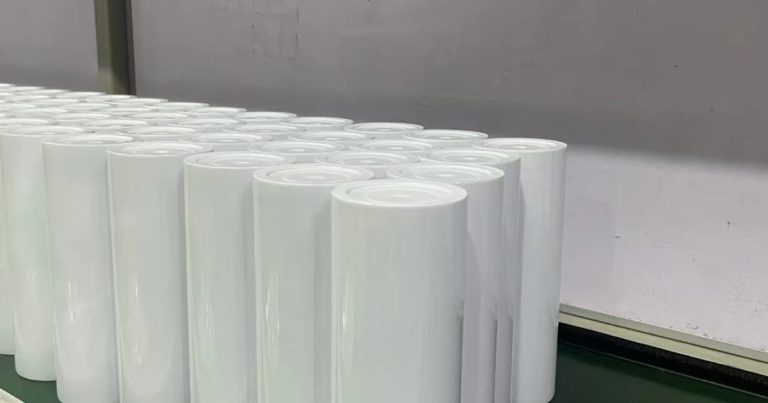
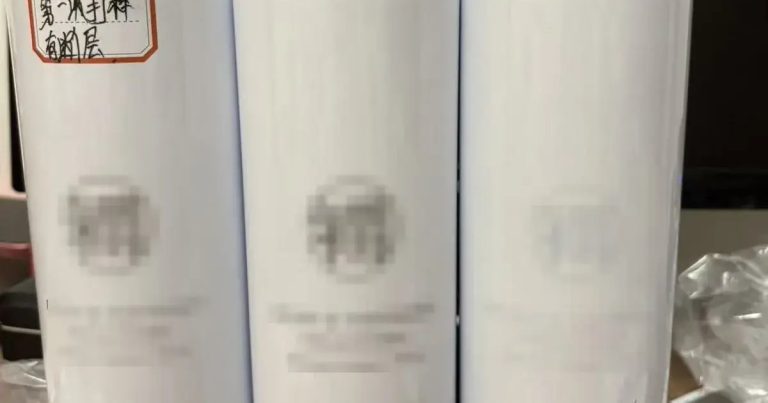
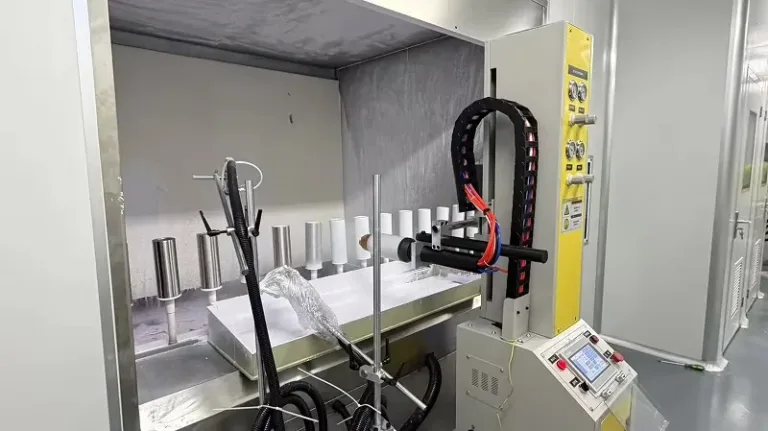
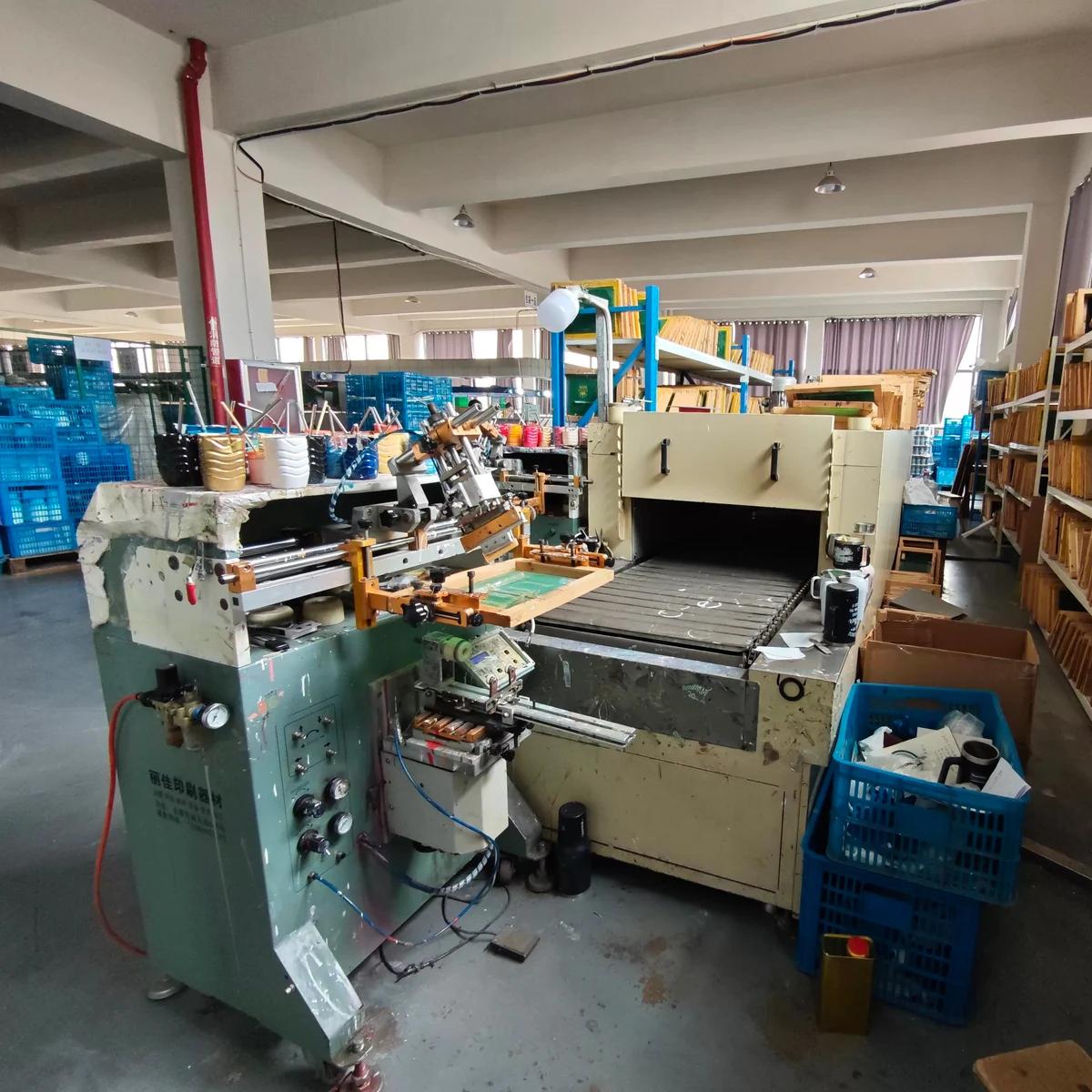
How this guide was prepared: BG Drinkware supplied the factory practices described here. Technical references explain UV curing and adhesion factors; they are not test reports for our products. The photographs show production equipment and handling, not adhesion-test results.
Is the logo coming off, or is the tumbler losing its coating?
Start by identifying what has detached. Loss of the printed logo with the paint or powder coat still present is different from coating loss that exposes the metal. That distinction helps the factory choose what to investigate, although the appearance alone does not establish the cause.
The image disappears; the finish remains
Record the affected colors and area. Review the ink-to-surface bond, print processing and the conditions that caused the change.
Paint or powder coat also lifts
Include the coating system and its attachment to the body in the investigation. Rechecking the artwork alone will not address this problem.
For a buyer reporting a problem, useful evidence includes an overall photo, a close-up of the affected area, the order reference and a description of what happened before the print changed. State whether it followed ordinary handling, repeated rubbing, a cleaning agent or a washing process. Avoid treating every complaint as the same form of “peeling paint.”
Our focus here is the first situation: the decoration changes while the underlying finish remains intact. The same distinction matters when specifying stainless steel drinkware: knowing the body material does not establish how well a printed logo will adhere to its exterior.
For a mark with no ink layer, see engraved water bottles.
If the coating itself bubbles or chips, see tumbler coating peeling or bubbling.
Why does the finished cup surface matter to logo adhesion?
The logo is printed onto the selected exterior surface, not onto an abstract material name. A spray-painted body, a powder-coated body and a different finish revision need an appropriate printing system and sample confirmation. Approval should therefore identify both the finish and the print.
In BG Drinkware's production experience, temperature control during preparation of the painted or powder-coated body is an important risk point. Temperatures below or above the suitable process range can affect the surface used for subsequent printing. The suitable conditions depend on the selected coating and process; there is no single temperature recipe for every tumbler.
Here, the underlying layer means the cup body's paint or powder coat. It does not mean that every order receives a separate printing primer. If a proposed ink system needs additional surface treatment, that treatment should be identified and checked on the actual sample rather than assumed.
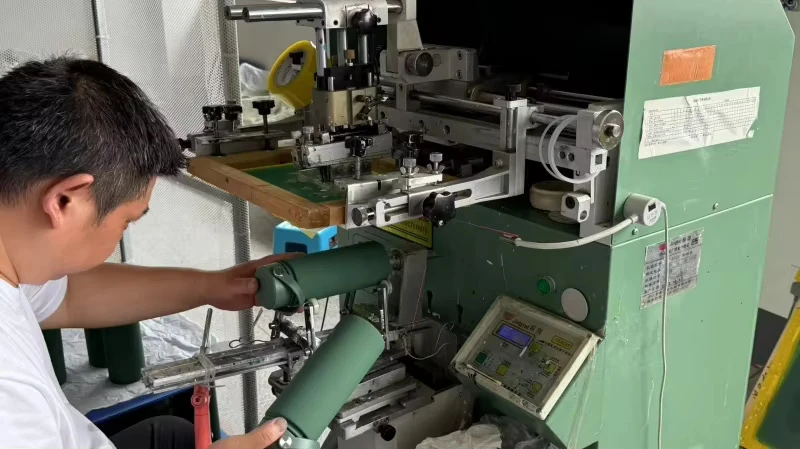
UV curing is a separate step from coating the body
UV ink cures through ultraviolet exposure during the printing process. Mimaki's explanation of UV-curable ink describes this light-driven curing mechanism. It is not a process that bakes the ink into the stainless steel. BG Drinkware confirms that its UV-printed cups do not go through a separate baking stage after UV printing.
Curing is important, but it is not the only factor. Marabu's guidance for UV-curable screen-printing inks identifies ink choice, application and surface preparation as adhesion factors alongside curing. That guidance supports checking the whole system; it does not establish the settings for the rotary printer pictured below.
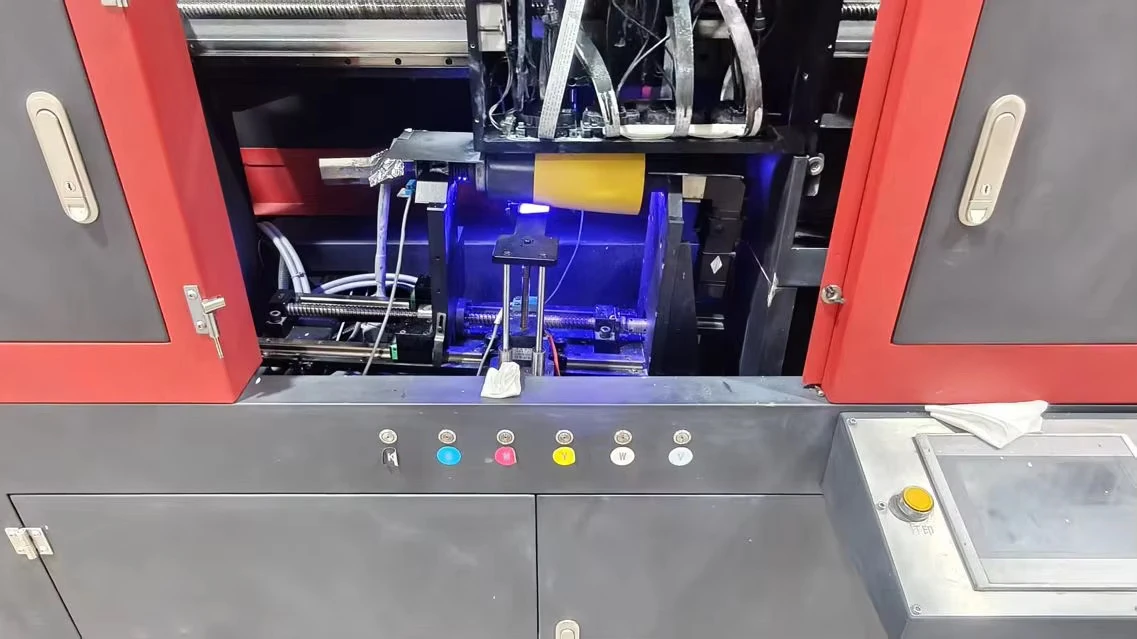
Which tests help check whether a printed logo will stay on?
Adhesion, resistance to rubbing and resistance to alcohol wiping answer different questions. BG Drinkware uses crosshatch, rub and alcohol-wipe checks, with the test parameters and acceptance criteria agreed for the order. Passing one check should not be treated as passing all three.
Crosshatch adhesion
Examines detachment around a cut grid under the agreed procedure. Identify which layer is being assessed and confirm suitability for the curved or textured surface.
Agree: sample area, method, any tape or removal step, and the acceptance rule.
Rub resistance
Examines whether repeated contact visibly wears, transfers or removes the decoration. A light hand rub without defined conditions is not a reproducible order specification.
Agree: contact material, force, repetitions and allowed appearance change.
Alcohol-wipe resistance
Examines the print after the agreed alcohol exposure. It should be defined separately from dry rubbing and must not be generalized to every cleaner.
Agree: alcohol type and concentration, wiping conditions, repetitions and acceptance.
The items above are points to specify, not published BG Drinkware test settings. No universal grid spacing, load, alcohol concentration, number of repetitions or pass grade is asserted in this guide. If a customer requires a named standard, its applicability and procedure need to be agreed before the order is tested.
Sample identity matters as much as the method: record the cup model, surface finish, printing method, artwork revision and condition at testing. Assess the actual approved decoration, not only an unprinted body or a different ink color. A clear photo of the logo establishes appearance; a documented check establishes the result under its stated conditions.
Where the intended product claim involves dishwasher use, agree on the relevant cleaning exposure separately. A crosshatch or alcohol-wipe result is not, by itself, a dishwasher-suitability claim. Our quality-control review can help align the requested inspection with the selected product and order.
When should a printed sample be checked again?
Recheck when the surface, ink or relevant supply source changes. BG Drinkware confirms that it makes and tests samples again after these changes. An unchanged logo file is not enough to show that the new production combination performs like the previous one. Buyers should approve a printed tumbler sample before bulk whenever those inputs change.
The factory carries out the printing processes discussed here in-house. Changes to a coating or ink supplier can still matter even when the same factory prints the cup. Keep the production configuration tied to the approved sample and inspection record; do not transfer a previous result solely because the cups look alike.
BG Drinkware also leaves a waiting interval after printing before testing or packing. The interval is determined for the selected process rather than published as a fixed number of hours for all products. For UV printing, this does not introduce a separate post-print baking step or imply that every UV ink needs the same waiting period.
What belongs in the bulk order's logo-approval record?
Keep artwork approval and durability approval in the same order record, but identify them separately. Color, placement and sharpness are visual decisions. Adhesion and exposure resistance need their own test conditions and acceptance rules.
Product and finish
Cup model, exterior coating or surface treatment, and the approved finish revision.
Decoration
Printing method, ink-system reference, artwork revision, colors, print size and position.
Sample and inspection
Approved sample reference, sample condition, waiting interval, agreed checks and order-specific sampling arrangement.
Acceptance and changes
Allowed appearance change, pass/fail criteria, treatment of a failed check, and reapproval after relevant material or process changes.
Use and care expectations
Intended handling and cleaning conditions, with any additional performance claim supported separately.
Start the discussion with the cup model, logo file, intended use, quantity and required durability checks. BG Drinkware can then review the custom tumbler printing and finish options against a specific project. The practical objective is an approved combination and an agreed way to inspect it—not an unsupported promise that the logo can never wear. For where to put the logo, see tumbler logo placement.
Printed tumbler logo durability FAQ
Can a logo peel while the powder coat stays intact?
Yes. The printed decoration and the underlying coating are different layers. If the finish remains, review the printed layer and its bond to that finish first, then test the suspected cause rather than diagnosing from appearance alone.
Does a dry-looking UV print prove good adhesion?
No. Surface appearance alone does not establish adhesion or resistance to later rubbing or chemicals. Check the selected print system on the actual cup using the agreed procedures.
Does BG Drinkware bake cups after UV printing?
No separate baking stage follows its UV-printing process. UV ink is cured by ultraviolet exposure during printing. The preparation of the painted or powder-coated body is a separate process.
Does an alcohol-wipe test prove dishwasher suitability?
No. It establishes a result only for the stated alcohol-wipe conditions. Dishwasher-use requirements need separate agreement for the finish, decoration and relevant product components.
Can the same logo approval cover a new ink supplier?
Do not assume so. BG Drinkware confirms that changes to the surface, ink or relevant supply source trigger new sampling and testing. Keep the revised combination connected to its own approval record.
Is there one pass grade for every printed tumbler?
No universal grade is stated here. Agree on the applicable method, conditions and acceptance criteria for the selected product and intended use before production approval.
Approve the tumbler logo for durability, not just appearance.
Send the cup model, artwork, exterior finish, order quantity and durability requirements. BG Drinkware can review the printing approach and sample checks with your team before production approval.