Corporate Water Bottles: Plan an Employee Bottle Programme
Specify corporate water bottles around how employees will carry, refill and clean them, then approve the complete decorated sample and budget through to handover. Before ordering, decide who receives a bottle, where stock will be held and how new starters will receive the same approved model later.
Corporate water bottles work best when the programme is specified around how employees carry, refill and clean them, not around a mock-up. Shortlist one common model where needs overlap, then approve a complete decorated sample with its lid, seal, finish and logo before production. Choose a shared company logo if unissued bottles must be reallocated to new starters; individual names tie every unit to a roster and need one owner for spelling and revisions. Budget through to employee handover: bottle and decoration, sample and setup, packaging and transport, internal distribution and a replacement reserve set from the hiring forecast. BG Drinkware, a drinkware manufacturer in Yongkang, China, quotes a standard MOQ of 500 pieces, negotiable, with some models available from 100 per colour. Samples of existing models take up to 7 days, and bulk production takes 7–12 days after sample approval, so plan the launch date backwards from sample sign-off.
HR owns the recipient plan; procurement coordinates specifications and quotations. Facilities can check refill and washing arrangements, while marketing approves the logo. Give each decision an owner so an attractive mock-up does not become production approval before the bottle has been tried.
Match the bottle to the working day
Start with the places where the bottle will be used. A desk-based employee, a commuter and a mobile technician may need different closures or carrying arrangements. Shortlist from the existing water bottle range, then compare actual samples against a short use brief.
| Employee use | What to check | What to put in the brief |
|---|---|---|
| Office and shared desks | Refill access, desk stability, washing access | Assembled height, base diameter, removable parts and care instructions |
| Commuting between locations | Closed-lid sealing, bag fit, filled weight | Intended carrying position, closure configuration and agreed leak checks |
| Field and mobile teams | Grip, carrying attachment, access to refills | Capacity, lid operation, attachment construction and workplace restrictions |
Swipe or scroll to view the full table.
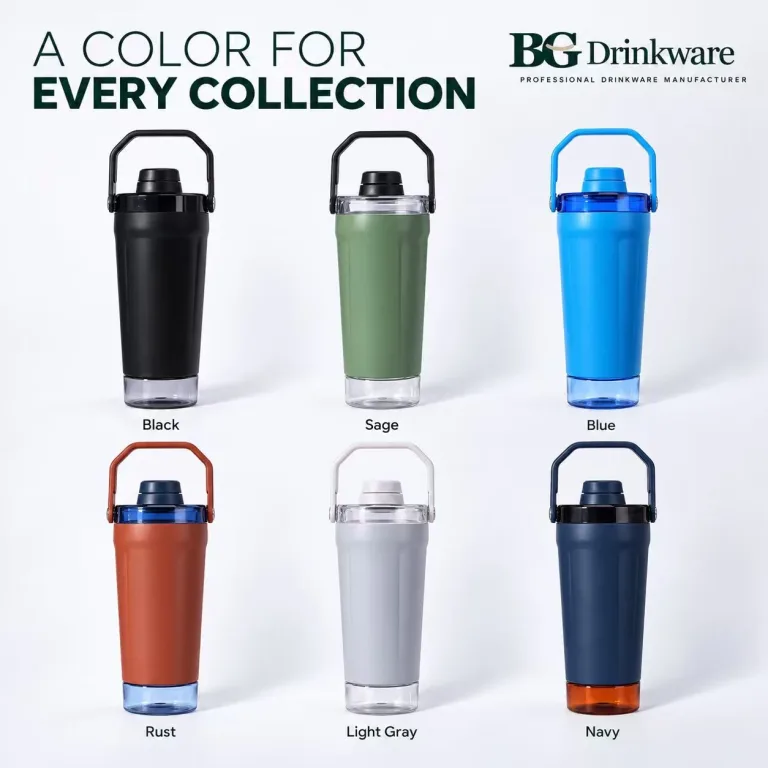
Choose a common model where requirements overlap. Add a second configuration only where it solves a defined problem. Each extra capacity, colour or lid creates another stock item to count and replenish.
Approve a sample employees can actually try
Review the complete bottle with its intended lid, seal, finish and logo. Ask for the exact component materials and any target-market documents required for that configuration. A body-material description leaves the drinking components and care limits unresolved.
Use the sample review to make five decisions:
- Check the filled bottle in the intended bag, desk space and refill station.
- Open, drink, close and carry it using the intended closure configuration.
- Remove and reinstall the parts users are allowed to clean. Confirm the supplied instructions match that sequence.
- Inspect the decorated surface for logo position, readability and colour under normal workplace lighting.
- Agree production checks, including the method and acceptance criteria for any leakage, decoration or washing requirement.
Arrange a short user trial before approval if the choice remains uncertain. Keep usability feedback alongside the separate quality checks agreed for production. Retain an approved sample and its specification; the golden-sample guide explains what that reference should include.
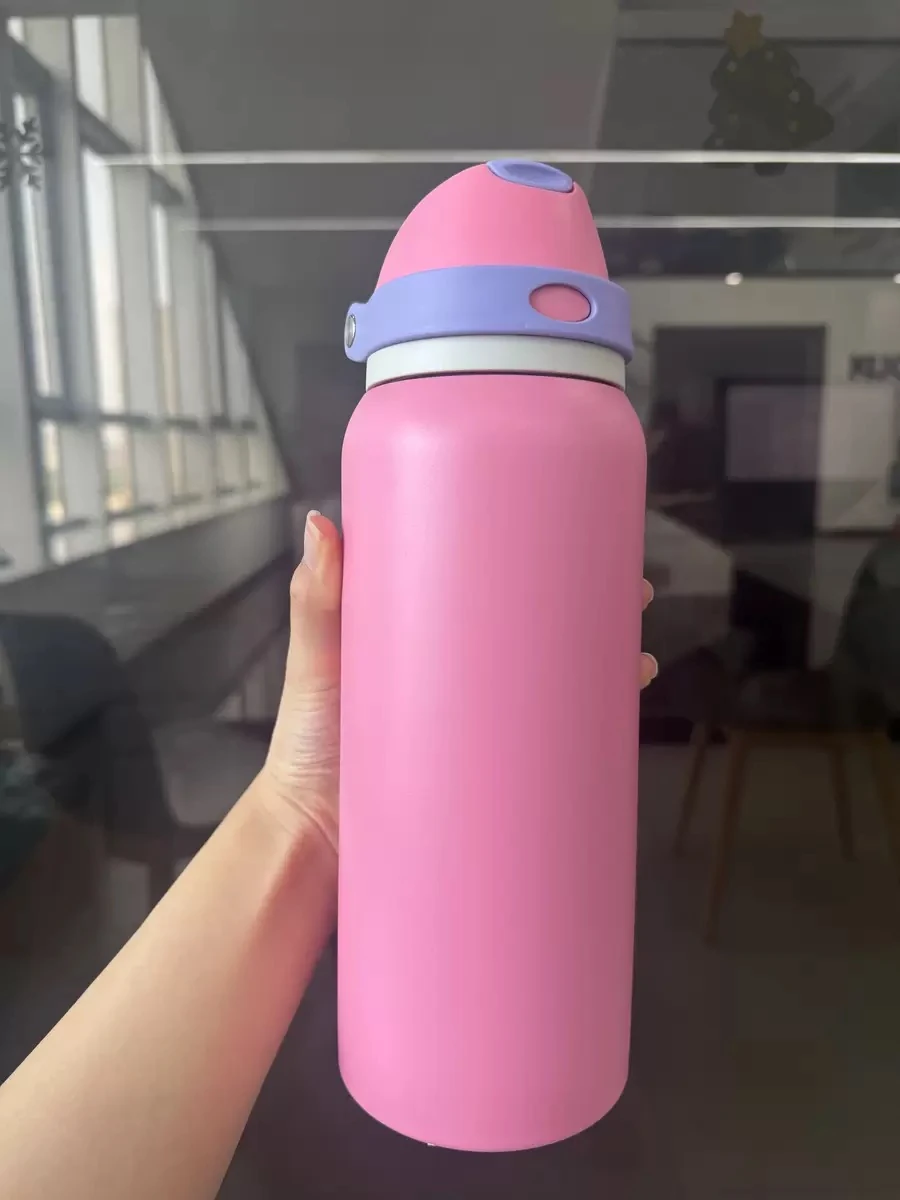
Decide between a shared logo and individual names
A shared company logo allows unissued bottles to be allocated to any employee. Individual names tie each unit to a recipient list. Ask the supplier whether the selected model and decoration process support variable names, and request a separate quotation for that work.
For named bottles, assign one owner to approve spelling, character support, layout and the final roster revision. Agree how packed units will be identified for distribution. Handle late joiners and name corrections separately from the signed-off list.
Consider keeping the bottle's artwork useful across hiring rounds. A dated event slogan can leave future starters receiving old campaign stock. If the date belongs only to the launch, ask whether it can sit on an insert instead.
Build the budget through to employee handover
Compare quotations for the same finished configuration and delivery scope. A useful internal measure is the total programme cost divided by the number of employees receiving bottles. Keep reserve stock visible in that calculation so finance can distinguish initial distribution from inventory held for later use.
| Budget line | Confirm before approval |
|---|---|
| Bottle and decoration | Model, colour quantities, logo method and any name variation |
| Sample and setup | Sample scope, artwork preparation and charges for later changes |
| Packaging and transport | Unit protection, carton configuration, delivery point and responsibilities |
| Internal distribution | Receiving, storage, sorting and any onward parcel costs |
| Continuing supply | Replacement reserve, available spare components and future-order terms |
Swipe or scroll to view the full table.
When the budget is tight, compare simpler decoration or packaging while keeping the required bottle function. Confirm minimum quantities and timing for the chosen configuration; a small onboarding top-up may follow different terms from the launch order.
Plan the first issue and the next hiring round
Set the quantity from confirmed recipients, expected starters before replenishment, an agreed replacement reserve and usable stock already held. Keep those figures separate. A reserve should follow the company's issue policy and hiring forecast, rather than an unexplained percentage added to headcount.
For central distribution, agree carton identification and quantities by office, then count received goods before scheduling handover. For home-based staff, identify who will pack and send individual parcels. Ask separately about any supplier storage or fulfilment service; these arrangements need their own scope and price.
Assign one stock owner to record issues, remaining units and defects. Set the reorder trigger using expected demand during the supplier's confirmed replenishment period. Keep the model reference, lid version, finish and artwork revision with the stock record. On a repeat order, reconfirm availability and compare the new sample with the retained reference before accepting substitutions.
Corporate water bottles: procurement questions
These are the questions HR and procurement teams most often settle before approving an employee bottle programme, covering model choice, reserve stock, quotations, minimum quantities and timing.
Should every employee receive the same bottle?
Use one model where it meets the team's requirements. Different working conditions can justify another configuration, but specify the reason and the quantities for each group. Before offering unrestricted colour or capacity choices, ask how the split affects minimum quantities, pricing and future replenishment. A single model also keeps reorders simple.
Can new starters receive bottles from the original order?
Yes, if the company holds suitable unissued stock. Keep the reserve identifiable and include it in stock counts. A shared logo makes allocation flexible. If every bottle carries an individual name, agree how future names will be added and how small follow-up orders will be supplied.
What should we send for a quotation?
Send the employee use brief, shortlisted model, quantity by configuration, logo file, naming requirements, packaging, delivery destination and required handover date. State which requirements are fixed and which need a sample decision. Ask the supplier to distinguish production, transport and any distribution services in its response.
What is the minimum order for corporate water bottles?
At BG Drinkware the standard minimum order is 500 pieces per model, and it is negotiable. Some models can be ordered from 100 pieces per colour, which helps when a programme needs two or three colours for different teams. Confirm the minimum for the exact model, lid and decoration you shortlist, because a follow-up onboarding order may differ.
How long does a corporate bottle order take?
At BG Drinkware, a sample of an existing model takes up to 7 days, and bulk production takes 7–12 days after the sample is approved. Add time for artwork sign-off, any user trial, transport and internal sorting. Work backwards from the handover date so the sample decision is not squeezed into the final week.