

Organic and repeating patterns
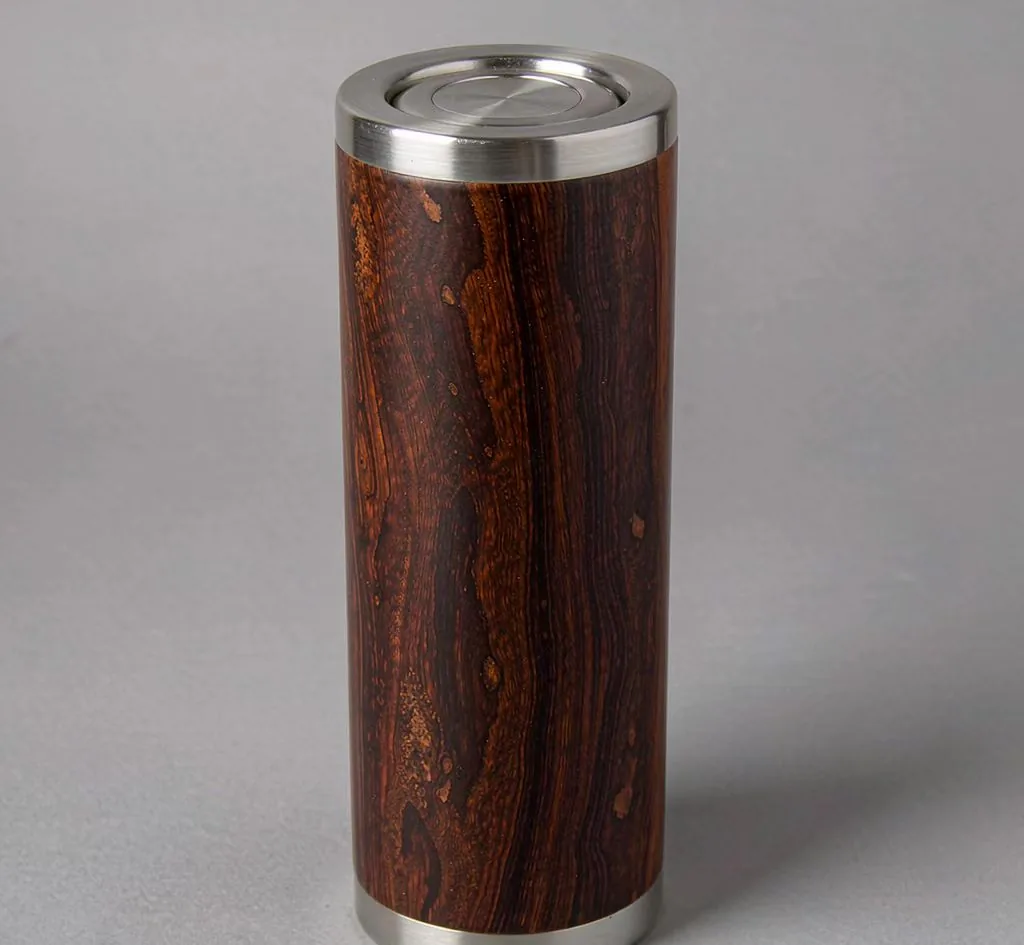
Wood grain, stone, camouflage and abstract repeats can tolerate natural variation while creating a broad visual effect around the body.
Full-cover decoration for selected drinkware
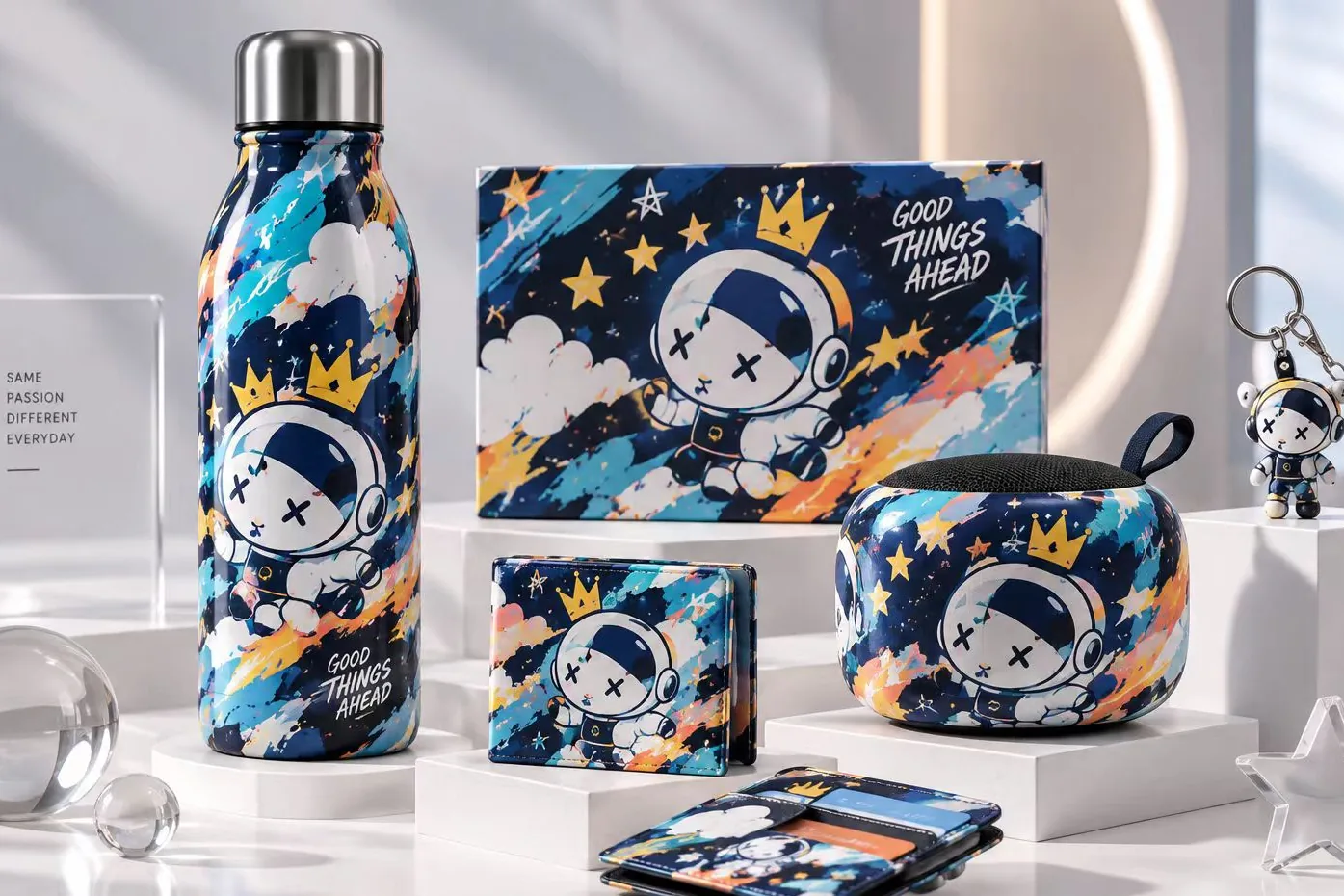
Water transfer printing lays a printed film over the cup in a water tank, so the pattern follows the curves of the body: wood grain, camouflage, marble or repeating graphics. Exact logos and brand colours are better screen printed or UV printed on top.
Choose by outcome and risk
Choose water transfer printing when the visual depends on an all-over decorative pattern that must follow more than a flat panel. Do not choose it simply because the artwork contains many colours; compare image control, cup geometry, surface feel and approval criteria first.
Wood grain, stone, camouflage and abstract repeats can tolerate natural variation while creating a broad visual effect around the body.
Complex shapes can stretch the film. Mark where some distortion, overlap or a small uncovered area is acceptable.
Custom pattern tumblers are a stronger fit than designs that demand a small logo, sharp registration or a tightly controlled spot colour. Compare screen printing, UV printing or laser engraving for those requirements.
Water transfer printing is best treated as a surface-decoration system, not a guarantee of identical placement on every curved cup. The RFQ should pair the exact body with the film, base colour, meeting-zone tolerance, topcoat and sample inspection plan.
From film to finished surface
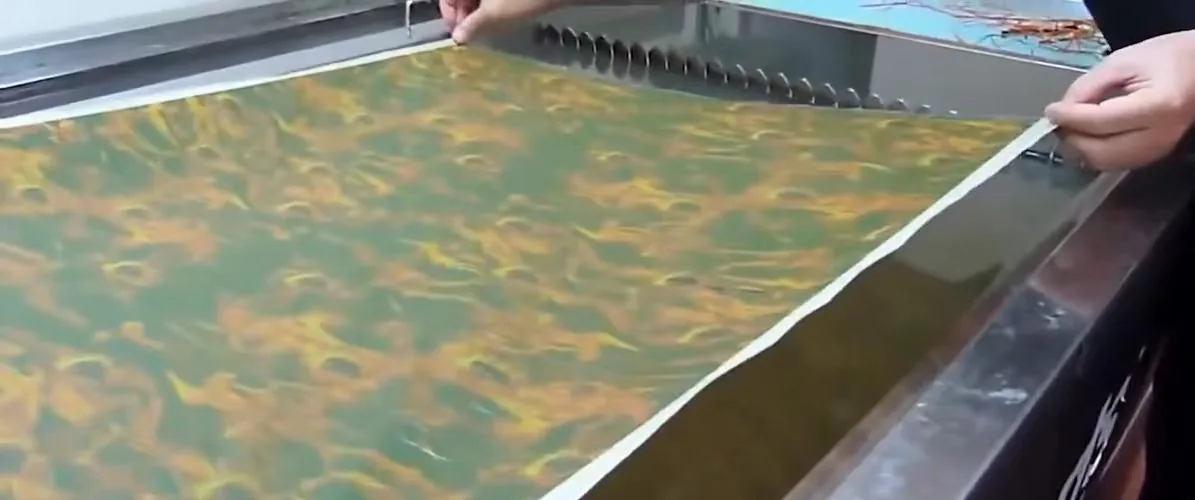
The water transfer printing process places printed hydrographic film on water prepared for the selected film system. After the film carrier hydrates on the water, activator softens the printed layer so it remains transferable as the prepared product passes through it. The result then requires cleaning, drying and the specified protective finish before inspection.
Technical boundary: hydration time, water temperature, activator application and cure schedule are material-system variables. Confirm them for the selected film, base coat and protective finish instead of treating one supplier setting as universal.
Fix the cup model, material, exterior preparation and base colour before evaluating the decoration.
Agree pattern scale, direction, repeat and the preferred location for any visual meeting zone.
Place the film on water controlled for that film system. Confirm the proposed tank conditions rather than assuming one time or temperature.
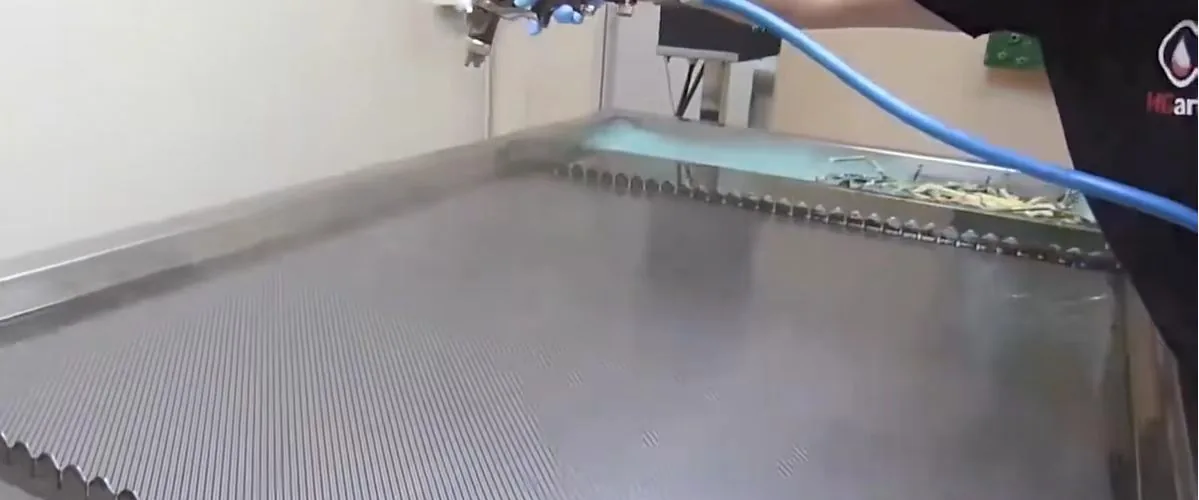
Activate the film and move the product through the floating pattern with controlled angle and speed.
Remove residue, dry the item and apply the agreed protective finish, such as the clear topcoat selected for appearance and intended handling.
Review coverage, distortion, meeting areas, surface condition and packing contact on the actual item.
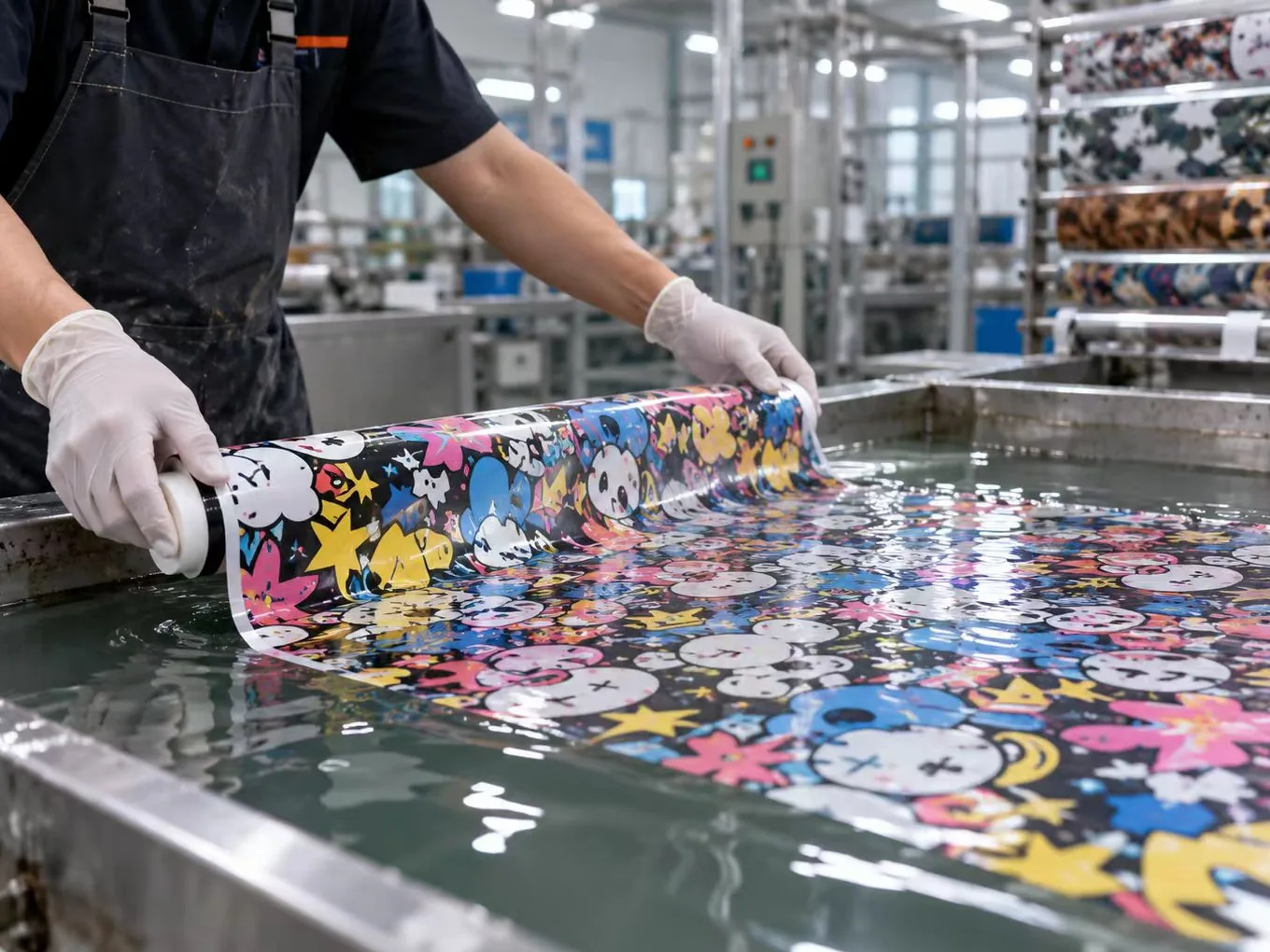
The same film can look different over light and dark base colours. Shoulders, tapers and recessed areas can change how the design stretches. Approve the full decorated construction rather than the artwork file or film alone.
Compare before sampling
When assessing hydrographic printing on tumblers, begin with the design outcome and cup surface. Final recommendations must be confirmed against the selected product and a physical sample because process names alone do not establish durability, dishwasher performance or colour accuracy.
| Method | Useful starting point | Buyer should verify |
|---|---|---|
| Water transfer printing | All-over decorative patterns that need to follow curved forms | Distortion, meeting zone, edge coverage, base colour and protective finish |
| Dye sublimation | Photographic artwork on a compatible sublimation coating | Coating compatibility, transfer contact, pale areas, seam gap and colour shift |
| UV printing | Detailed digital artwork with more controlled placement | Print area, white layer, adhesion, banding and wrap meeting point |
| Screen printing | Solid-colour logos, lettering and repeat graphics | Ink compatibility, registration, fine lines and curing |
Compare dye sublimation, UV printing and laser engraving.
Approve the decorated construction
Turn the sample all the way round and check the six points below. A sample of an existing model takes up to 7 days; samples are charged, and the charge is credited against the bulk order.
Confirm where the pattern starts and stops near the rim, base, threads, handle mounts or other fixed details.
Locate the visible meeting area and define what level of overlap, gap or mismatch can be accepted.
Look for stretched motifs, compressed lines or changes in scale where the body geometry varies.
Inspect for pinholes, trapped contamination, folds and areas where the pattern did not transfer cleanly.
Judge the pattern over the actual base colour. Cross-cut and dishwasher tests can be run on the sample on request.
Review sleeves, dividers and retail packs where contact could mark the decorated surface during transport.
Prepare a useful RFQ
Send the product and decoration decisions together. If a detail is undecided, mark it clearly so it can be resolved before sampling rather than assumed during production.
Buyer questions
Water transfer printing, also called hydrographic printing, uses a printed film floated on water and activated before the pattern is transferred onto a prepared drinkware surface. It is commonly considered for decorative wraparound effects. The result depends on cup geometry, base coating, film, transfer setup and any protective topcoat.
Hydrographic printing can cover broad curved areas, but an entire tumbler may still have excluded zones near rims, threads, bases, handles or fixtures. Tapers and shoulders can distort the image, and a meeting area may remain visible. Mark the intended coverage on the selected cup and approve the sample from several angles.
It may not be the best first choice when a logo needs tightly controlled placement, fine registration or an exact spot colour. Water transfer printing is stronger for decorative patterns that can tolerate some variation. Compare screen printing or UV printing for controlled logo placement and laser engraving for a contrasting mark on suitable materials.
Yes. The printed film becomes part of a layered surface system, so the colour beneath it can influence the final appearance. Ask the supplier to identify the proposed base colour and finish, then approve the decorated sample under consistent lighting. A film swatch alone does not show the final result on the cup.
Check uncovered spots, pinholes, folds, stretched motifs, overlap or gaps at the meeting area, inconsistent gloss and abrupt transitions near the rim or base. Inspect the whole circumference and confirm the agreed handling checks for the finished surface. Photograph or record the approved views for the production reference.
The process name alone does not prove dishwasher suitability. Performance depends on the complete construction, including substrate, preparation, base coating, transferred pattern and protective finish. State the intended cleaning conditions in the RFQ and agree a suitable test method before making a dishwasher claim.
Use the approved physical sample as the reference. Because the film floats on water, the pattern never lands in exactly the same place twice, so agree which areas must match and where some movement is acceptable. Bulk orders are inspected to ISO 2859-1, general level II, AQL 2.5 / 4.0.
Start with the actual cup and pattern
Send the cup reference, artwork or pattern direction, quantity, coverage boundary, surface requirement, packing and delivery target. BG Drinkware can use those details to clarify the next practical step.
Search BG Drinkware
Add us on WeChat

WeChat ID: +86 151 5891 9004
Open WeChat, tap + then Scan, and point it at the code.