Is Stainless Steel Dishwasher Safe? Grades, Finishes and Lids
The steel is rarely the problem. When a stainless steel bottle or tumbler comes out of a dishwasher looking worse, the cause is usually the coating, the print, the lid or the way the product was built. Here is how each part copes and what to check before a care claim goes on the box.
By Feng, Head of After-Sales Service & Online Marketing Lead
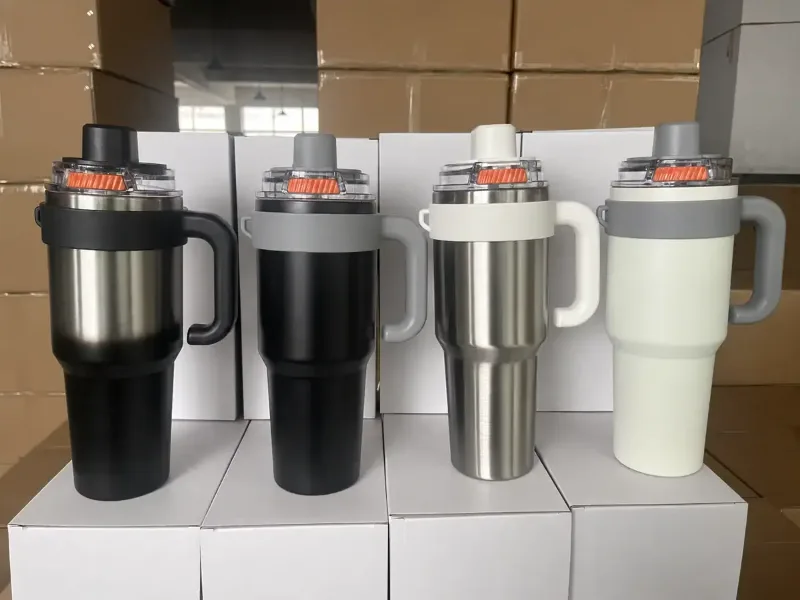
Yes: food-grade stainless steel such as 304 (18/8) and 316 can generally go in a dishwasher, and the steel itself is rarely what fails. What decides whether a stainless steel bottle or tumbler is dishwasher safe is everything around the steel: the outer coating, the print, the lid and its seals, and the way the parts are joined. Strong detergents and long hot cycles can dull prints and some finishes, and a design with a plastic liner held in by glue may come apart. BG Drinkware, a drinkware manufacturer in Yongkang, China, uses a 304 inner wall and a 201 outer wall as standard, with 316 inside on request. In its experience, stainless steel and most surface coatings can generally go in a dishwasher, but a care claim should rest on a test of the finished product, lid included. Hand washing remains the gentlest option for printed and coated drinkware.
Can stainless steel go in the dishwasher?
Yes. Food-grade stainless steel resists water, heat and ordinary detergents, which is why steel cutlery and pans go in dishwashers every day. A stainless steel bottle body copes in the same way. The questions that matter are which grade touches the drink and what else is attached to the steel.
The steel
304 and 316 generally cope well with dishwashers.
The finish
Coatings and prints are where wear usually shows first.
The lid
Plastic, silicone and moving parts have their own limits.
The build
Glued or mixed-material designs need extra care.
For cleaning by hand, see how to clean a stainless steel bottle.
Do 304, 316 and 201 steel behave differently in a dishwasher?
Slightly. 316 contains molybdenum and resists corrosion best, 304 (18/8) is the standard food-contact grade, and 201 has less nickel and resists corrosion less well. That is why BG Drinkware uses 201 only for the outer wall, where it is usually coated, and 304 or 316 for the wall that touches the drink.
| Grade | Where it is used | Dishwasher notes |
|---|---|---|
| 316 | Inner wall, on request | Best corrosion resistance of the three |
| 304 (18/8) | Standard inner wall | Generally copes well with dishwashers |
| 201 | Outer wall, usually coated | Lower corrosion resistance; best kept coated |
For the grades in depth, see 18/8 vs 304 vs 316 steel and stainless steel drinkware.
Does a dishwasher damage an insulated bottle?
Not usually, if the bottle is well made: the vacuum sits sealed between two steel walls, and a dishwasher does not reach it. Damage comes from a weak seal, a dent or a bottle that was already losing its vacuum. If a bottle stops insulating after washing, the vacuum was probably compromised and cannot be repaired.
BG Drinkware seals the vacuum with lead-free sealing beads in a vacuum furnace, and every vacuum-insulated bottle is temperature-checked on its testing machine before shipping. Some insulated designs are not all steel, though: a build with a steel outside and a plastic inside held by glue may come apart in a dishwasher. See how insulated bottles work.
Which coatings and prints survive a dishwasher?
Most surface coatings can generally go in a dishwasher, in BG Drinkware’s experience, but they do not all wear at the same rate, and prints usually show wear before the coating does. Bare steel with a laser-engraved logo has the least to lose. Any finish should be judged on a washed sample, not by name.
- Bare or brushed steel: the steel itself; may show water marks, which wipe off.
- Powder coating and spray paint: generally cope, but compare wear on washed samples.
- Screen and UV prints: check for fading or peeling after repeated cycles.
- Laser engraving: removes the coating to show the metal, so there is no print to wear off.
For finish options, see powder-coated tumblers and customisation.
Are the lids of stainless steel bottles dishwasher safe?
Check the lid separately, because it is usually plastic and silicone rather than steel, and it often has moving parts. Many lids cope with the top rack, but seals can loosen and printed lids can fade. Take out the sealing ring and straw, and test the assembled lid for leaks after washing.
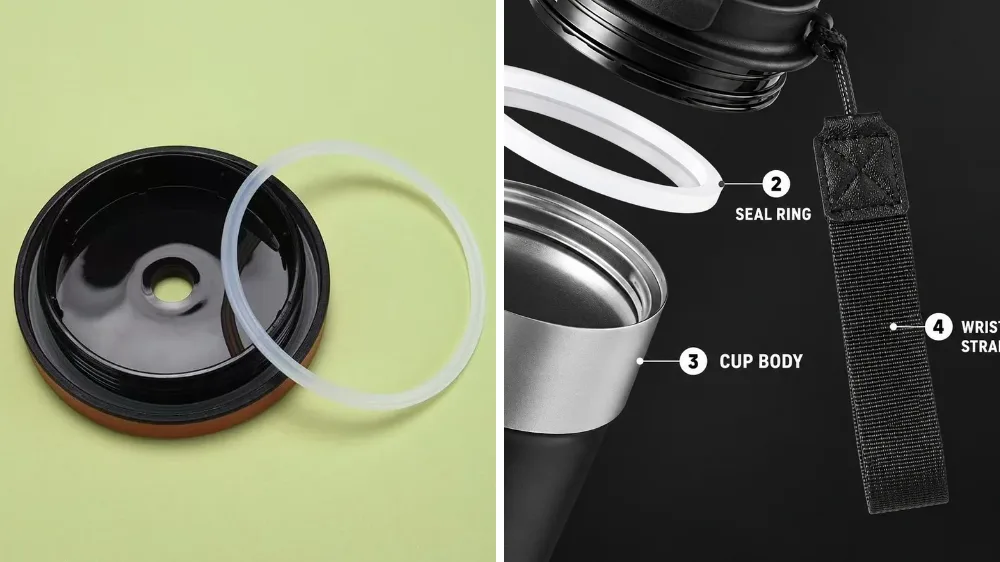
BG Drinkware tests lids for leaks before shipping by filling them with hot water, turning them upside down for 10 minutes and shaking them. Repeat that check on a lid that has been through your dishwasher test. For plastic parts, see Tritan water bottles; for seals, why a bottle leaks.
When can a brand call its stainless steel drinkware dishwasher safe?
Only after the finished product, with its coating, print and lid, has passed a dishwasher test that you agreed in advance. Record the machine programme, temperature, detergent, rack position, number of cycles and what counts as a pass. Until then, write a care line that recommends hand washing.
For a full test plan, see dishwasher-safe water bottles in bulk. A sample of an existing model takes up to 7 days, so allow time for testing before bulk production, which takes 7–12 days after the sample is approved. See golden samples.
Planning a branded run?
If your bottles will be sold as dishwasher-friendly, put the wash test and the decoration method into the specification, because the coating and the print decide how the logo holds up. See our custom water bottles and the decoration options. The standard minimum order is 500 pieces, negotiable.
Stainless steel dishwasher FAQ
Short answers to the questions buyers and their customers ask most about putting stainless steel drinkware in a dishwasher: stains, insulation, coated tumblers and safety. The answers come from BG Drinkware’s production practice and after-sales experience.
Why does stainless steel get spots after the dishwasher?
Usually from minerals left behind when hard water dries, not from the steel rusting. The marks wipe off with a soft cloth, and a little white vinegar helps with stubborn ones. Drying the bottle after the cycle prevents most spots. Brown marks that do not wipe off are worth reporting to the supplier.
Can an insulated tumbler go in the dishwasher?
A well-made vacuum-insulated stainless steel tumbler generally can, because the vacuum is sealed between the steel walls. The coating, print and lid are the parts to check. Designs with a plastic inner part held by glue may come apart, so follow the care instructions for that model.
Does the dishwasher ruin powder-coated tumblers?
Not usually: most surface coatings can generally go in a dishwasher, in BG Drinkware’s experience. Prints and some colours can fade over many cycles, and harsh detergents speed this up. Compare washed samples of the exact finish and colour before writing a dishwasher-safe claim on the box.
Is it safe to wash stainless steel drinkware with other dishes?
Yes. Place bottles and tumblers so they do not knock against other items, because dents can damage coatings and, on insulated products, the vacuum. Put lids and small parts on the top rack or in a basket, and take out sealing rings so they dry properly.
This guide is based on BG Drinkware’s production practice and after-sales experience. Related guides: dishwasher-safe bottles in bulk, easy-to-clean bottles and are Owala bottles dishwasher safe.
Planning a dishwasher-safe line?
Send the model, capacity, quantity, finish, logo method, packaging, the care claim you want to make, payment terms and trade terms.