How to Choose a Stainless Steel Water Bottle Manufacturer
Ask a stainless steel water bottle manufacturer for the inner and outer steel grades, the vacuum test method and reports that match the model. Use the sample to check what the supplier will measure and how it will handle any correction.
By Feng, Head of After-Sales Service & Online Marketing Lead
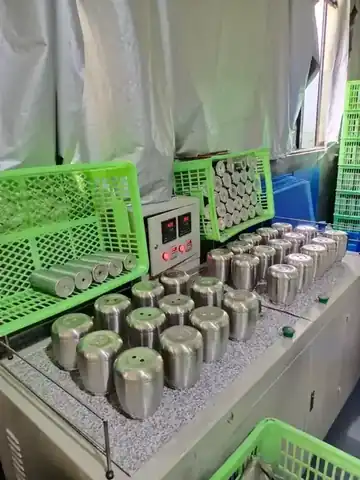
Choose a stainless steel water bottle manufacturer by checking five things in writing: that it makes the bottles itself, the steel grade of each wall, how every bottle’s vacuum is checked before shipping, which parts its test reports cover, and how the approved sample is used to check bulk. Ask the same questions of every shortlisted supplier and compare the answers in a table, not the unit prices alone. A low price often hides a cheaper outer wall, an unchecked vacuum or a report that excludes the lid. BG Drinkware, a drinkware manufacturer in Yongkang, China, uses a 304 inner wall and 201 outer wall as standard, offers a 316 inner wall on request, and temperature-checks every vacuum bottle on a testing machine before it ships. BG’s usual minimum is 500 pieces per model and colour. Each logo is counted separately. Lower quantities for some start-up orders are confirmed in the quotation. Samples of existing models can take up to 7 days.
How can you tell whether a supplier really makes the bottles?
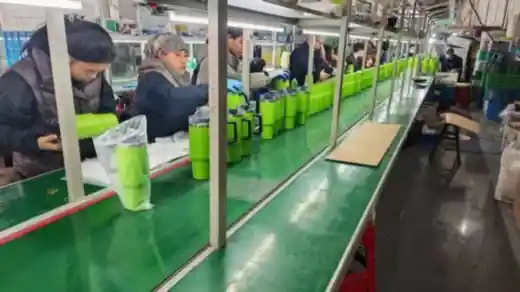
Ask for production records tied to your enquiry, not a general factory video. A manufacturer can show the vacuum line, the testing machine and dated photos of work in progress, and can answer process questions directly. A trading company can still be a good partner, but you should know which one you are dealing with before you compare prices.
- Location and process: where the bottles are drawn, welded, vacuumed and coated, and which steps are outsourced.
- Dated records: whether production photos are kept with dates and order references. BG Drinkware keeps dated production photos in its CRM records.
- Direct answers: whether the person quoting can explain the vacuum and sealing process without waiting for someone else.
Yongkang in Zhejiang is one of China’s main stainless steel drinkware clusters; Yongkang drinkware manufacturers explains what that means for buyers, and manufacturer vs trading company lists the checks in more detail.
Which steel grades should a manufacturer state for each wall?
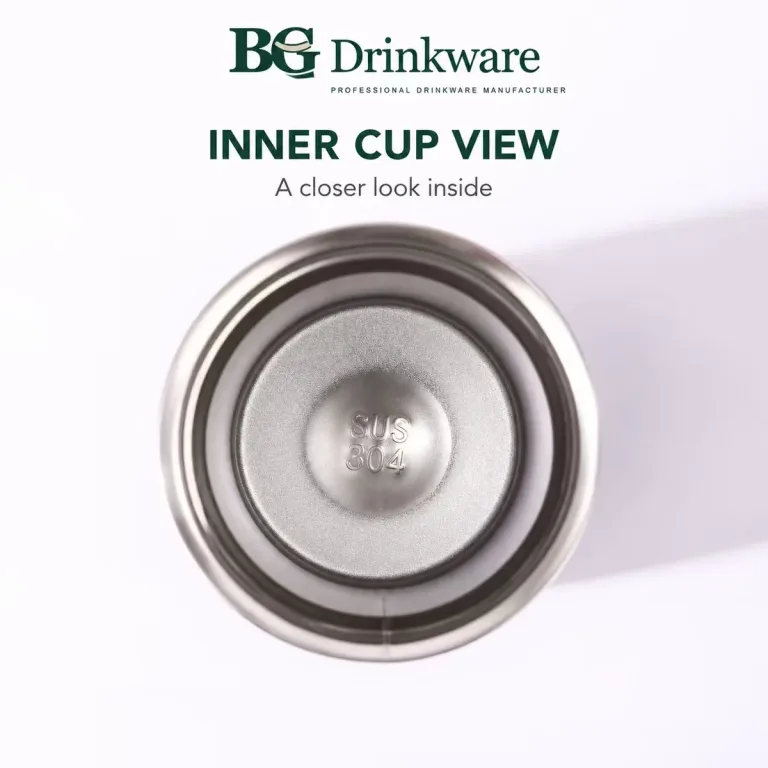
A good supplier names the grade of the inner wall and the outer wall separately. The inner wall touches the drink, so it is usually 304 or 316; the outer wall is often 201 or 304. A quote that only says “stainless steel” or “18/8” leaves the outer wall and the cost difference unexplained.
| Inner wall | Outer wall | What to ask |
|---|---|---|
| 304 | 201 | Is this the standard build, and how is the outer wall finished and coated? |
| 316 | 304 | What does the upgrade cost per unit, and does it change the minimum? |
| 304 | 304 | Is it available on this model, and at what price difference? |
At BG Drinkware the standard insulated build is a 304 inner wall with a 201 outer wall, and a 316 inner wall with a 304 outer wall is available on request. Put the grade of each wall in the purchase order, so the approved sample and bulk can be checked against the same specification. 18/8 vs 304 vs 316 explains the grades, and the stainless steel drinkware page lists the options.
How should a manufacturer check the vacuum?
Ask whether every bottle is checked or only a sample, and what the check measures. A bottle that has lost its vacuum looks identical to a good one, so only a temperature check finds it. A supplier that checks a handful per carton will ship some failures; one that checks every bottle should be able to say how and when.
At BG Drinkware the vacuum is sealed with lead-free sealing beads in a vacuum furnace, and every vacuum bottle is temperature-checked on a testing machine before shipping; customers can ask for more checks. Heat-retention tests at 95°C for 6 hours run on samples and as spot checks on bulk. Ask other suppliers for the same level of detail:
- WhenAt which production stages the temperature is checked.
- How manyEvery bottle, or a sample per batch.
- SealingHow the vacuum is sealed, and whether the sealing material is lead-free.
- Retention testThe water temperature, duration and lid state used for any heat-retention test.
How vacuum-insulated bottles are made walks through each step a buyer can ask to see.
What should you check in a manufacturer’s test reports?
Read the scope, not the logo on the cover. A report names the lab, the standard, the date, the model and the parts tested. Many food-contact reports cover only the inner wall material and exclude lids, seals, straws and coatings. If your market needs a test on the finished bottle, plan one on your exact configuration.
Ask each supplier to send the reports it holds and to say which of them apply to the model you are quoting. As an example of how narrow a scope can be, BG Drinkware’s 2025 food-contact reports from Ningbo GIG Testing cover the 304 inner wall of two tumbler models; they are not FDA reports and do not cover lids, straws, seals or coatings. A supplier that states limits this clearly is easier to trust than one that sends a folder of certificates with no explanation. See certifications.
How do samples show which manufacturer to choose?
Order a sample of the exact model, lid and decoration from each shortlisted supplier and judge them side by side. Check the lid seal, the finish, the logo and the vacuum, then ask how the approved sample will be kept and used to check bulk. The answer tells you more than the sample itself.
| Check | What a clear answer looks like |
|---|---|
| Steel by wall | Inner and outer grade named in the quote |
| Vacuum check | Every bottle, method and stage stated |
| Report scope | Model and parts covered, limits stated |
| Sample time | A firm date for the exact configuration |
| Bulk check | Retained sample and agreed inspection points |
| After-sales | A named contact and a written process for problems |
At BG Drinkware a sample of an existing model takes up to 7 days, and bulk production typically takes 7–12 days from receipt of the deposit, subject to timely approvals. Golden samples for bulk drinkware explains how to retain the reference. To start, see sampling.
Which commercial terms separate good manufacturers from risky ones?
Compare the minimum per colour, the sample and bulk timing, payment terms, trade terms and what happens when goods arrive wrong. A supplier that explains these before you pay is usually the one that handles problems well afterwards. Vague answers about after-sales are a warning sign, however low the price.
BG’s usual minimum is 500 pieces per model and colour. Each logo is counted separately. Lower quantities for some start-up orders are confirmed in the quotation. Its capacities run from 120 to 4,000 ml across the range. If you bring a reference bottle from another brand, expect a careful manufacturer to check it for possible design-right problems before quoting. For a branded range, continue on the private label drinkware page.
Choosing a manufacturer FAQ
How many manufacturers should I sample before choosing?
Two or three is usually enough to see real differences. Send all of them the same brief and order the same model, lid and logo, so the samples can be compared fairly. More suppliers mean more sample costs and more time, and the comparison gets harder rather than better once the briefs start to differ.
Do I need a factory audit before ordering?
Not always for a first order of an existing model, but you do need proof. Ask for dated production photos, the vacuum and temperature-check process, and the reports that cover your model. For large or repeat programmes, a visit or a third-party audit is worth the cost, especially if your customers or retailers require one.
Why is one manufacturer much cheaper than another?
Compare the specifications before the price. A lower quote may use a different outer wall, a thinner gauge, a cheaper lid, a sample-only vacuum check or no individual packaging. Ask each supplier to state the grade of each wall, the lid materials, the vacuum check and the packaging in the quote, then compare like for like.
What should I send in the first enquiry?
Send the capacity, quantity per colour, model or reference, colour, logo method, packaging, payment terms and trade terms, which are the fields BG Drinkware asks for. Add the market you sell in and any tests you need. A complete first message gets a comparable quote back and saves a round of questions.
This guide is based on BG Drinkware’s production process and order records. Related guide: why insulated bottles lose their vacuum.
Shortlisting manufacturers?
Send the capacity, quantity per colour, model, logo method, packaging, payment terms and trade terms for a comparable quote.