Tumbler Manufacturer Checklist: 12 Questions Before You Order
Tumblers fail in different places from water bottles: the lid and straw, the handle, the coating, the base pad and the fit in a cup holder. Ask a tumbler manufacturer about each of them before the first sample, and write the answers into the order.
By Feng, Head of After-Sales Service & Online Marketing Lead
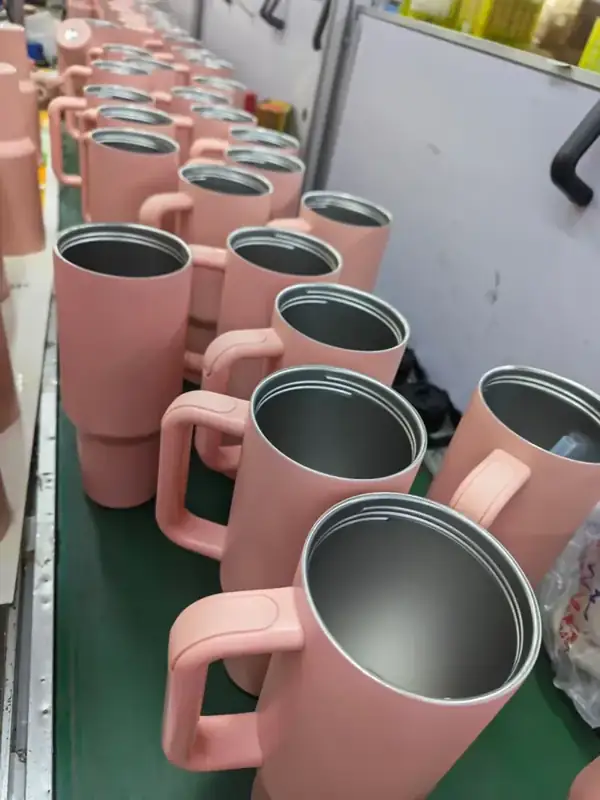
Before ordering from a tumbler manufacturer, get written answers on twelve points: the steel grade of each wall, how every vacuum is checked, the lid and seal materials, the straw material, how the lid is leak-checked and in which position, how the handle is fixed, how the coating is applied and tested, how the base pad is attached, the logo method for that finish, cup-holder fit, packaging, and which parts any test report covers. Tumbler complaints usually start at the lid, the handle or the coating rather than the steel, so those answers matter most. BG Drinkware, a drinkware manufacturer in Yongkang, China, builds insulated tumblers with a 304 inner wall and 201 outer wall as standard, temperature-checks every vacuum tumbler before shipping, and offers PP, SK, Tritan and silicone straws. Its standard minimum order is 500 pieces, negotiable.
What should you ask about the tumbler body and vacuum?
Ask for the grade of the inner and outer wall, and whether every tumbler’s vacuum is checked or only a sample. These two answers decide whether the tumbler keeps drinks cold and how it holds up to coating and engraving. Get them in the quote, because a sample alone cannot show either.
- 1. Steel by wallInner wall 304 or 316, outer wall 201 or 304, named separately.
- 2. Vacuum checkEvery tumbler or a sample, at which stage, and by what method.
BG Drinkware’s standard insulated tumbler has a 304 inner wall and a 201 outer wall, with a 316 inner wall and 304 outer wall on request, and every vacuum tumbler is temperature-checked on a testing machine before it ships. See stainless steel drinkware.
Which lid, seal and straw questions prevent leak complaints?
Ask what the lid, seal and straw are made of, and in which position the lid is leak-checked. A straw lid is a drinking lid, not a sealed travel lid, so it will leak if tipped over with the straw in. Agreeing the closed configuration and the check method stops most leak disputes before they start.
- 3. Lid and seal materialsEach part named, including the seal.
- 4. Straw materialBG Drinkware offers PP, SK, Tritan and silicone straws; SK is SK Chemicals copolyester.
- 5. Leak checkWhich closure is checked, upright or tipped, and how many units.
Tumbler lid, seal and straw checks lists the tests to agree for each lid type.
How is the handle fixed, and what happens to the base?
Ask how the handle is attached, whether by welding, a strap or screws, and how the attachment is checked before packing. Ask the same for the base pad: what it is made of and how it is bonded. Loose handles and pads that fall off are common after-sales complaints on large tumblers.
- 6. Handle fixingMethod, check before packing, and whether it can be replaced.
- 7. Base padMaterial and bonding method, and whether it affects stability on a table.
For the after-sales side, see loose tumbler handles.
Which coating and logo questions should you ask?
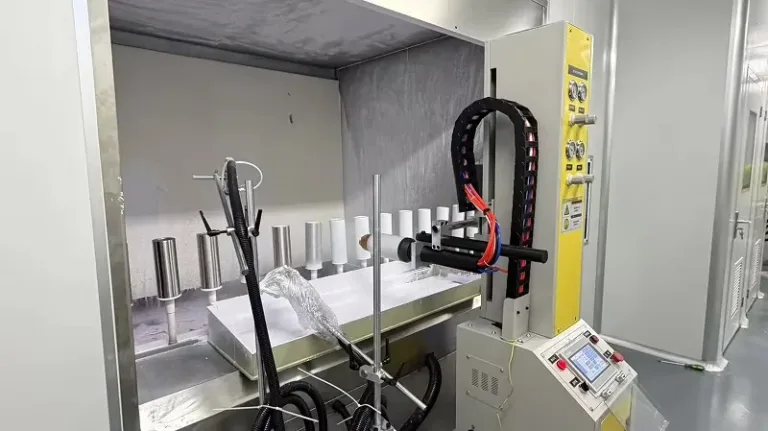
Ask how the coating is applied, how it is checked for adhesion, and which logo methods suit that finish. Powder coating, soft-touch coating and sublimation coating behave differently, and the logo method must match the surface. Bare stainless steel cannot take UV printing, for example, while laser engraving removes coating to show the metal.
| Finish | Logo methods to discuss | Question to ask |
|---|---|---|
| Bare stainless steel | Laser engraving, screen printing | How is the logo kept consistent around a curved wall? |
| Powder or soft-touch coating | Laser engraving, screen printing, UV printing | How is coating adhesion checked on each batch? |
| Sublimation coating | Full-wrap sublimation | What press settings were used on the approved sample? |
- 8. CoatingType, colour reference and adhesion check.
- 9. LogoMethod, size and position relative to the handle and seam.
Compare methods on the customisation page, and see tumbler logo placement for positioning around a handle.
What should you confirm about fit, packing and reports?
Confirm whether the tumbler fits the cup holders your customers use, how it is packed, and which parts any test report covers. Cup-holder fit depends on the base diameter and taper, not the capacity. Packing decides carton count and freight, and report scope decides what you can claim on the listing.
- 10. Cup-holder fitBase diameter, and a check against the holder on the sample.
- 11. PackagingIndividual box or bag, carton quantity and carton size.
- 12. Report scopeWhich models and parts are covered. BG Drinkware’s 2025 food-contact reports from Ningbo GIG Testing cover the 304 inner wall of two tumbler models, not lids, straws, seals or coatings.
Sizes and base diameters by capacity are compared in tumbler sizes. For the full range, see tumblers.
How do you turn the answers into an order?
Put the twelve answers into the purchase order and check the sample against them before approving bulk. Keep the approved sample as the reference for bulk inspection. At BG Drinkware a sample of an existing model takes up to 7 days, and bulk production takes 7–12 days after the sample is approved.
The standard minimum order is 500 pieces, negotiable, with some models available from 100 pieces per colour. For blank tumblers bought for your own decoration, use the blank tumbler inspection checklist instead. For branded orders, continue on wholesale drinkware.
Tumbler manufacturer FAQ
Short answers to the questions buyers ask most before choosing a tumbler manufacturer: straw choice, leak-proof claims, dishwasher use and handle problems. The answers reflect BG Drinkware’s production practice and after-sales experience with insulated stainless steel tumblers.
Which straw material should I choose for a tumbler?
Choose by use and feel. BG Drinkware offers PP, SK, Tritan and silicone straws; SK is a copolyester from SK Chemicals. Silicone is soft and flexible, while Tritan and SK are clear and rigid. Ask for the straw material on the quote, check it on the sample, and confirm which parts any test report covers.
Can a tumbler with a straw lid be called leak-proof?
Usually not with the straw in, because a straw lid is open for drinking. A tumbler can be leak-resistant or leak-proof only in a defined closed position, such as a sliding cover closed or a flip lid shut. Agree that position and the check method with the manufacturer, and describe the lid accurately on your listing.
Are stainless steel tumblers dishwasher safe?
Stainless steel and most surface coatings can generally go in a dishwasher in BG Drinkware’s experience, but builds that rely on glue may come apart, and some prints wear faster. If you plan a dishwasher claim, run a dishwasher test on the finished sample, including the lid, coating and logo.
What causes a loose handle on a large tumbler?
A loose handle usually comes from the fixing method or a strap or screw that was not tightened or checked before packing. Ask the manufacturer how the handle is attached and checked, whether replacement handles are available, and how a loose-handle complaint is handled. The details belong in the order, not in after-sales emails.
This checklist is based on BG Drinkware’s production practice and after-sales records for tumblers. Related guide: tumblers in bulk.
Ready to compare tumbler quotes?
Send the capacity, quantity per colour, model, colour, logo method, packaging, payment terms and trade terms.