Materials & construction / Buyer guide
How to Choose the Right Handle for a Stainless Steel Tumbler
By Feng, Head of After-Sales Service & Online Marketing Lead
The right handle for a stainless steel tumbler is one that matches the cup's appearance, leaves enough space for the intended grip and suits the cup's mounting design. Buyers should judge all 3 points on an assembled sample. The outside shape sets the visual impression, while the opening and clearance decide where the fingers fit. A photograph can shortlist options, but it cannot settle both questions. BG Drinkware reports that its customers are particularly concerned with how a handle looks on the complete cup, so the handle is part of the product design rather than an add-on. BG Drinkware commonly supplies plastic handles and also offers welded stainless steel handles on some products. The handle material is therefore specified separately from the body, which on the standard build pairs a 304 inner wall with a 201 outer wall. For a bulk order, record the handle version, colour and attachment method, then approve the assembled sample, which takes up to 7 days on an existing model.
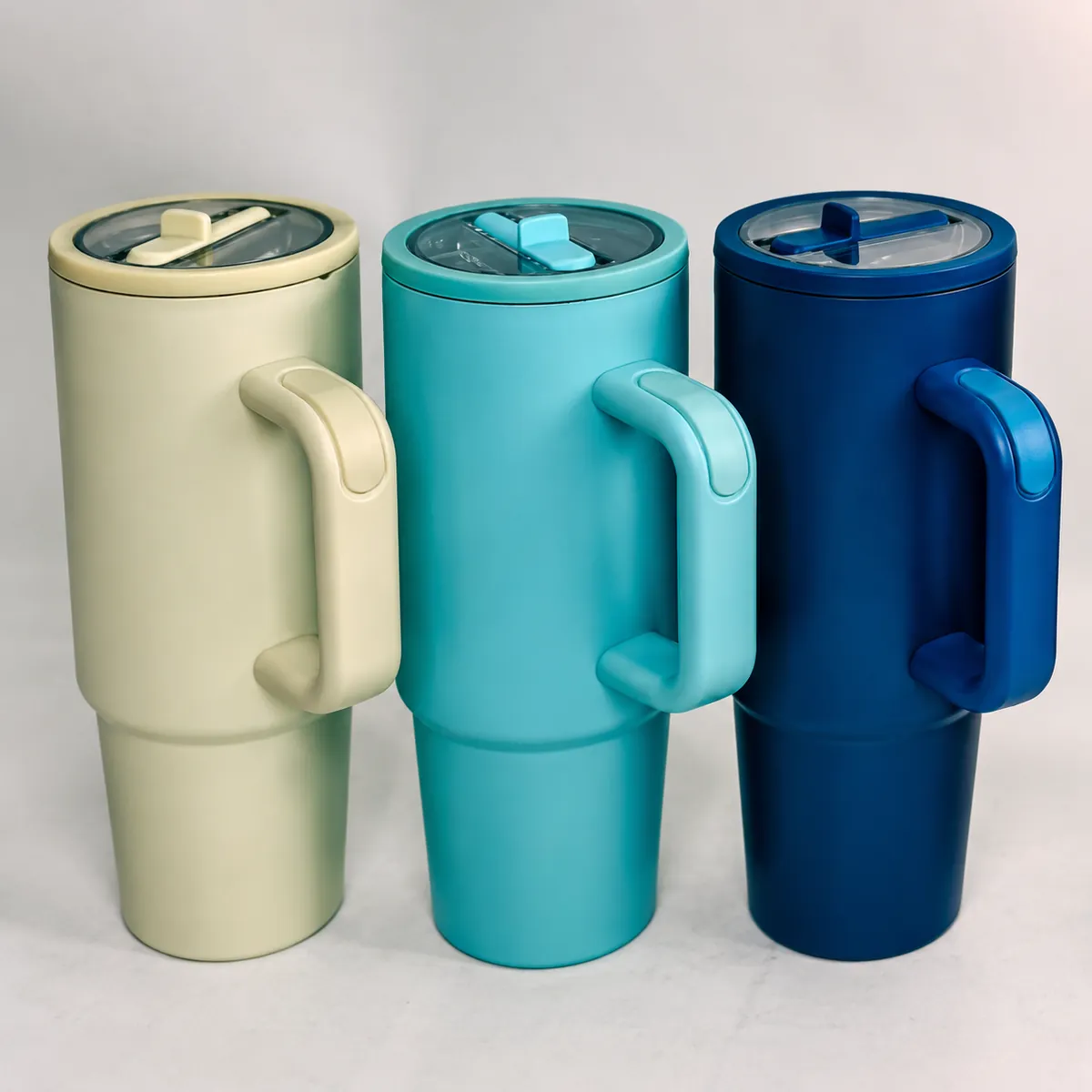
A handle can look right in a product photo and still leave too little room for the buyer’s preferred grip. BG Drinkware has encountered exactly that situation: a customer needed a larger handle of the same style because the original grip space was insufficient. The lesson is not to choose the biggest handle. It is to separate the look you want from the space you need.
What should buyers compare first: appearance or grip space?
Start by shortlisting handle shapes that work with the tumbler’s overall design, then check usable grip space on a sample. These are separate decisions: the outside shape determines the visual impression, while the opening and clearance determine where the fingers fit. A photograph can help shortlist options, but cannot settle both questions.
BG Drinkware reports that its customers are particularly concerned with handle appearance and how well it suits the complete cup. That makes the handle part of the product design, not simply an accessory added at the end.
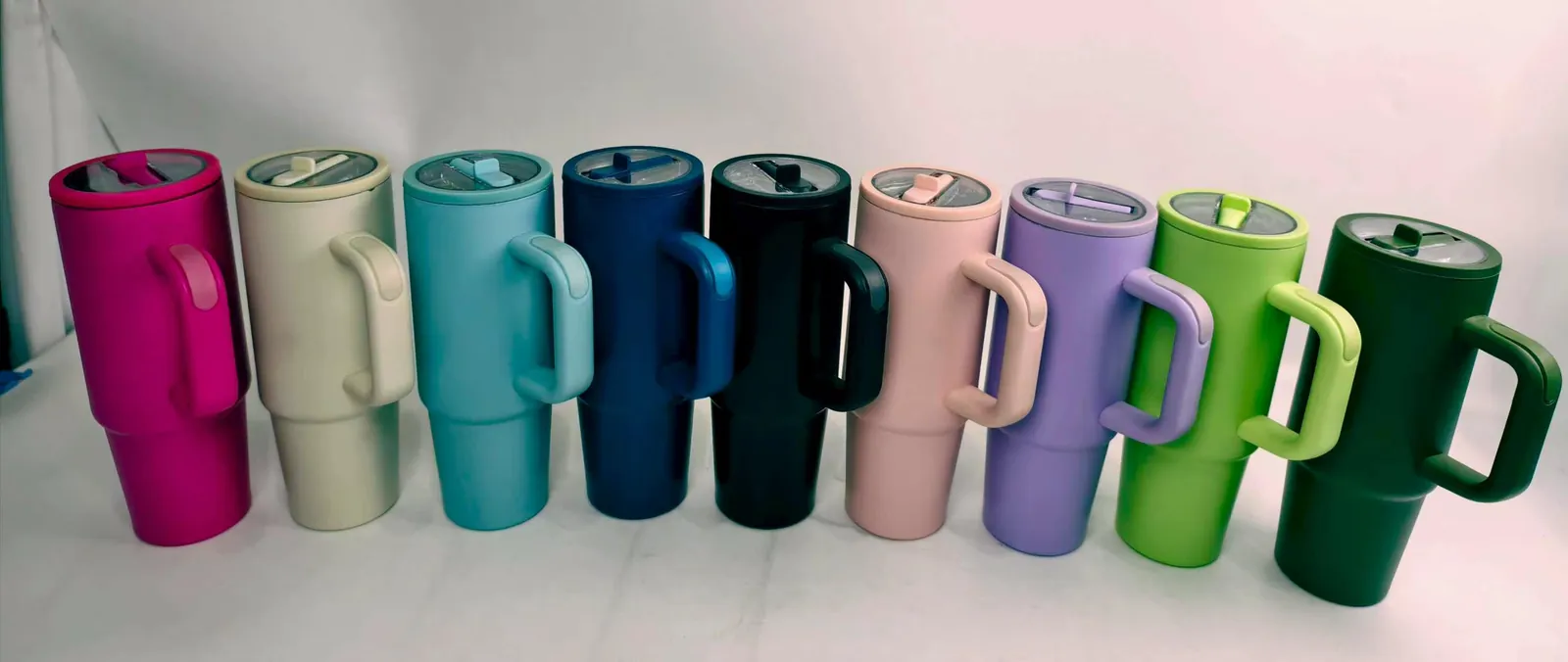
When comparing the tumbler range, look at the handle’s position, shape and colour alongside the body and lid. Ask whether the handle supports the look of the product line you are building. Then move from the catalogue image to the assembled sample.
If you are also choosing capacity, review water bottle sizes for a product line. Capacity selection and handle fit are related purchasing decisions, but one does not establish the other.
How can you check whether the handle opening is large enough?
Separate three things when reviewing a handle: its overall outline, the usable opening inside it, and the clearance between the gripping area and the cup body. Ask for the relevant measurements on the assembled sample and try the intended grip. A larger-looking outline alone does not establish that the usable space is sufficient.
Use the assembled sample to identify where the grip feels restricted and mark that area in a photo. Record the opening and clearance at that point so the supplier can review the specific change you need.
| Check | What to record | What it helps clarify |
|---|---|---|
| Inner opening | Clear height and width at the intended finger position | Whether the opening itself needs to change |
| Body clearance | Gap from the gripping area to the cup body, with measurement points marked | Whether the hand is crowded against the cup |
| Handle shape | Front and side views of the complete sample | Whether a revised handle preserves the desired appearance |
| Assembly | Cup reference, handle version and attachment details | Which combination the buyer is actually approving |
On small screens, swipe the table horizontally.
If filled-cup handling matters to your project, discuss a specific sample evaluation and its conditions with the supplier.
Should you choose a plastic handle or a welded stainless steel handle?
Choose between the actual handle constructions available for your selected cup, rather than assuming one material is always better. BG Drinkware uses plastic handles more commonly, including removable screw-fastened designs, and offers welded stainless steel handles on some products. Confirm the construction on the exact model; not every handle uses the same attachment.
For a screw-fastened option, ask whether the handle is designed to be removed and which replacement version fits the mounting points. For a welded option, do not treat the handle as an interchangeable screw-on accessory. If the handle needs to change, ask the supplier to review what that means for the selected cup construction.
The material and attachment method describe the construction; performance requirements need a separate agreement. If your order requires load or durability results, discuss the test method and acceptance criteria through the quality-control discussion.
For the other parts of an insulated tumbler, see what is a tumbler.
If a handle works loose in use, see tumbler handle loose.
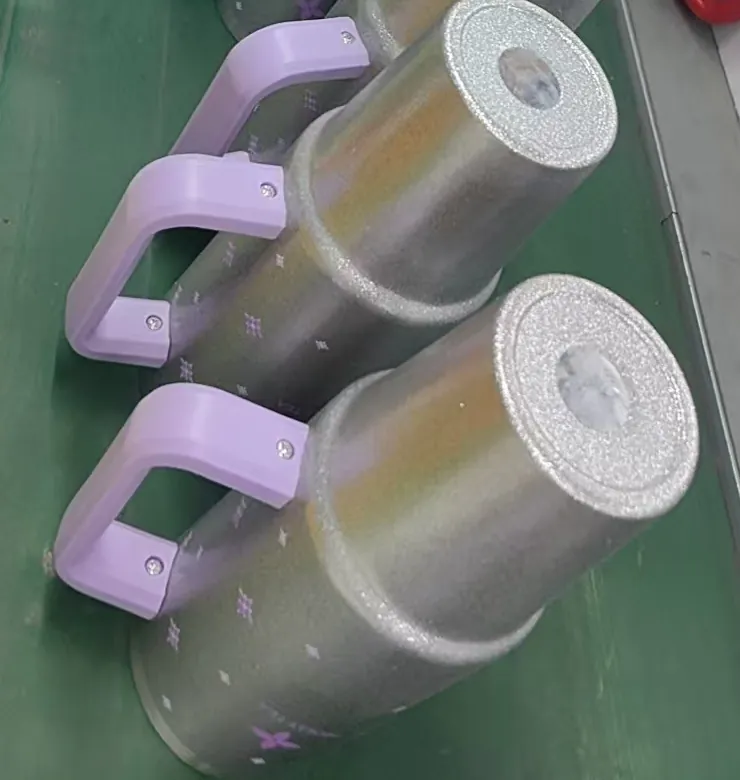
What changed when a customer needed more grip space?
In one BG Drinkware project, the customer found the gripping space insufficient and changed to a larger handle of the same style. The customer kept the preferred shape and chose a bigger version. The example shows why a handle’s appearance and its usable opening deserve separate attention during selection.
For your own project, describe the problem precisely: “We like this handle style, but need more room here.” Send a marked-up sample photo and ask whether a larger compatible version is available. Avoid assuming that a visually similar handle will fit the same mounting points.
What should be agreed before approving a bulk-order sample?
Agree on the cup-and-handle combination, not just the tumbler body. Record the chosen handle style, size or version, colour and attachment construction against the sample reference. Where grip space prompted a change, check that concern again on the revised assembly. Treat these as approval details, separate from any additional testing required by the order.
A practical sample approval note can cover:
- The exact cup: model reference and selected capacity, rather than a generic product photo.
- The exact handle: style, version and colour, especially if more than one size looks similar.
- The fit concern: marked measurement points and feedback on the intended grip.
- The connection: confirmed attachment method and whether removal or replacement is intended.
- Any required checks: agreed conditions and acceptance criteria, without assuming they are included automatically.
Use the sampling discussion to clarify the configuration and any outstanding questions before giving approval.
For handles on bottles rather than tumblers, see water bottle handle types.
Frequently asked questions
Does a stainless steel tumbler always have a stainless steel handle?
No. The cup body and handle can use different materials. BG Drinkware commonly supplies plastic handles and also offers welded stainless steel handles on some products. Confirm the handle separately from the body specification.
Can a replacement handle fit any tumbler of the same capacity?
Do not assume so. Capacity does not identify the mounting arrangement. Check compatibility with the exact cup reference and attachment points before selecting a replacement or a larger handle.
Is a larger handle always the better choice?
No. A larger version may address insufficient grip space, as in the factory example, but it still needs to suit the cup’s appearance and construction. Compare the revised assembly rather than choosing solely by handle size.
Discuss the handle with the cup—not in isolation
Send BG Drinkware your cup reference, preferred handle style, any grip-space concern and target order quantity. A marked-up photo is useful if you want to keep the current look but change the opening or clearance. We can discuss the available configuration for your selected tumbler.
Discuss your tumbler and handle requirements
Factory information and the handle-size example were supplied by BG Drinkware. Agree on any additional sample evaluations for your specific order.