Do Tumblers Need a Prop 65 Warning? What Brands Should Check
Brands selling tumblers into California often ask whether every cup needs a Prop 65 label. There is no single answer for all tumblers: it depends on whether the product exposes people to a listed chemical above a safe harbour level. Here is how the rule works and what to check on your own tumbler.
By Feng, Head of After-Sales Service & Online Marketing Lead
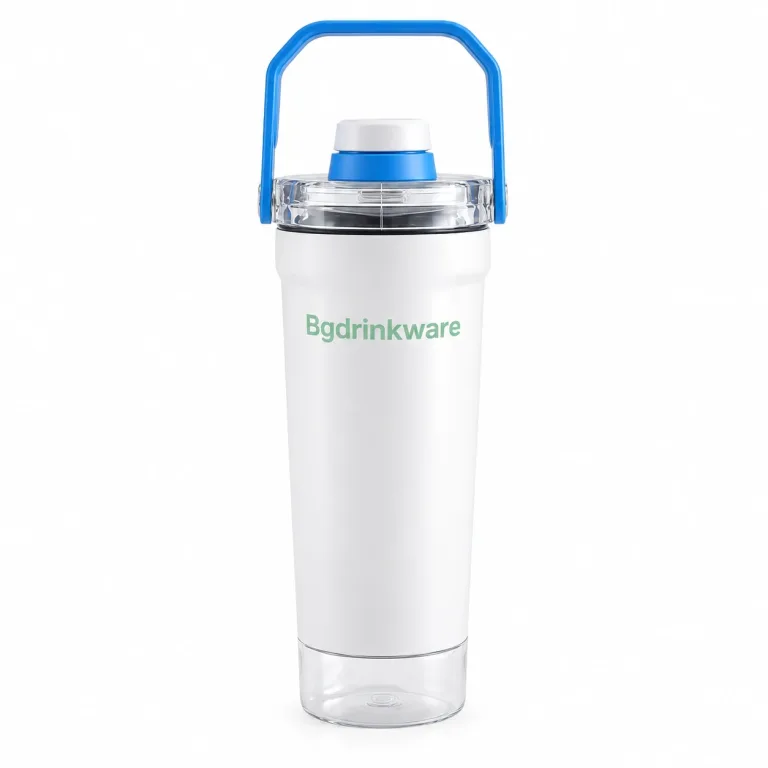
A tumbler needs a Prop 65 warning only if it can expose people in California to a chemical on the Proposition 65 list above the safe harbour level, or the business cannot show the exposure is below it. The law applies to businesses with 10 or more employees that sell products in California, including online. Manufacturers, importers and distributors carry the main duty: label the product or give written notice to the business they sell to. Lead is listed, and in some vacuum tumblers it sits in the material that seals the vacuum under the base cap. BG Drinkware, a drinkware manufacturer in Yongkang, China, seals its vacuum tumblers with lead-free melt-sealing material, but coatings, inks and lid parts need their own checks. Agree the test scope for the finished tumbler and take the warning decision with your compliance adviser.
What does Proposition 65 require of a tumbler brand?
Proposition 65 requires businesses to warn people before exposing them to chemicals on the state’s list. It applies to businesses with 10 or more employees that operate or sell products in California, including sales over the internet and through catalogues. Companies with fewer than 10 employees are exempt from the warning requirements.
The law is California’s Safe Drinking Water and Toxic Enforcement Act of 1986, and OEHHA, the state’s Office of Environmental Health Hazard Assessment, maintains the chemical list and the warning regulations. A tumbler made in China and sold into California through a US brand or marketplace is covered in the same way as one made locally.
Who is responsible for the warning: the maker, the brand or the retailer?
Manufacturers, producers, packagers, importers, suppliers and distributors carry the primary responsibility. They either put the warning on the product label or give written notice to the business they sell to and receive an acknowledgement. Retailers are responsible for placing and maintaining the warning materials they receive.
Brand or importer
Usually decides whether a warning is needed and supplies it.
Distributor
Passes the warning or written notice down the chain.
Retailer
Places and maintains the warning materials it receives.
Overseas maker
Supplies material details and test results for the decision.
For a private label tumbler, that usually makes the brand the party that decides. See private label drinkware.
Where can lead hide in a vacuum tumbler?
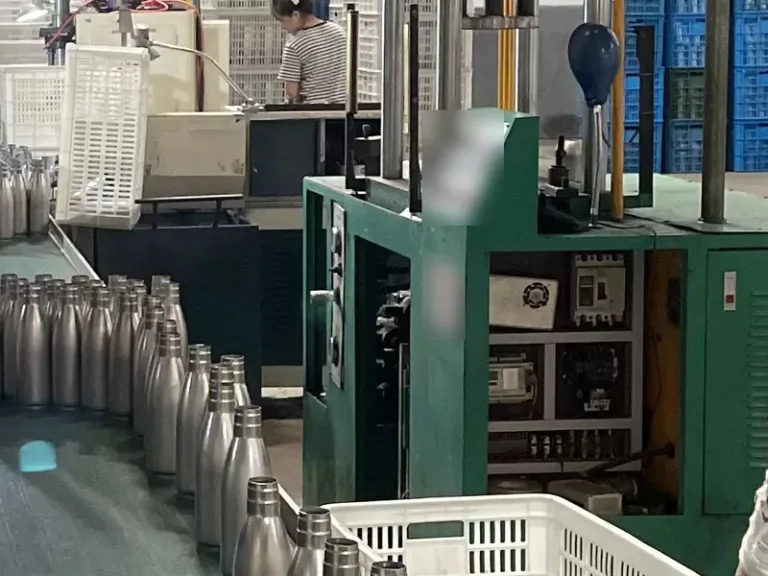
Usually under the base. One long-used method closes the vacuum opening in the outer wall with a sealing material that melts and sets in a furnace, and some of those materials contain lead. The seal is hidden under a steel cap, outside the drink path. Coatings, printing inks and lid parts are separate materials again.
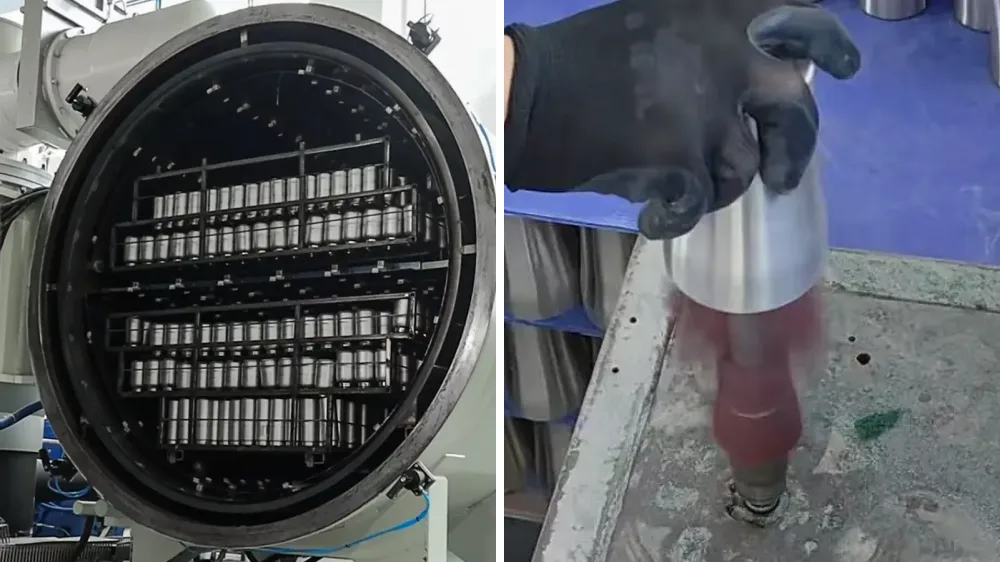
BG Drinkware confirms that its process uses lead-free melt-sealing material with a vacuum furnace that meets the material’s processing requirements. That covers the seal, not the whole tumbler. Lead is on the Proposition 65 list for cancer and for developmental and reproductive toxicity. See lead-free tumblers and do Stanley cups have lead?
When is a Prop 65 warning not required?
When the exposure is at or below the safe harbour level. OEHHA has set more than 300 of these levels: No Significant Risk Levels for cancer and Maximum Allowable Dose Levels for reproductive harm. A business can also show by its own assessment that an exposure poses no significant risk, without relying on the published levels.
| Item | Value |
|---|---|
| Listed for | Cancer (as lead and lead compounds); developmental, male and female reproductive toxicity |
| Reproductive toxicity listing date | 27 February 1987 |
| Maximum Allowable Dose Level | 0.5 µg per day |
| No Significant Risk Level, oral | 15 µg per day |
These levels describe daily exposure, not a content limit for the material, so a lab and your compliance adviser need to work out what a test result means for your tumbler and how it is used.
What does a safe harbour Prop 65 warning look like?
A yellow triangle with a black exclamation mark, the signal word “WARNING”, “CA WARNING” or “CALIFORNIA WARNING”, and the warning text, displayed prominently. A short-form warning on the product must be in type no smaller than 6-point. Under the regulations effective 1 January 2025, the new short-form text names at least one listed chemical.
Products manufactured and labelled before 1 January 2028 can continue to use the earlier short-form wording. If your tumblers carry a warning, decide where it goes, on the unit, the box or both, before the packaging artwork is approved, because the box print is fixed before production. See packaging and Amazon FBA drinkware prep.
What should a brand ask its tumbler supplier before deciding?
Ask for the facts the decision depends on: how the vacuum is sealed and with what material, a list of every part with its material, and test results for the finished tumbler in your colour and finish. Then agree the test scope with a qualified laboratory and take the warning decision with your compliance adviser.
- Sealing methodThe sealing material specification and how the vacuum is closed.
- Part listBody, base cap, coating, ink, lid, straw and seal, each with its material.
- Test scopeParts, method and reporting limits agreed with the laboratory.
- Change controlAny change to the seal, coating or lid is notified and re-checked.
- Warning planWhether a warning is used, its wording and where it is printed.
BG Drinkware arranges testing per order. Its published food-contact reports cover the 304 inner wall of two tested samples against EU, German and Italian rules, not Prop 65. See test reports and quality control.
Prop 65 tumbler FAQ
Short answers to the questions brands ask most about Prop 65 and tumblers: lead-free seals, labels on every product, safety tests and who is liable. The answers draw on OEHHA’s published guidance and BG Drinkware’s process information, and are not legal advice.
Does a lead-free tumbler still need a Prop 65 warning?
Not because of lead in the seal, if the seal is lead-free, but the decision covers the whole product. Coatings, printing inks, lid parts and straws are separate materials and can contain other listed chemicals. Base the decision on the finished tumbler, its test results and your compliance adviser’s view, not on the seal alone.
Do I need a Prop 65 label on every tumbler I sell?
Only on products that need a warning, and only for sales that reach California, but many brands sell nationally from one stock. If a warning is needed, decide whether it goes on the unit, the box or both, and supply written notice to retailers where you do not label the product yourself.
Is a Prop 65 warning the same as failing a safety test?
No. A Prop 65 warning tells people about exposure to a listed chemical; it is a separate question from food-contact compliance or a product safety standard. Food-contact rules, children’s product rules and Prop 65 are assessed separately, so one result does not answer the other.
Who is liable if a tumbler lacks a required warning?
Under OEHHA’s guidance, manufacturers, importers, suppliers and distributors carry the primary responsibility, and retailers are responsible for the warning materials they receive. In practice, that usually points to the brand or importer. Agree in your supply contract which documents the supplier provides, and get legal advice for your situation.
Sources
This guide summarises OEHHA’s published Proposition 65 guidance and BG Drinkware’s process information. It is not legal advice; ask a compliance adviser about your product. Related guides: BPA-free bottles in bulk, how vacuum bottles are made and non-toxic water bottles.
Selling tumblers in California?
Send the model, coating, logo method, lid, destination market and the tests you need, plus quantity per colour, payment terms and trade terms.