How Are Vacuum Insulated Bottles Made? The 10 Production Steps at BG Drinkware
How are vacuum insulated bottles made? From stainless steel sheet and tube to packed carton: which step creates the vacuum, and where each bottle is checked.
By Feng, Head of After-Sales Service & Online Marketing Lead
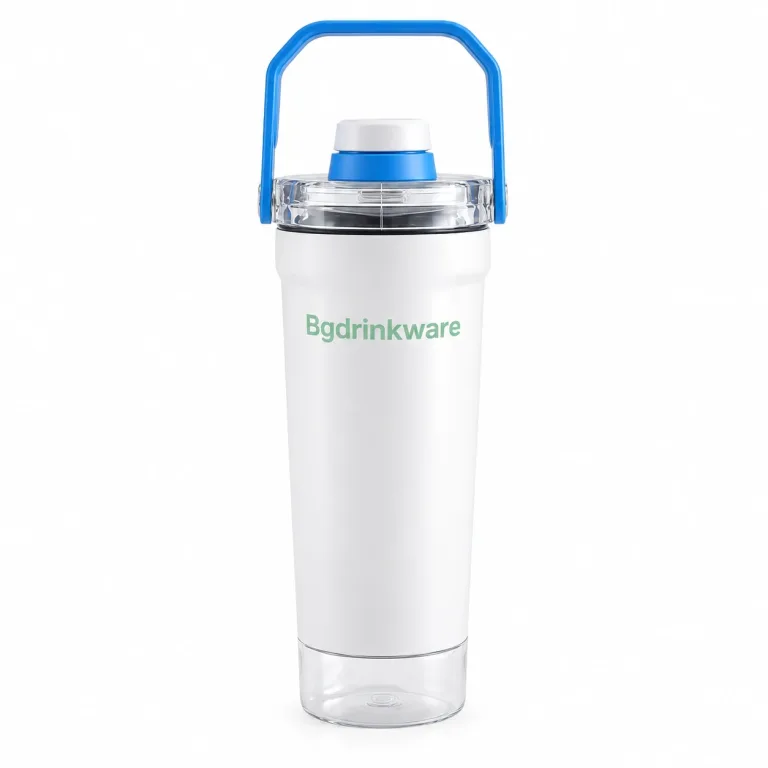
Vacuum insulated bottles are made from two stainless steel bodies, one inside the other, with the air removed from the gap between them and the gap sealed shut. BG Drinkware, a drinkware manufacturer in Yongkang, China, makes its vacuum bottles in 10 steps: choose the steel, with a 304 inner wall and 201 outer wall as standard; form the bodies by stretching or hydroforming; weld the inner and outer bodies together at the mouth; seal the vacuum by brazing in a vacuum furnace with a lead-free sealing material; polish; temperature-test every bottle; spray a ceramic inner coating on orders that ask for it; spray the outside colour; add the logo; and pack. A sample of an existing model takes up to 7 days, and bulk production takes a reference 7–12 days from receipt of the deposit, subject to timely approvals, with 2–3 more days for a ceramic lining. The vacuum keeps drinks hot or cold, so the sealing and testing steps matter most.
What is inside a vacuum insulated bottle?
Two steel walls, an empty gap between them, and a seal that keeps the gap empty. The same steps answer how insulated water bottles are manufactured at scale.
- Inner wall
- Touches the drink. 304 stainless steel as standard at BG Drinkware, or 316 on request.
- Vacuum gap
- The air is removed, so heat cannot cross the gap by conduction or convection. Some heat still crosses by radiation, and some conducts through the joined mouth and the lid.
- Outer wall
- 201 stainless steel as standard, or 304 on request. It carries the colour and logo.
- Seal
- A small vacuum hole in the bottom of the outer wall is sealed after the air is removed. BG Drinkware uses a lead-free sealing material.
The idea is older than the steel bottle: James Dewar invented the vacuum flask in 1892: two glass vessels separated by a near-perfect vacuum. Later, metal replaced the glass, according to the Linda Hall Library. For the physics of why the gap works, read how insulated water bottles work. See drinkware manufacturing process.
For the main types of flask, see stainless steel vacuum flasks.
What are the 10 steps in making a vacuum insulated bottle?
Forming and joining build the double wall; sealing creates the vacuum; testing checks it; finishing makes it a product.
- Choose the steel304 inner wall and 201 outer wall as standard; 316 inner or 304 outer on request.
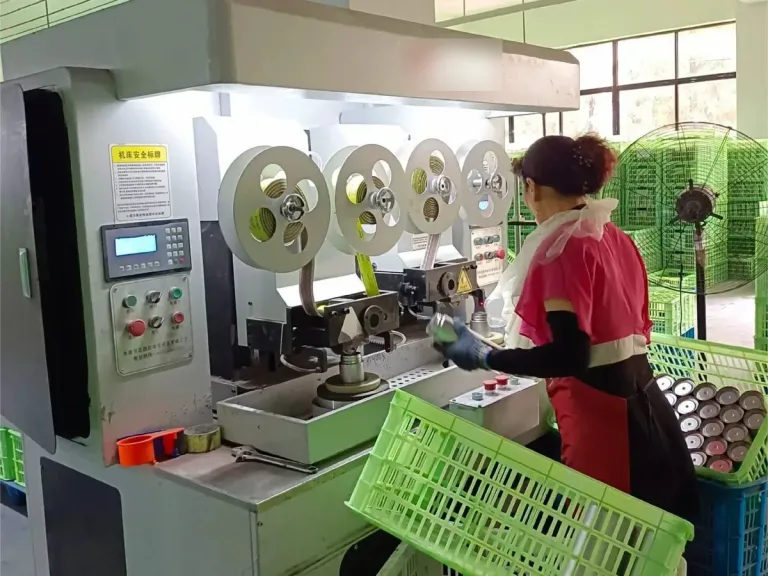
- Form the bodiesShape the inner and outer bodies by stretching or by hydroforming.
- Join the wallsFit the inner body inside the outer body and weld them together at the mouth.
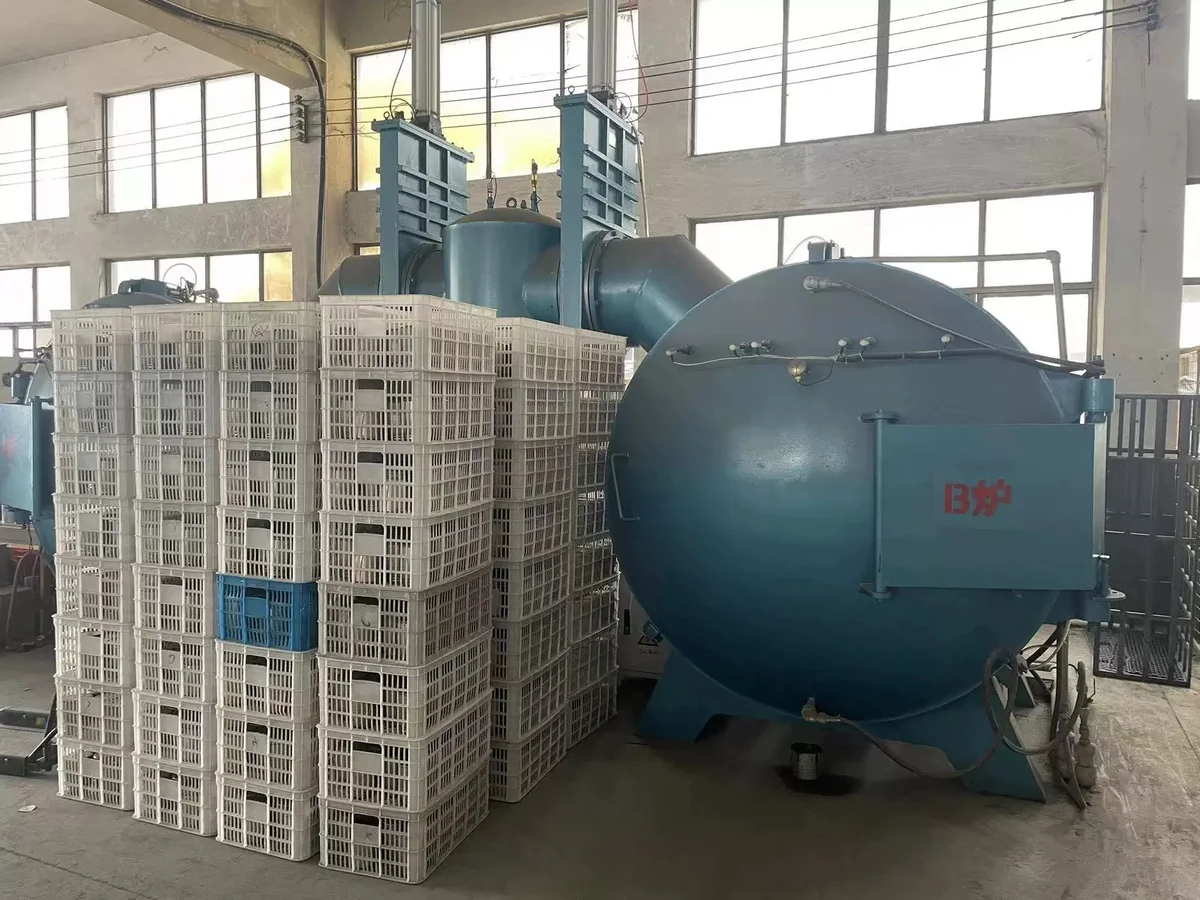
- Seal the vacuumBraze in a vacuum furnace, with a lead-free sealing material.
- PolishPolish the steel surface before testing and finishing.
- Temperature-testTest every bottle on a temperature-testing machine.
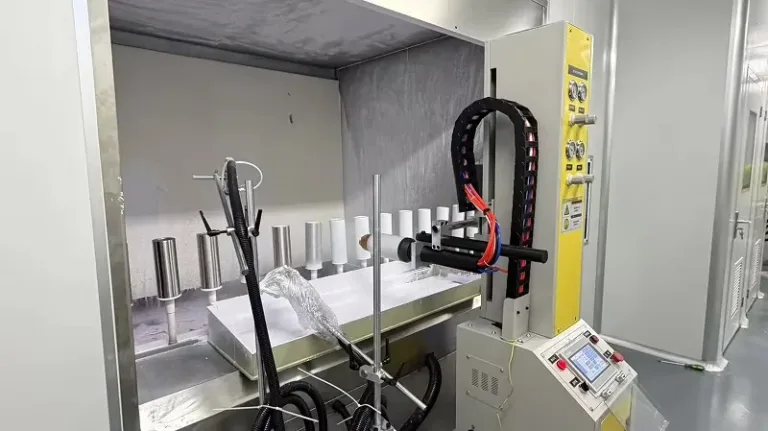
- Ceramic inner coatingOnly on orders that ask for a ceramic lining.
- Spray the outsideApply the outside colour, for example by powder coating or spray painting.
- Add the logoApply the logo by the method chosen for the order.
- PackPack to the order's packaging specification.
Every order Only when the order asks for it
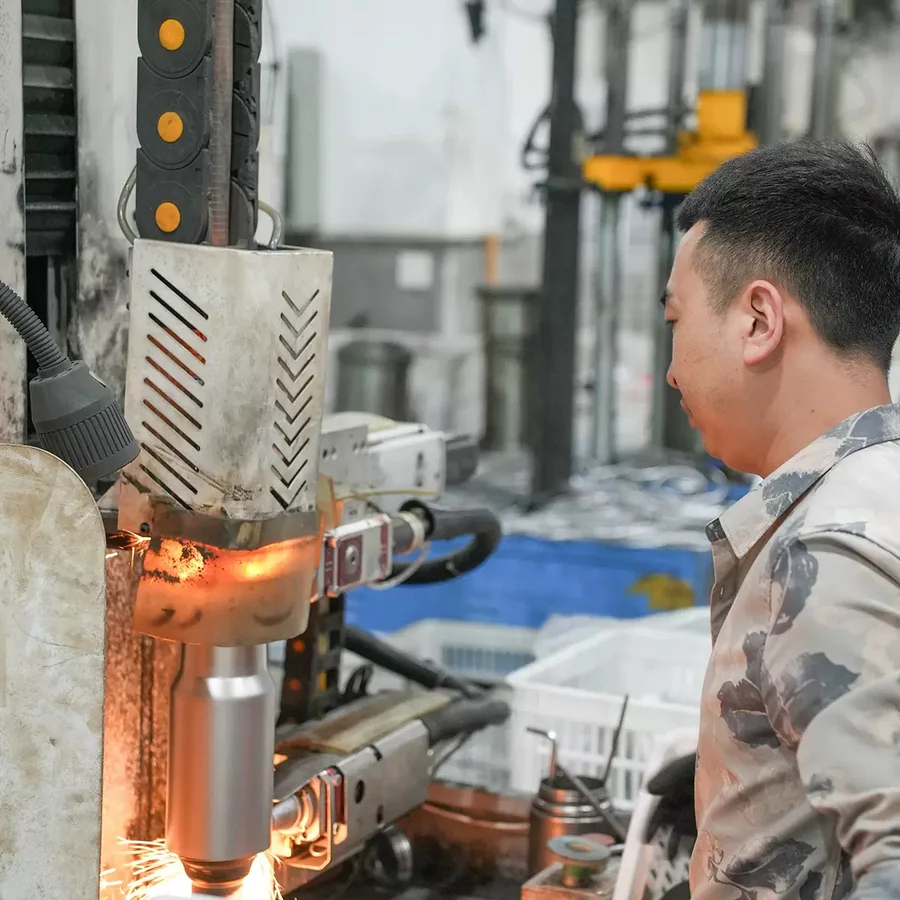
How are the steel bottle bodies formed?
BG Drinkware uses both stretching and hydroforming.
Stretching
A flat stainless steel disc is pressed by a punch through a die, usually in several draws, into a seamless body. In BG Drinkware's production experience, stretch-formed vacuum bodies usually achieve better vacuum performance.
Hydroforming
A steel tube is filled with liquid at high pressure, which pushes the wall out against a mould. In BG Drinkware's experience, hydroformed bodies are usually heavier.
Neither route is better for every bottle. Shape, capacity, target weight and the vacuum requirement all affect the choice, which is why two quotes for the same capacity can describe different bodies. Our guide to custom stainless steel tumbler pricing explains how forming and weight show up in a quote, and 18/8 vs 304 vs 316 covers the steel grades.
How is the vacuum sealed?
By brazing in a vacuum furnace.
In vacuum furnace brazing, the joined bottles go into a furnace chamber that is pumped down to a vacuum, so the air in the gap between the walls escapes through a small vacuum hole in the bottom of the outer wall. The furnace then heats the bottles until a sealing material placed over that hole melts and closes it. When the bottles cool, the gap stays under vacuum. BG Drinkware seals its vacuum bottles this way, and the sealing material it uses is lead-free; our guide to lead-free tumblers explains why buyers ask about it.
For why some seals contain lead, see do Stanley cups have lead?
How is each bottle checked?
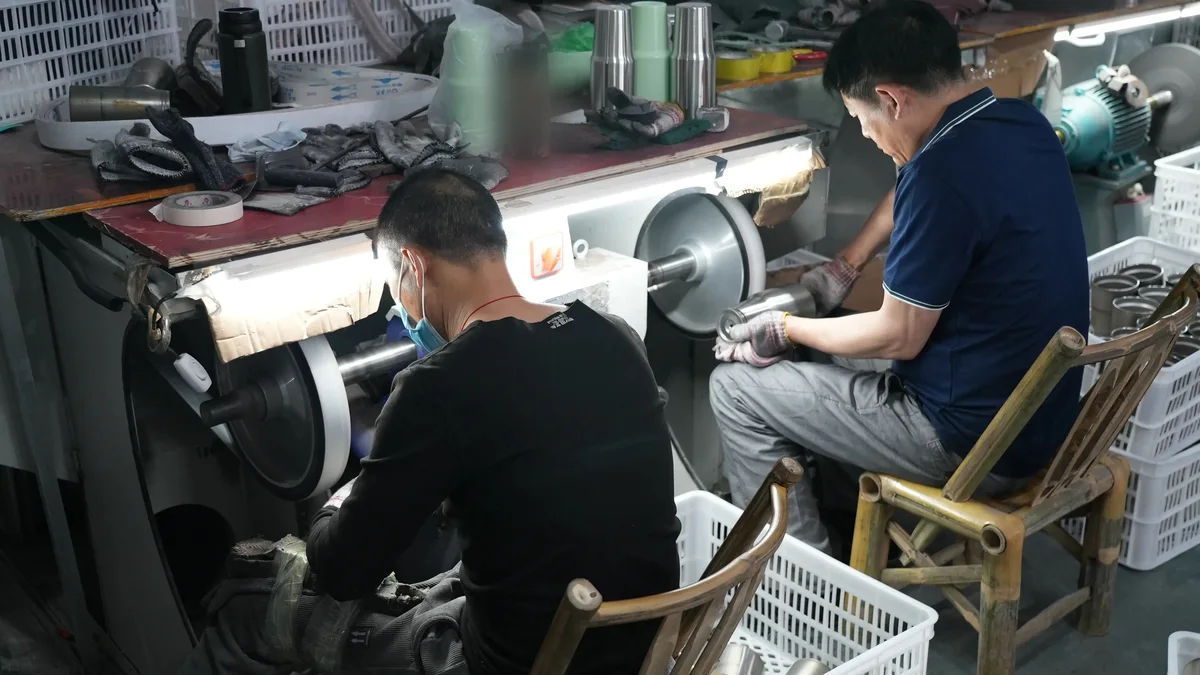
Every vacuum bottle is temperature-tested, one by one, after polishing.
BG Drinkware tests every vacuum bottle on a temperature-testing machine, unit by unit. How many times each bottle is tested depends on the customer: when an order asks for more rounds of testing, the bottles get more rounds. The test comes before the ceramic coating, colour and logo, so the vacuum is checked before the bottle is finished.
When are the ceramic coating, colour and logo added?
After the test, in that order: ceramic lining if ordered, then colour, then logo.
A ceramic inner coating is sprayed only on orders that ask for it, and our guide to ceramic coated tumblers explains what it changes. The outside colour comes next, for example by powder coating or spray painting. The logo goes on the finished colour, by a method such as laser engraving or UV printing. Packing is the last step.
How long does production take?
Up to 7 days for a sample, then 7–12 days for bulk.
These are BG Drinkware's standard times. The minimum order is 500 pieces per model and colour and negotiable; lower quantities for some start-up teams need individual approval. To quote, send the capacity, quantity, model, colour, logo method, packaging, payment terms and trade terms. Different logos are counted separately for MOQ.
For where much of this production happens, see why Yongkang makes so much insulated drinkware.
Vacuum bottle production FAQ
How long does it take to make vacuum insulated bottles?
At BG Drinkware, a sample of an existing model takes up to 7 days. From receipt of the deposit, bulk production normally takes 7–12 days, subject to timely approvals, and an order with a ceramic inner coating needs 2–3 more days. The minimum order is 500 pieces per model and colour and negotiable; lower quantities for some start-up teams need individual approval.
Why is every vacuum bottle temperature-tested?
Because a bottle with a weak vacuum looks the same as a good one. BG Drinkware tests every vacuum bottle on a temperature-testing machine, unit by unit, after polishing and before the coating and logo. The number of test rounds depends on the customer, so an order that asks for more rounds gets more rounds.
Is the vacuum seal lead-free?
At BG Drinkware, yes. The vacuum is sealed by brazing in a vacuum furnace, and the sealing material is lead-free. If your market needs proof, ask the supplier to name the sealing material in writing and to include it in the test report scope, rather than relying on a general lead-free claim.
What is the difference between stretched and hydroformed bottles?
Both are ways of shaping the steel bodies. Stretching draws the steel into shape; hydroforming uses liquid pressure to push it against a mould. In BG Drinkware's experience, stretch-formed vacuum bodies usually achieve better vacuum performance, and hydroformed bodies are usually heavier. The right choice depends on the shape, capacity and target weight.
Can a vacuum bottle that has lost its vacuum be repaired?
No. Once the vacuum layer is damaged, for example by freezing or a hard drop, it cannot be repaired: the vacuum can only be made in a vacuum furnace during production, and a finished bottle cannot be put back through that process. BG Drinkware sends a replacement instead. To avoid it, keep vacuum bottles out of the freezer and the fridge.
Sources
Planning a vacuum bottle order?
Send the capacity, quantity, model, colour, logo method, packaging, payment terms and trade terms, and BG Drinkware will reply with a quotation.