Custom Drinkware for Distributors: Manage Client Approvals
Before quoting custom drinkware for a client, tie approval to the exact model, artwork version, packaging and quote. Keep that record when the client asks for a change or a reorder.
By Feng, Head of After-Sales Service & Online Marketing Lead
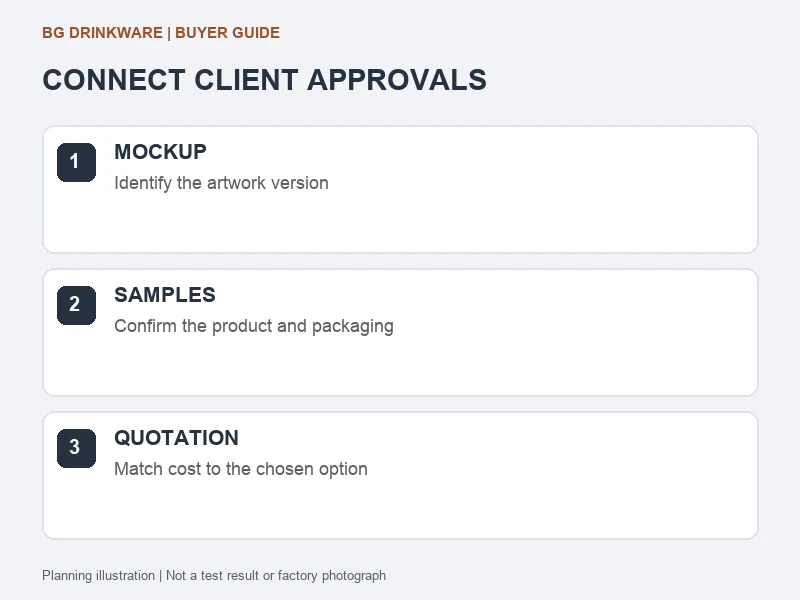
For a distributor or merchandise agency, the approval task is to connect the end client’s decision to a clearly identified order configuration. BG Drinkware, a drinkware manufacturer in Yongkang, China, can provide mockups, physical samples, packaging samples and itemised quotations. Agree which of these the client needs and what each approval covers. A mockup can record the intended layout, while the physical product and packed sample allow different checks; do not treat one approval as covering every item. Assign a person who can return the client’s consolidated decision, and keep the approved file names, sample references and quantities together. BG’s CRM automatically records orders and provides daily tracking and reminders. That follow-up does not replace the client’s decision or establish an automatic approval process. Lead time starts from the deposit, and late confirmations or revisions can affect the schedule. Ask for the cost and timing of any change before promising it to the client.
What should an agency settle before requesting a quotation?
Turn the client brief into an order list that identifies the model, quantity, body colour, logo and packaging for each line. Add the destination and required arrival date. Separate confirmed requirements from options still under discussion so the supplier can quote a defined job and flag the decisions that remain open.
A broad brief such as premium bottles for an event leaves procurement questions unanswered. Clarify the capacity, lid arrangement, finish and decoration expectations that matter to the client. If the client has not chosen them, ask for alternatives as separate options rather than mixing their costs into one unexplained unit price.
Check quantity allocation before presenting a range. BG applies the usual 500-piece minimum per model and colour, and another logo on the same model and colour counts separately. Several client departments requesting different logos therefore need a line-by-line quantity review, even when the combined order looks large. Lower minimums for some start-up teams need an order-specific quotation.
Related guide: Drinkware Manufacturer vs Trading Company: How to Tell and Choose.
Related guide: Custom drinkware purchase order requirements: PO attachments.
Which approval materials can BG provide?
BG can provide mockups, physical samples, packaging samples and itemised quotations. Choose the materials that answer the client’s open questions and agree their scope, cost and timing for the order. Each approval should identify what was reviewed, because approval of a layout does not by itself confirm the finished product or packaging.
| Material | Decision to record | Boundary to check |
|---|---|---|
| Mockup | Artwork version, size and intended placement | Which physical details still need a sample? |
| Physical sample | Model, finish and agreed product checks | Does it represent the ordered configuration? |
| Packaging sample | Box, insert, label and packed fit | Which artwork and label version is included? |
| Itemised quotation | Chosen configuration and price scope | Which costs or services remain separate? |
Explain the limits of each review to the client before requesting approval. A mockup is useful for identifying the proposed design and placement, but questions about the actual finish, handling or packed fit may need a physical sample. Ask what the supplied sample represents and which details remain provisional.
Keep an itemised quotation with the approvals so a later change can be assessed against the original scope. Ask the supplier to identify included and excluded work, any separate sample or setup charges, and the configuration behind each quoted price. The client should know which option the approved budget buys.
Related guide: Golden Sample: How Brands Keep Bulk Drinkware Matching the Approved Sample.
How should you record the client’s final approval?
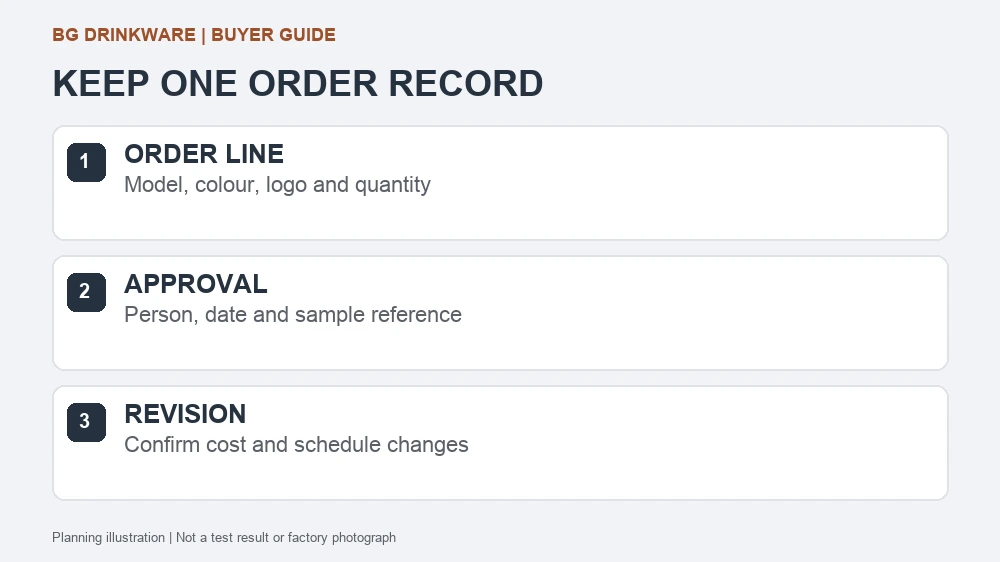
Keep one dated approval record for the selected configuration and identify who authorised it. Link that record to the artwork files, sample references and order lines. Use the record when sending the final instruction to BG, and ask the supplier to confirm which approved files and samples apply to the order.
- Client or project reference and approving person.
- Order line with model, colour, logo and quantity.
- Approved artwork file name and revision date.
- Physical and packaging sample references where used.
- Accepted exceptions and unresolved decisions.
- Quotation reference and current schedule.
Use a response that names the item being approved. A message saying looks good can be ambiguous if the conversation contains several models or revisions. Ask the client to confirm the selected version and list any remaining exceptions. Forward the consolidated instruction to the supplier and request confirmation of what will be used.
When a client changes only one part, record that part explicitly and retain the other approved details. For example, changing the logo text should not silently change its size or position. This is an illustrative approval situation, not a claim about an actual customer order.
How can you manage changes without promising the wrong date?
Ask for the effect on cost and schedule before accepting a client revision as part of the existing order. BG counts production lead time from the deposit, and late confirmation or changes can affect scheduling. Identify the affected line and obtain a response for that change at the current production stage.
Give the client the revised cost and dates together. A new logo may affect the minimum allocation as well as the decoration quotation, and a packaging revision may need another review. Ask the supplier which of these applies instead of treating all revisions as a small artwork edit.
CRM reminders can help bring an unanswered request back to attention, but they cannot supply a missing client decision. Agree a contact who can chase the end client and a date for returning the response. If the response is late, confirm the schedule again before telling the client that delivery is unchanged.
Related guide: Drinkware order changes after approval: a buyer's record.
Related guide: Custom Drinkware Production Timeline: From Sample to Shipment.
Why should distributors review labels with the packed product?
Review the label assignment as well as the label artwork. Check that each approved label belongs to the correct model, colour, logo and destination, then review its placement on the packed product. BG can supply packaging and label services, including barcode printing, with the requirements agreed for the order.
In one BG order, a Korean customer supplied the wrong label and paid BG for the rework. BG has confirmed that when BG makes the labelling mistake, BG bears that rework cost. Ask BG to assess the cause and proposed rework for your order before agreeing a remedy.
The practical check is whether the approved label file and its assignment are both correct. Ask the client to review the product identifier and destination details alongside the label. Keep the approval with the packaging instruction, and agree how any later discrepancy will be handled before authorising rework.
Related guide: Promotional drinkware blind shipping: agree the presentation.
Buyer questions
Can BG provide materials for end-client approval?
Yes. BG can provide mockups, physical samples, packaging samples and itemised quotations. Agree which materials are needed for the specific order and confirm their cost and timing. Tell the supplier what the client needs to decide, then record which configuration and file version each approval covers before issuing the final instruction.
How should distributors use order reminders?
BG’s CRM records orders automatically and provides daily tracking and reminders. Use the reminders to follow up on outstanding client decisions. The distributor should still obtain the client’s decision, identify the approved revision and confirm the resulting instruction with the supplier. Keep changes to cost and schedule in the same order record.
Can several client logos be combined into one minimum quantity?
BG counts a different logo separately for the minimum, even on the same model and body colour. The usual minimum is 500 pieces per model and colour. List each client logo and its quantity separately when requesting the quotation, then check the allocation before offering the proposed range to the end client. Lower minimums for some start-up teams need an order-specific quotation.
Who pays if approved labels need rework?
Responsibility depends on the source of the error. BG reports a Korean order where the customer supplied the wrong label and paid for rework. BG also confirms that it bears rework costs when BG makes the labelling mistake. Review the actual discrepancy and agree the remedy for the order rather than assuming a fixed charge.
Agree who will approve artwork, samples and packaging, and how revisions will be confirmed for your order.
Send the client brief and approval requirements
Send the model choices, quantities by logo, artwork, packaging needs and required arrival date. Identify who will approve the order and which mockups, samples or quotation details they need to review.
Scope a promotional drinkware project before sending your specifications.